 Florida Everglades
I went off to college with my friend, Hope. We were pursuing degrees in nursing, but since Hope’s boyfriend, Brent, was in the forestry school, we also got a healthy dose of wildlife biology. Brent had to memorize long lists of Latin names for every critter in the Southeast; some of them still pop into my head from time to time: Odocoileus virginianus, Meleagris gallopavo, Sus scrofa. He made sure we learned a proper philosophy of land stewardship, and in return we persuaded him to dress up and boot-scoot-boogie at our sorority formals.
It’s not surprising that Brent’s favorite book is A Land Remembered by Patrick L. Smith. The story chronicles the rise of the fictional McIvey family from impoverished wilderness squatters in the mid-1800s to real estate moguls in the 1960s. The book introduces readers to a Florida most don’t realize existed, and it warns about the consequences of a reckless use of natural resources. I confess, outside of colonial Spanish history, I mostly thought of Florida in terms of gimmicky recreation. Thanks to Brent’s recommendation, we enjoyed a fabulous history lesson listening to the McIvey’s Florida odyssey while driving through the state on an adventure of our own.
In our audiobook, the first generation of McIveys wander into Florida trying to avoid the Civil War. They almost starve for the first decade they live there, and they don’t avoid the war altogether. Tobias McIvey is conscripted to round-up and drive cattle north to Confederate camps. He makes it back alive, and he realizes there might be money in selling the wild cattle roaming the Florida wilderness. He also decides he’s too close to civilization (and the misbehavior of the residents there), so he moves his family from Northern Florida to the more-isolated Kissimmee River area above Lake Okeechobee.
Our first Florida stop was St. Augustine. Founded in 1565, it’s the oldest city in America. A lot of its touristy history spots are focused on colonial Florida, but we did get our first taste of Henry Flagler, Standard Oil co-founder, hotelier, and railroad-builder. And we learned about “crackers.” I thought this was just a derogatory term from my Georgia childhood, but it turns out the name was associated with Scotch-Irish drifters, like Tobias McIvey, who herded wild cattle with long, cracking whips in the early days of Florida.
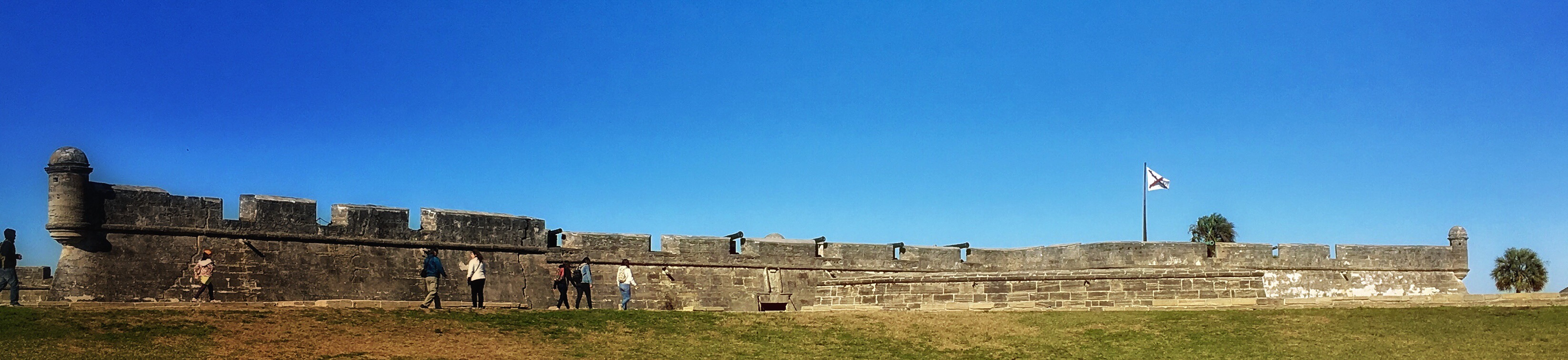 Spanish fort Castillo de San Marcos was built to defend against pirates, natives, and French, British, and South Carolinian invaders.
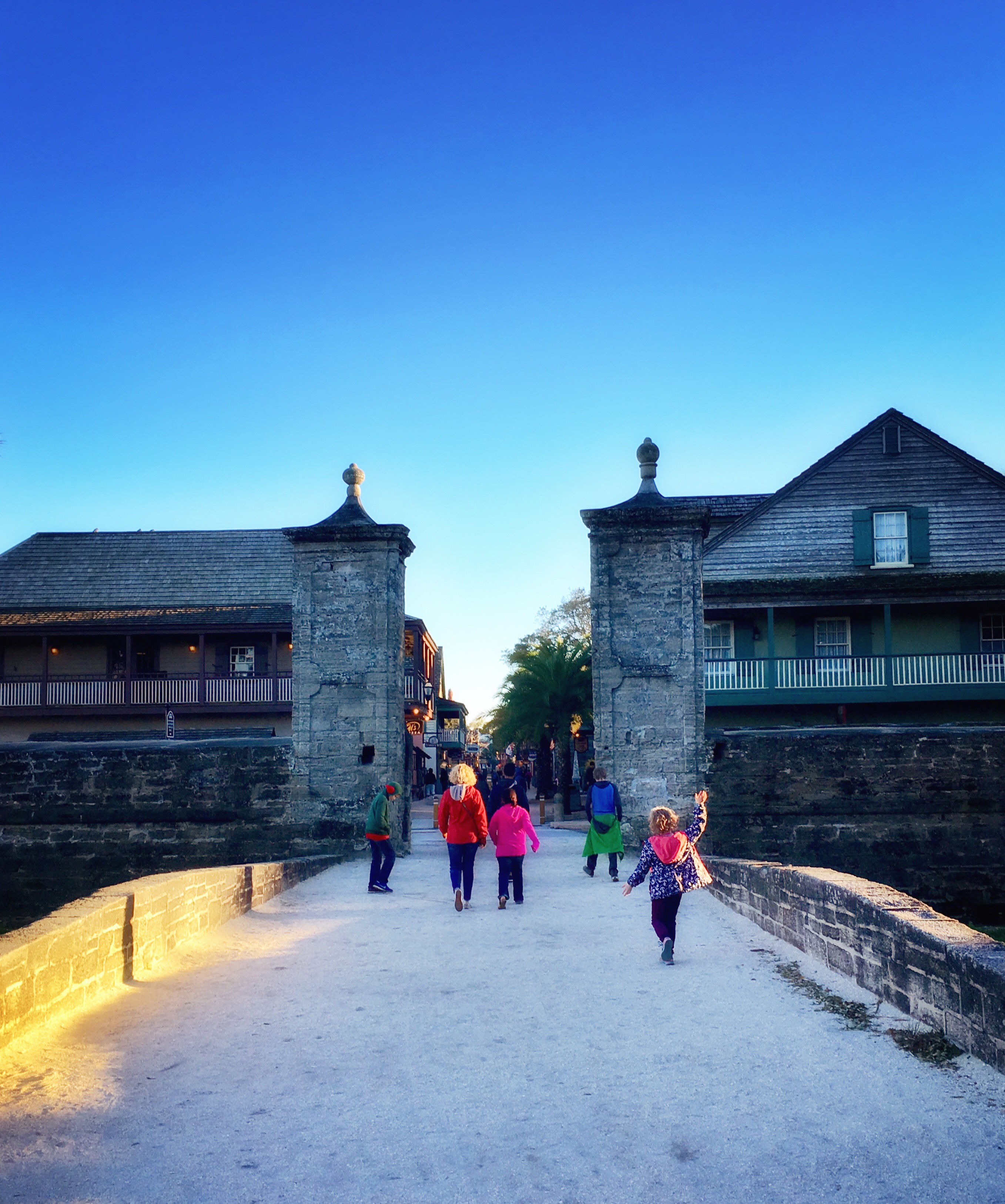 St. Augustine was once a walled city. The city gates survive thanks to a bunch of old ladies who camped out around them in protest until an 1880s mayor scrapped his plan to tear them down.
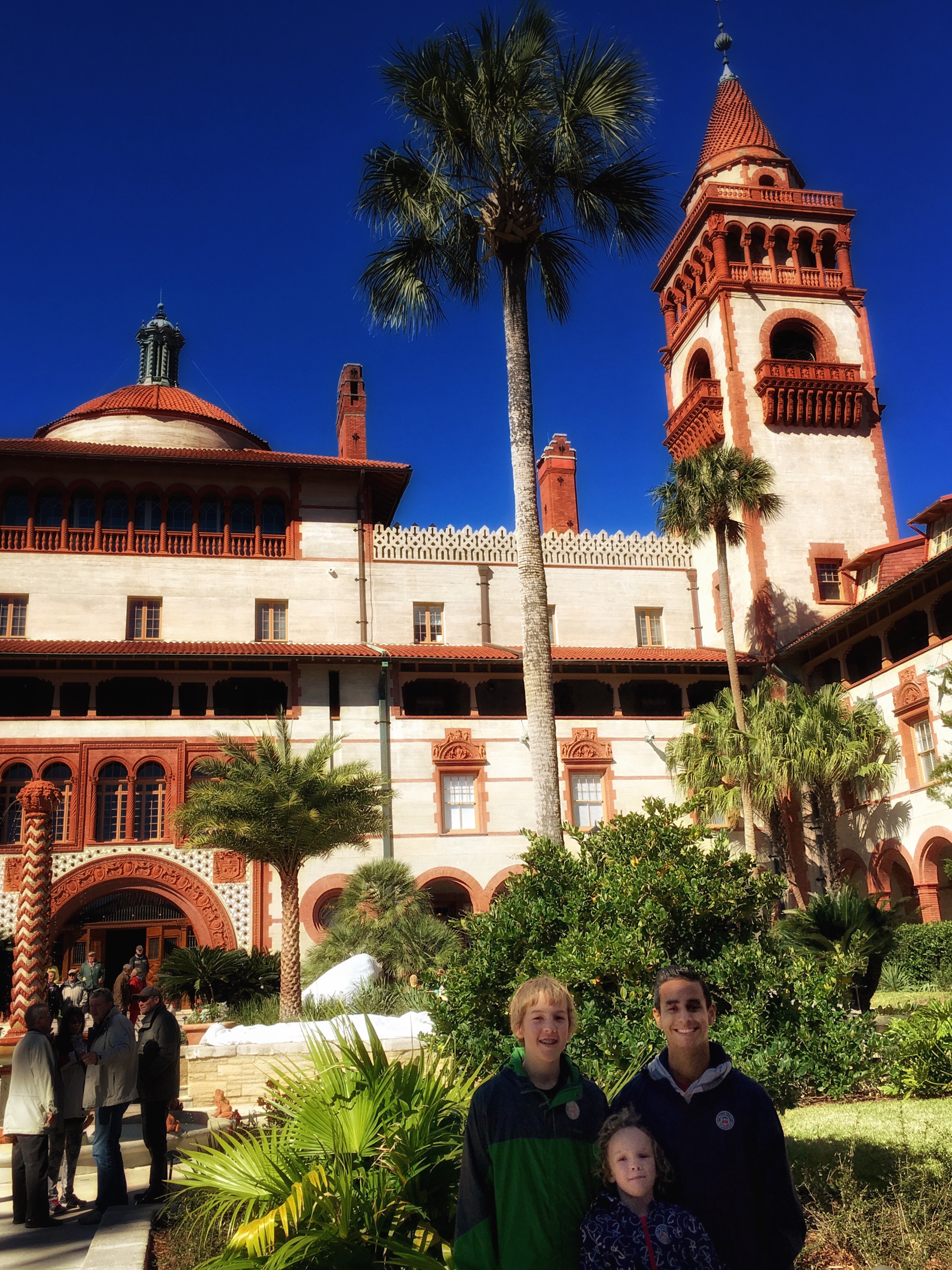 Henry Flagler’s luxurious hotel is now a college.
As we traced the coast toward Miami, we were still riveted by the McIvey saga. Tobias has made enough money on cattle to diversify into oranges. But a terrible freeze in 1894 kills orchards all over the state. It’s so bad, settlers walk away from their land altogether. Tobias hears that there are surviving orange trees at Fort Dallas, so the family loads up a wagon and heads south for new trees. (We looked and looked on our map, but we could not find Fort Dallas. Finally, I wikkied it, and discovered Fort Dallas is now called Miami!) In Fort Dallas, the McIveys purchase new trees and a huge parcel of land on a long, swampy island right off the settlement. They head back to Kissimmee, just before Mr. Flagler arrives with his railroad and turns Fort Dallas into a vacation paradise.
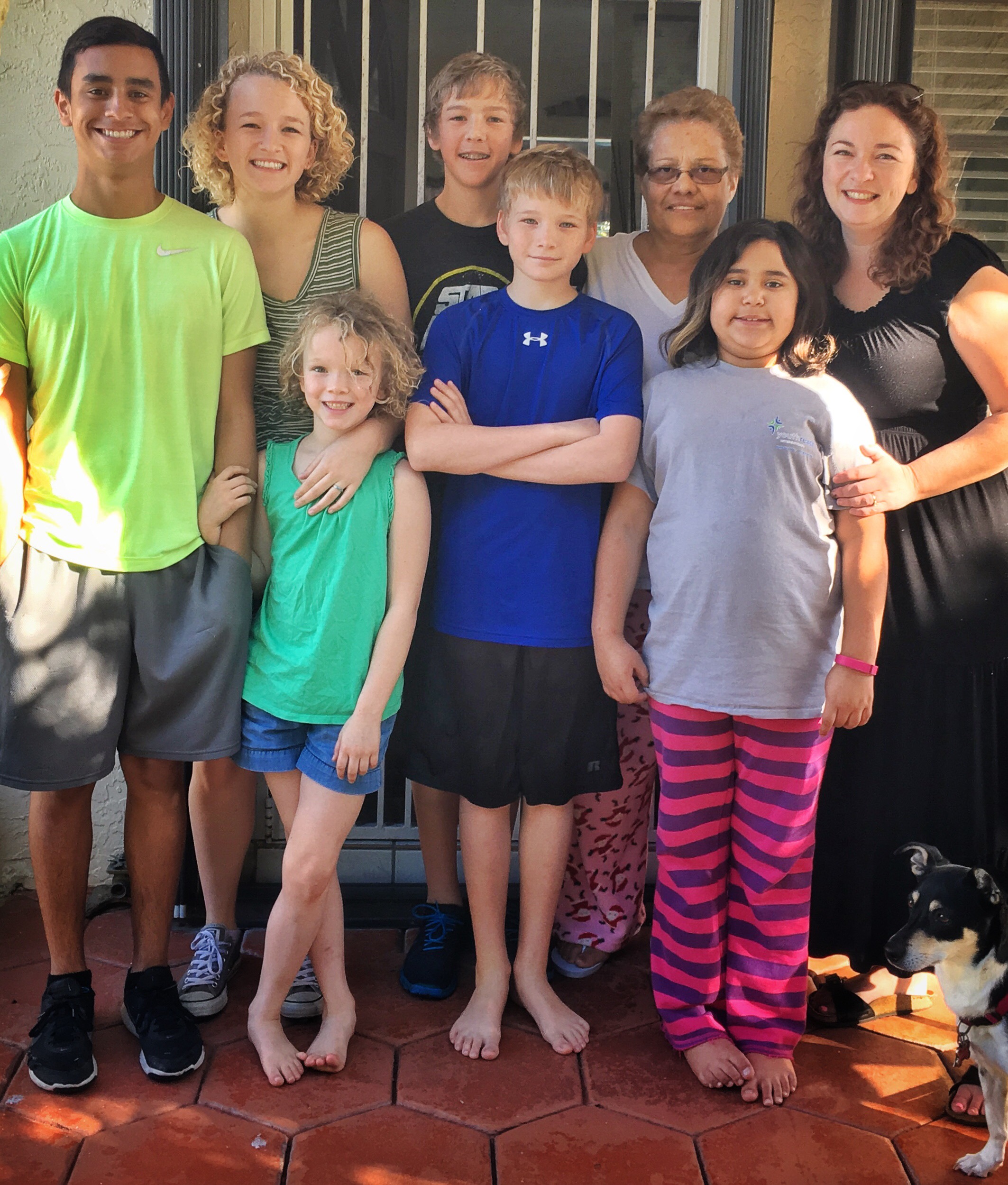
In Miami, we stayed with Rosa Figueroa, the mother of our Lubbock friend, Abi Morales. We arrived in the evening, and some of Abi’s cousins were just leaving. Instead, they lingered, chatting away with the kids until after midnight. Mrs. Rosa mothered us all, making coffee in the morning and hot chocolate before bedtime, and loading the RV with extra provisions when we left. I loved listening to her stories of growing up in Puerto Rico and working as a nurse in New York City.
We visited Calle Ocho to watch lightning-fast rounds of Dominos and taste Cuban dishes. (We learned that yucca, like okra, tastes better fried than boiled.)
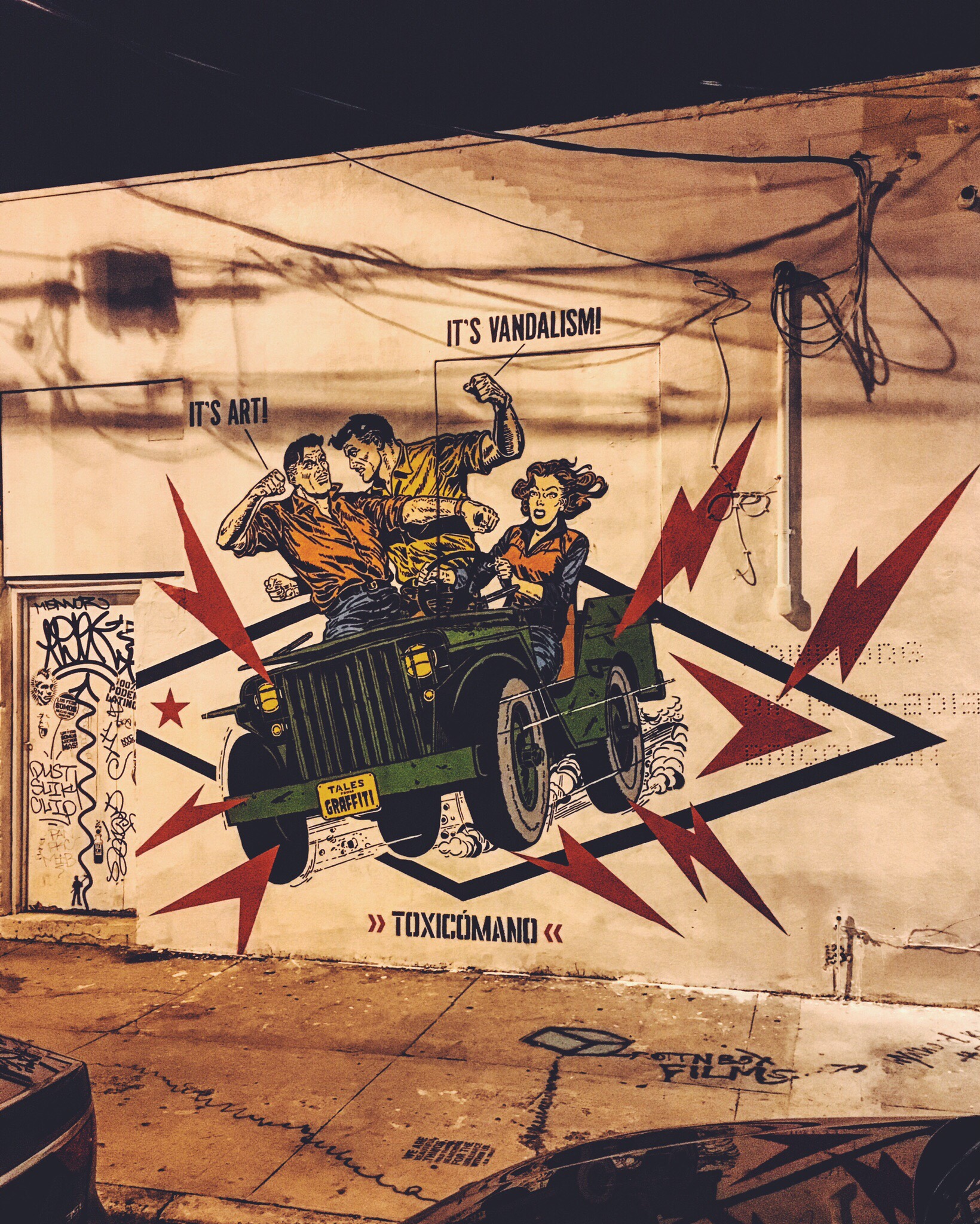 Jane was thrilled by all the graffiti art in Wynwood. It was dark, so my pictures aren’t very good, but here’s a link to see more of the murals, which cover the sides of buildings all over the district: www.thewynwoodwalls.com
Meanwhile in our audiobook, two more generations of McIveys toil away on the Florida frontier and profit from economic booms and busts of the early twentieth century. The last McIvey, Sol, accumulates a huge fortune by draining more and more of the Everglades for his agriculture and real estate businesses. He’s successful, but often unhappy, and he is increasingly uneasy with the distance between his way of living and that of his grandparents. We visited a huge, old estate on Biscayne Bay, just like the mansion Sol built in the book, and we felt his ghost all over it!
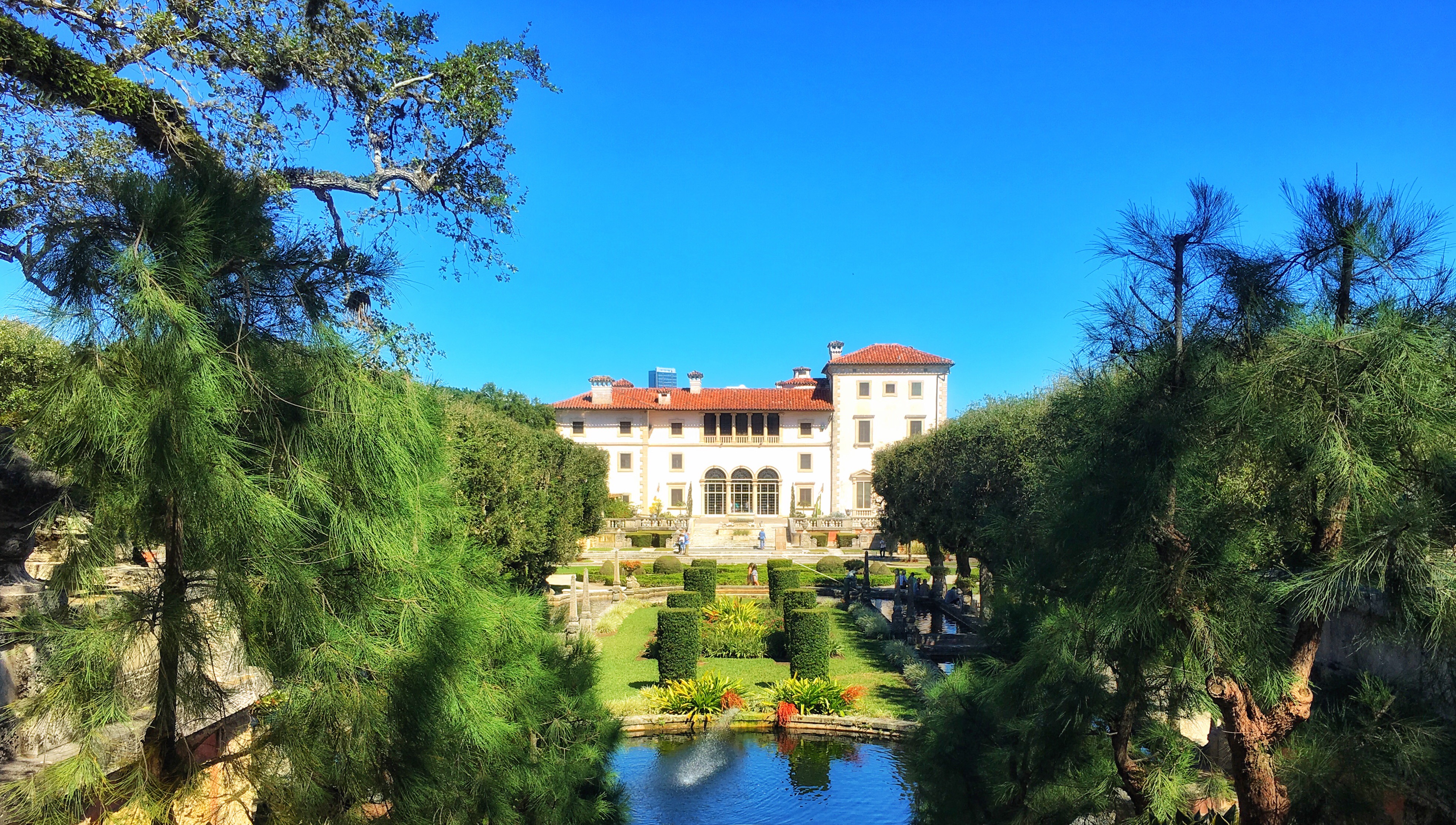
Villa Vizcaya
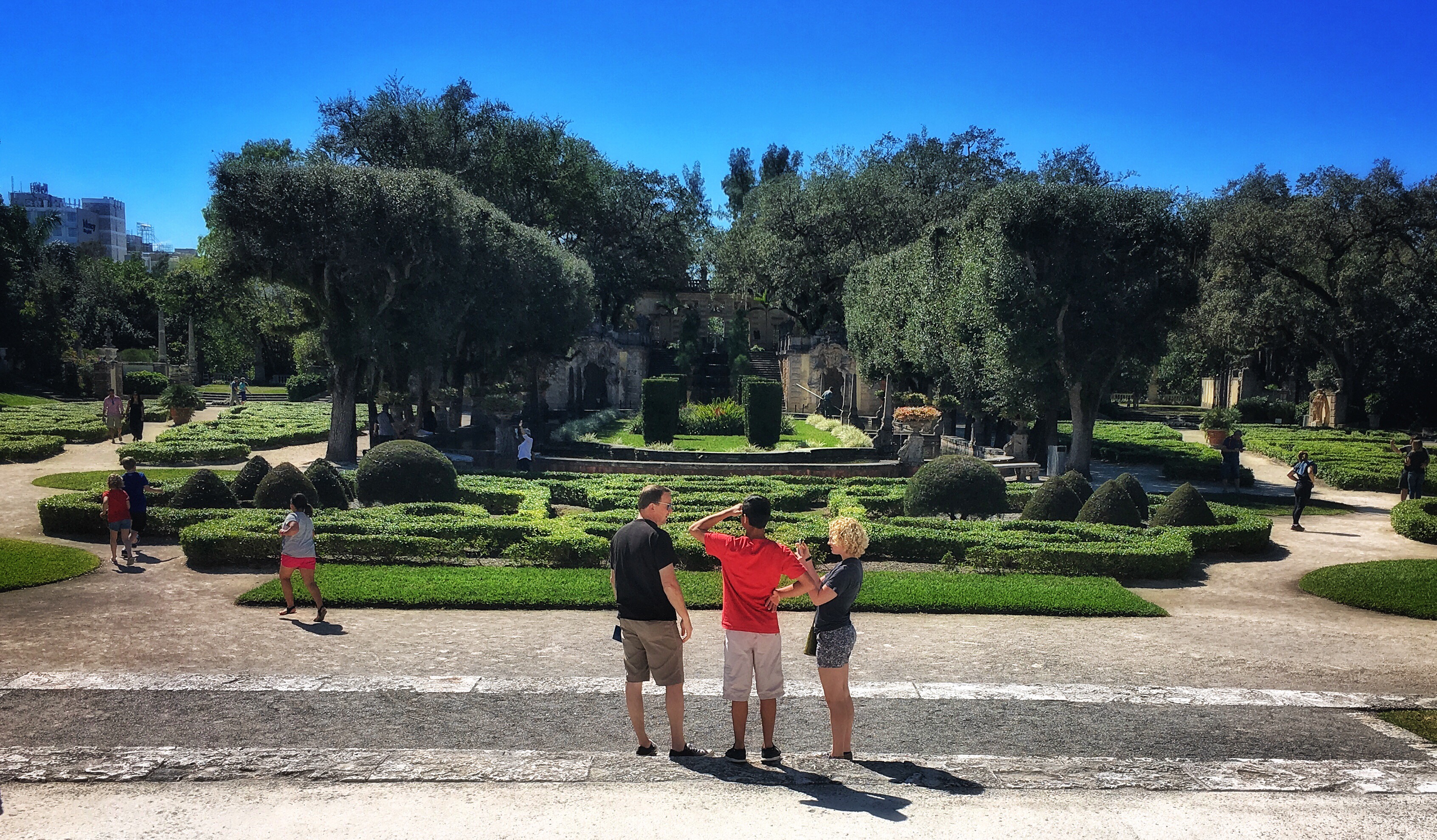
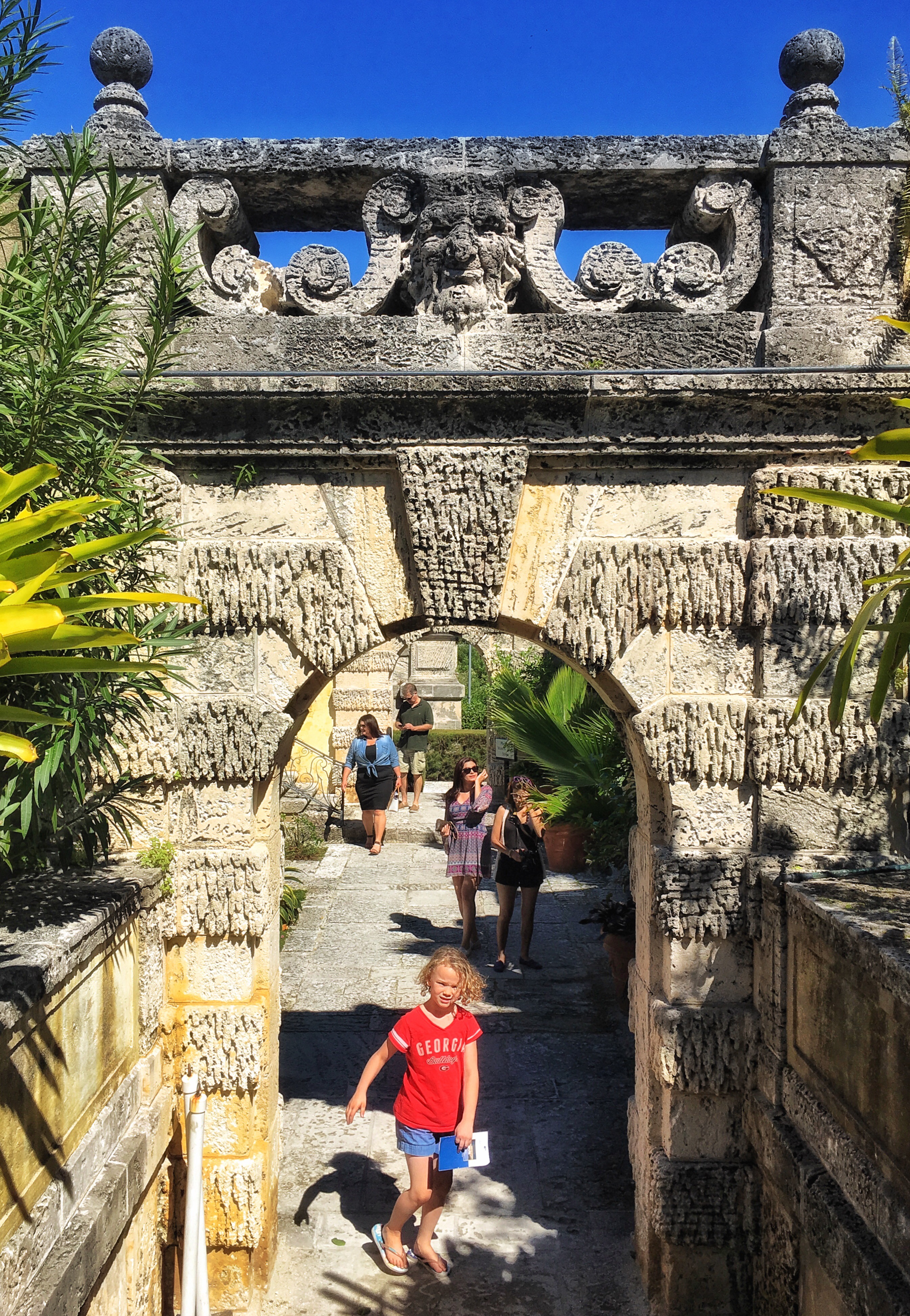
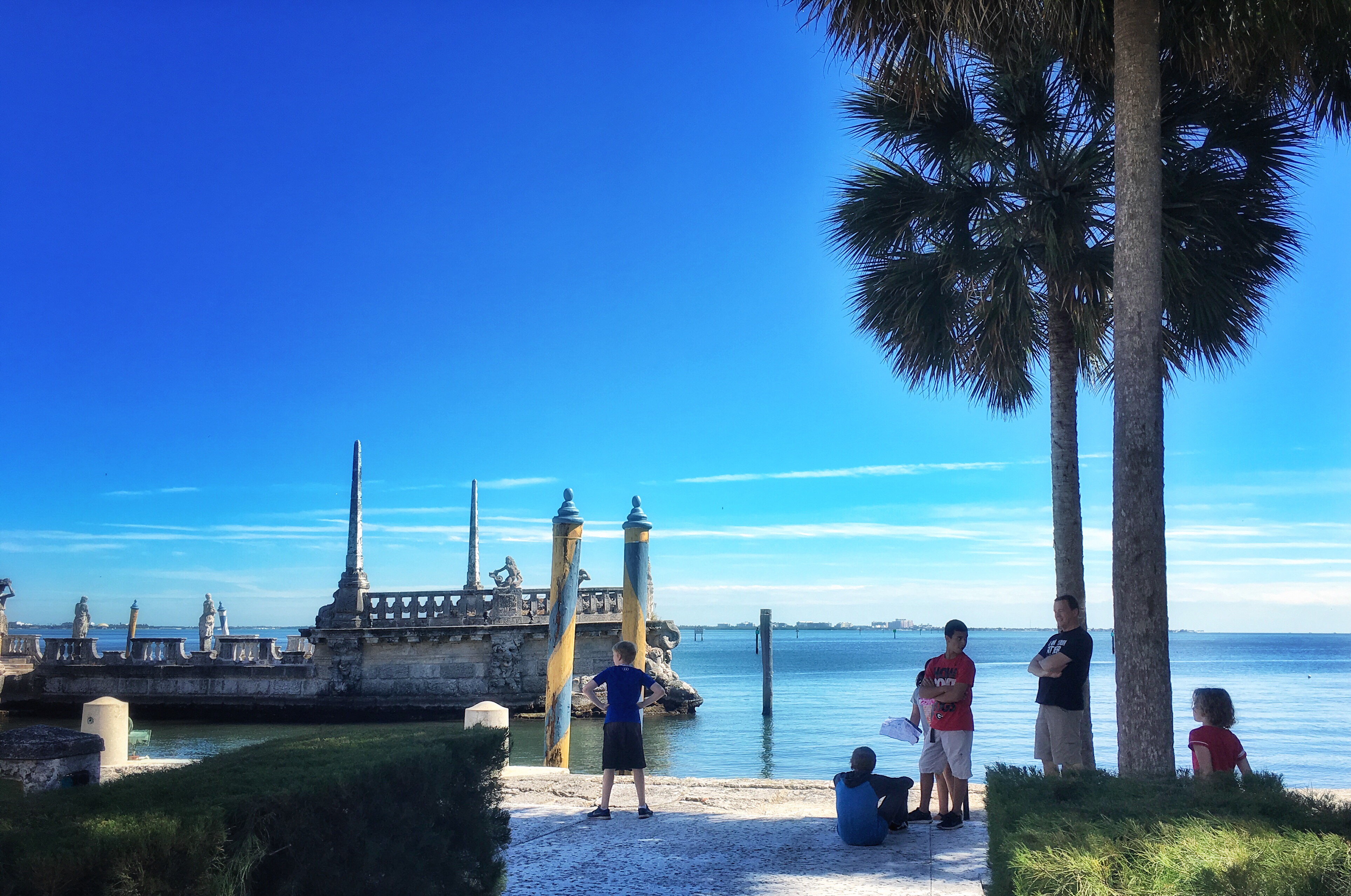
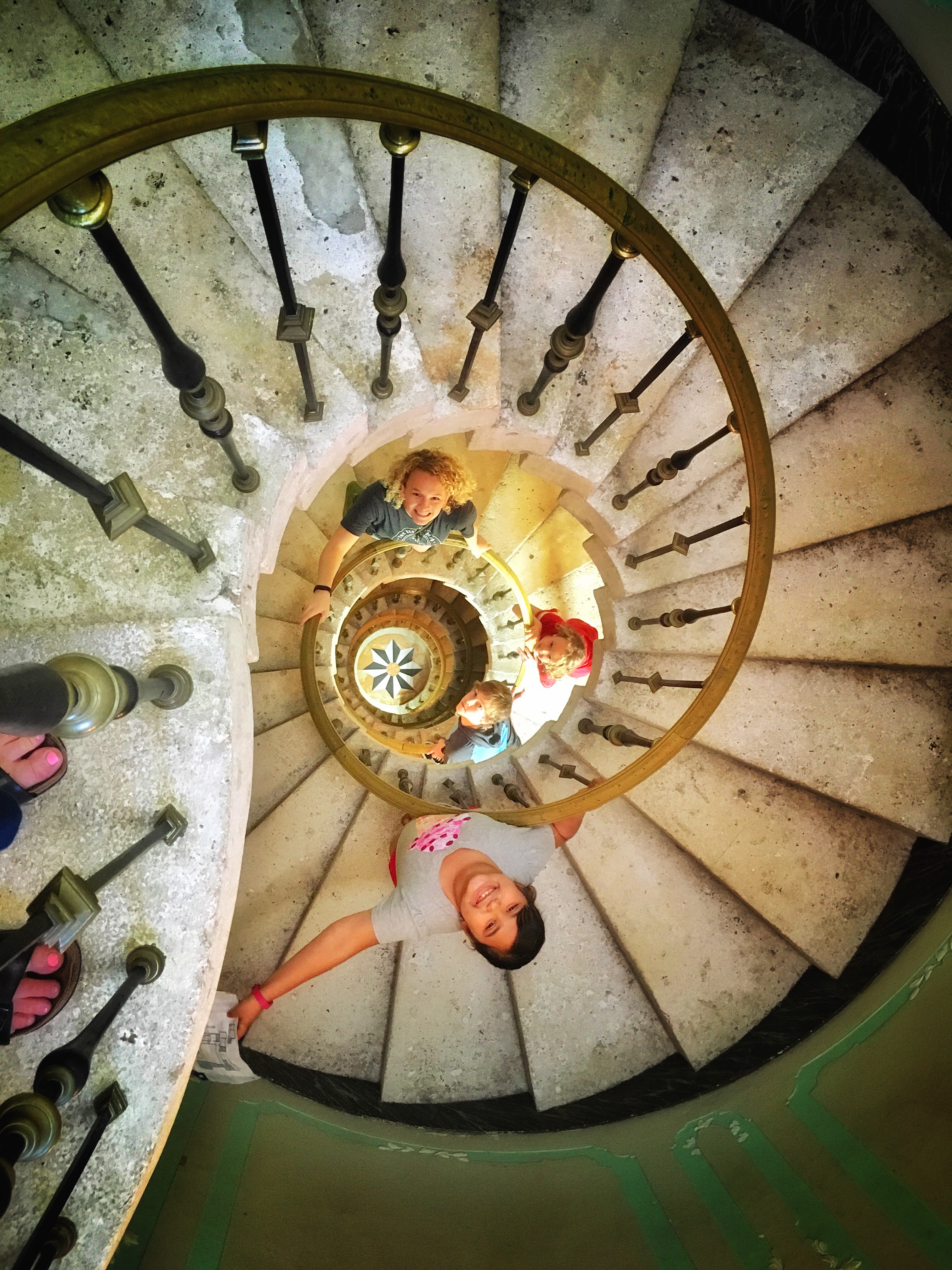
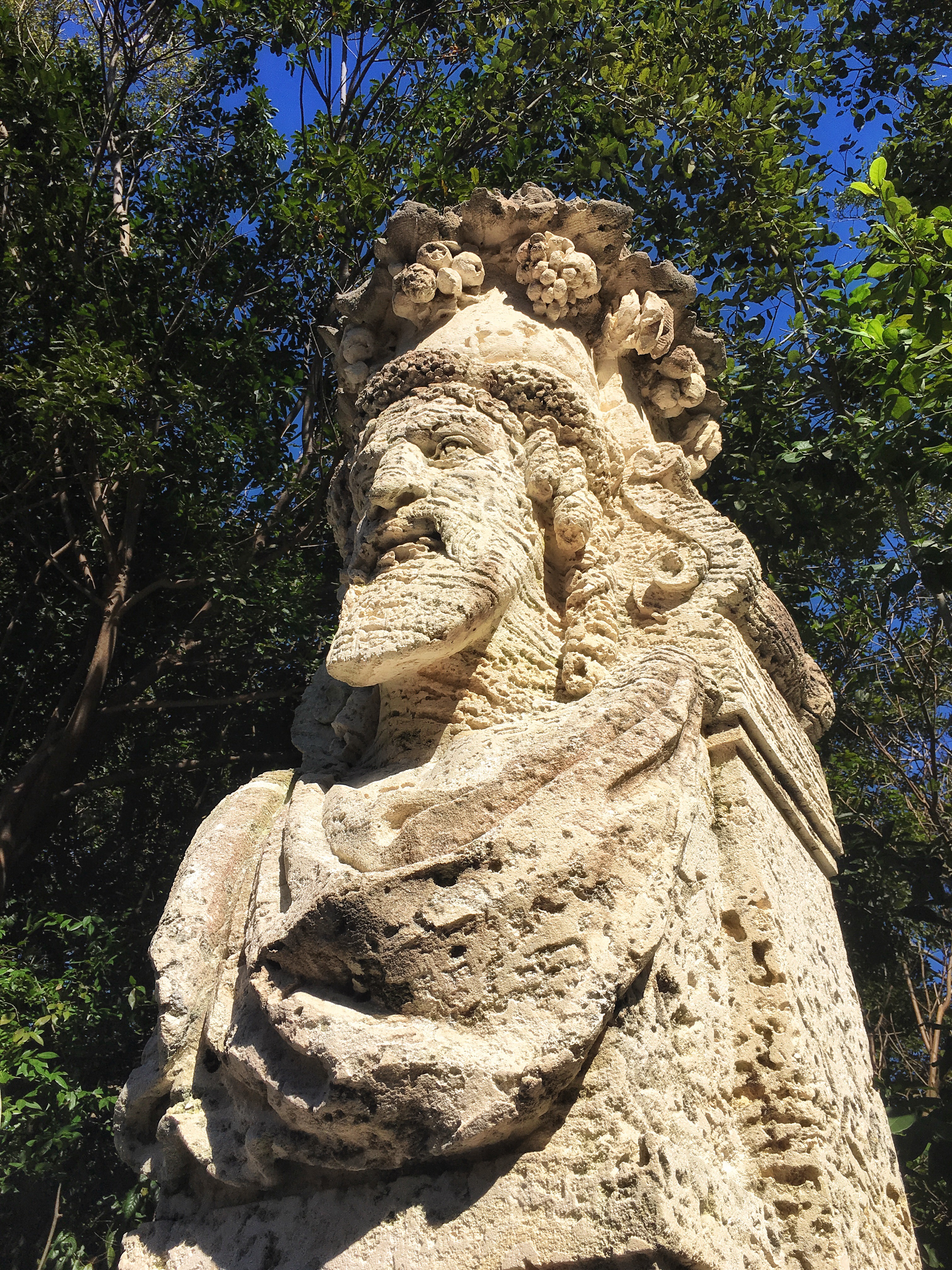 I was fascinated by the swirling fossils in the coral rock used to build the mansion.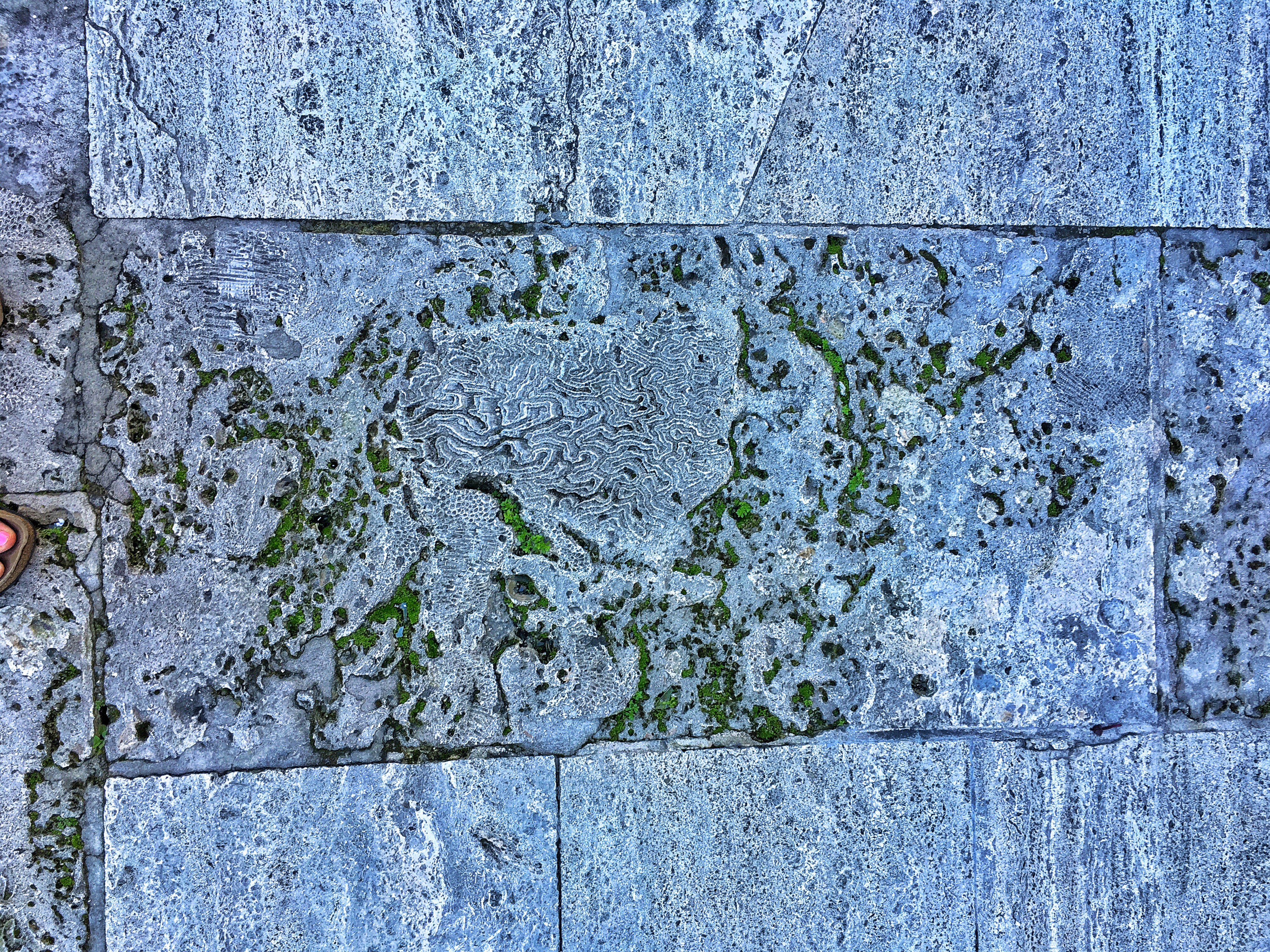
A Land Remembered ended as we drove along Ocean Drive on South Beach gazing up at the colorful rows of Art Deco buildings. We knew the ocean was there, but we couldn’t quite see it. About that time Sol, now an old man, curses the big hotels he built that “blocked out the sea.” Meandering along the famous road, we found ourselves crying over Sol, and all his regrets, but we could understand how it happened, too. Like the generations before him, he worked tirelessly to make progress, but what he earned was a disappointment he couldn’t reverse.
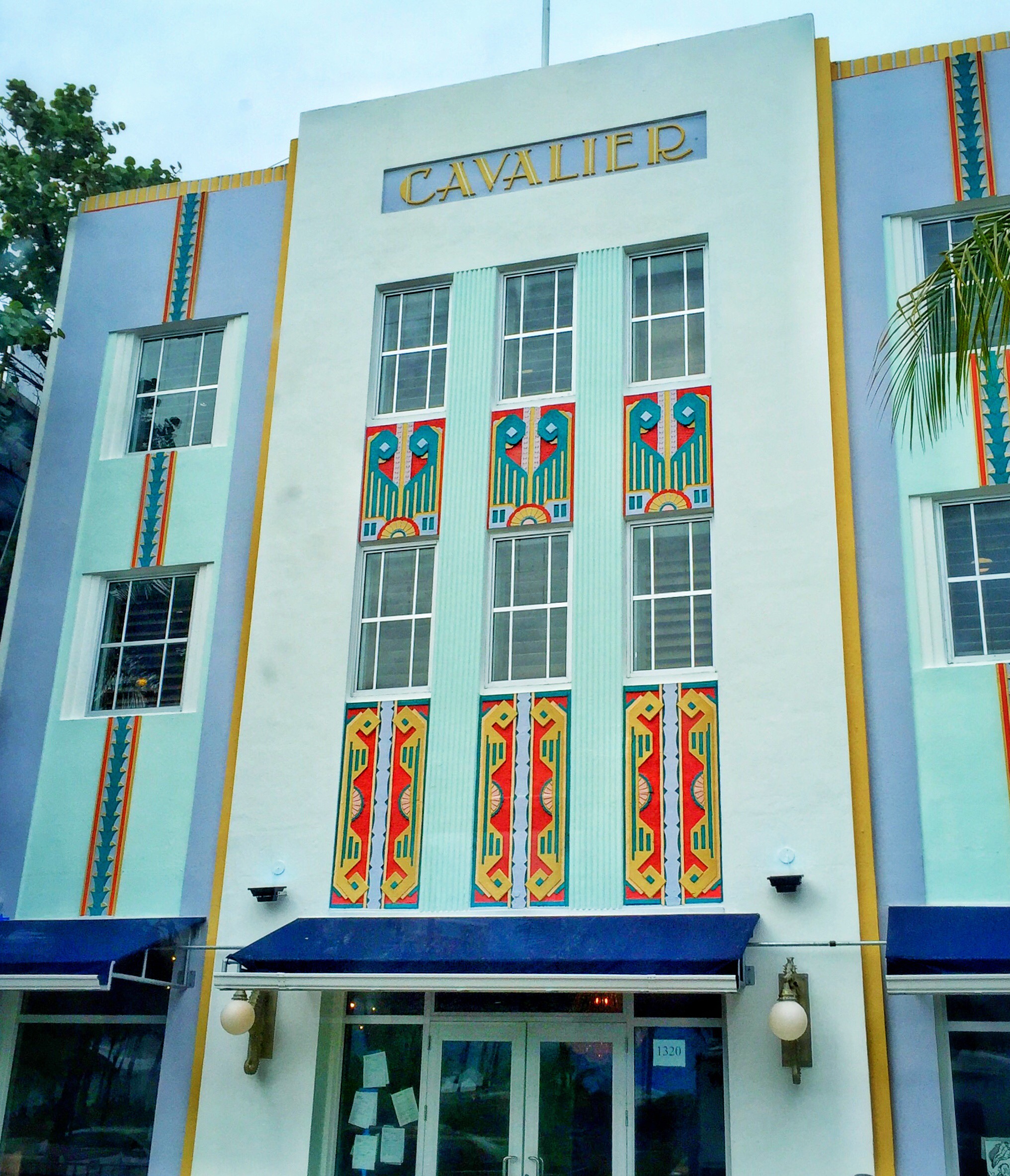
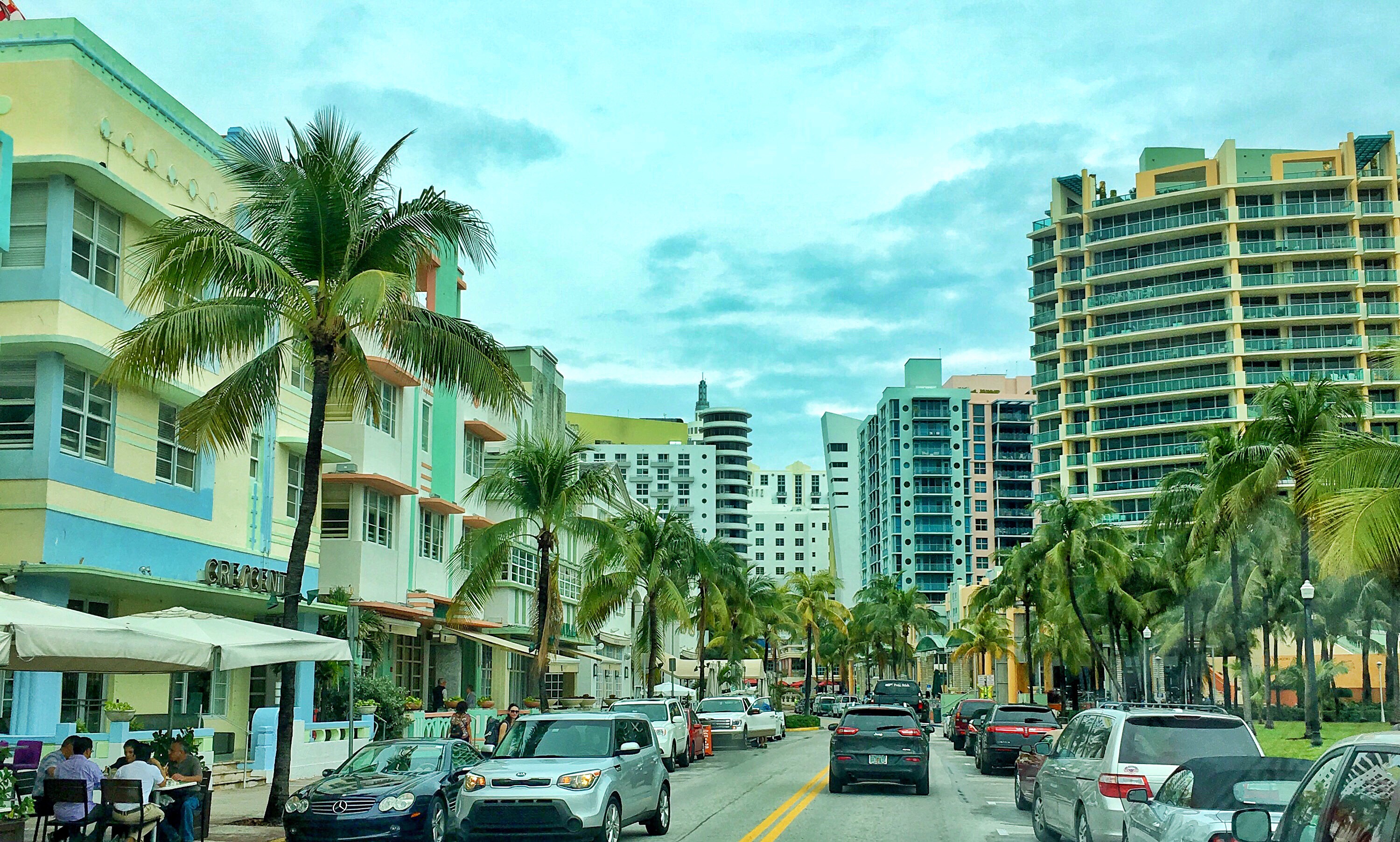
 We were a little disappointed not to run across any naked people on the beach. Perhaps it was too chilly. There were lots of interesting people to watch on Lincoln Road, though.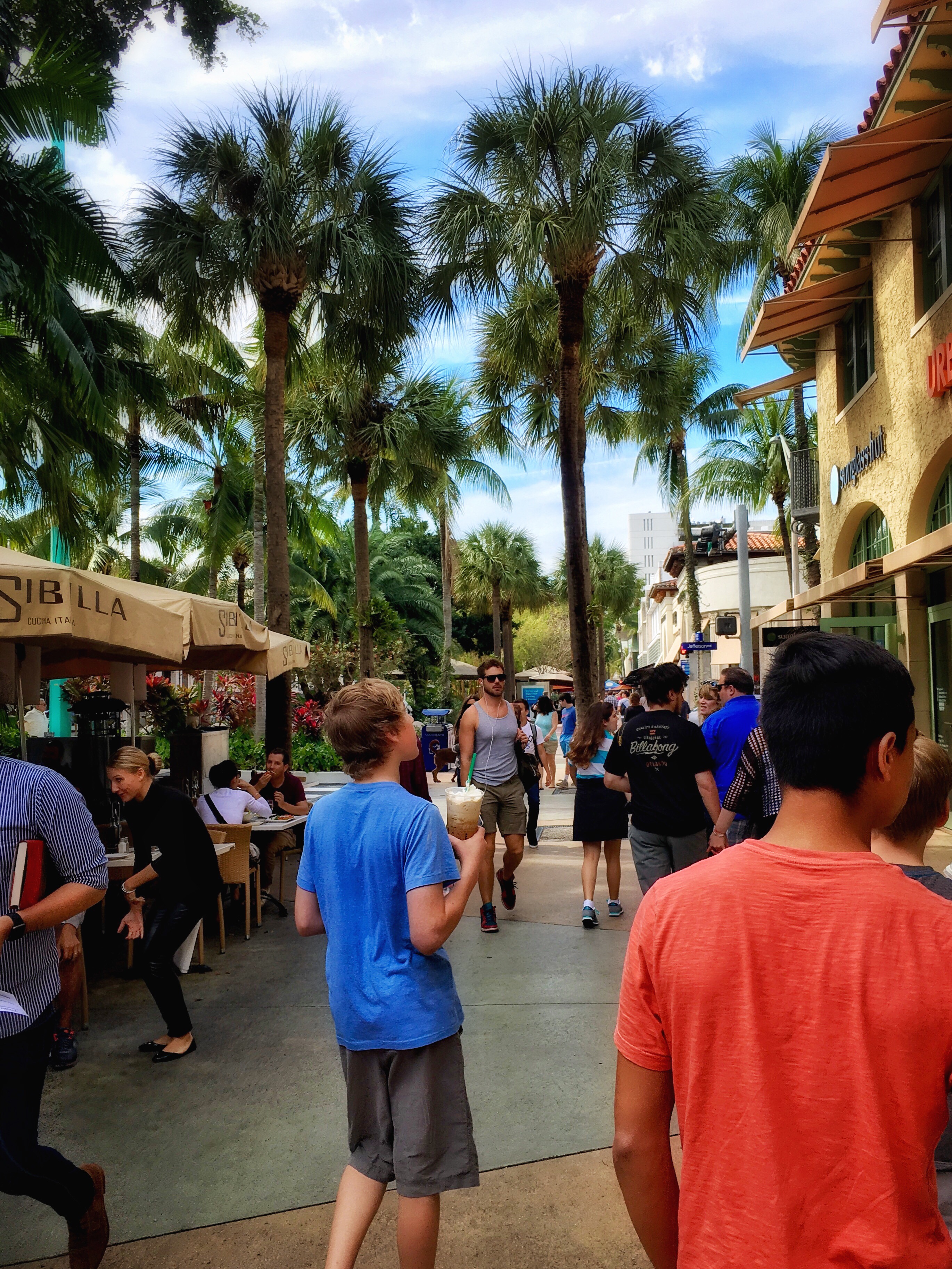
After Miami, we pushed on south toward the quiet, shallow waters of the Florida Keys.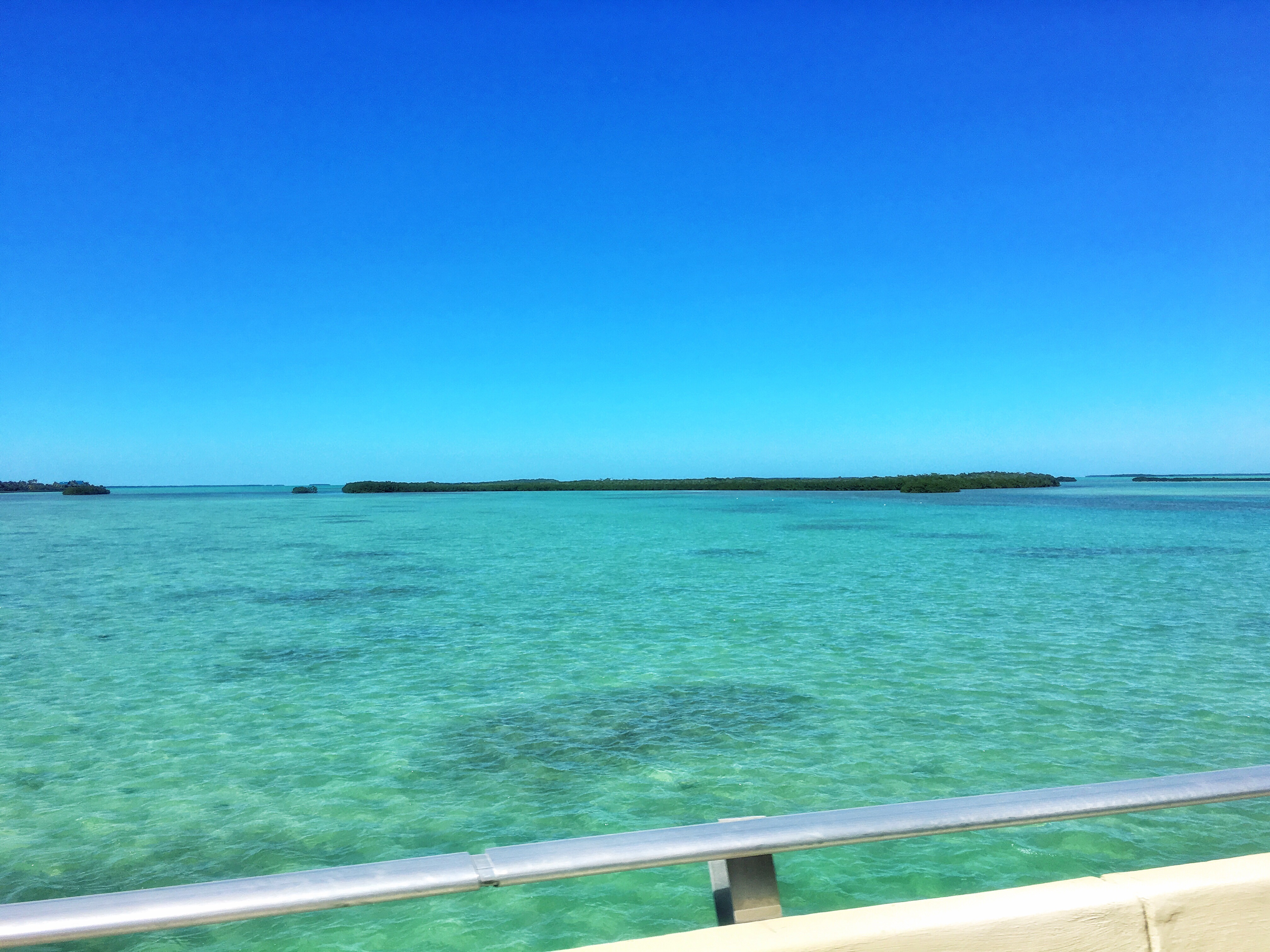 Southern-most point selfie at Key West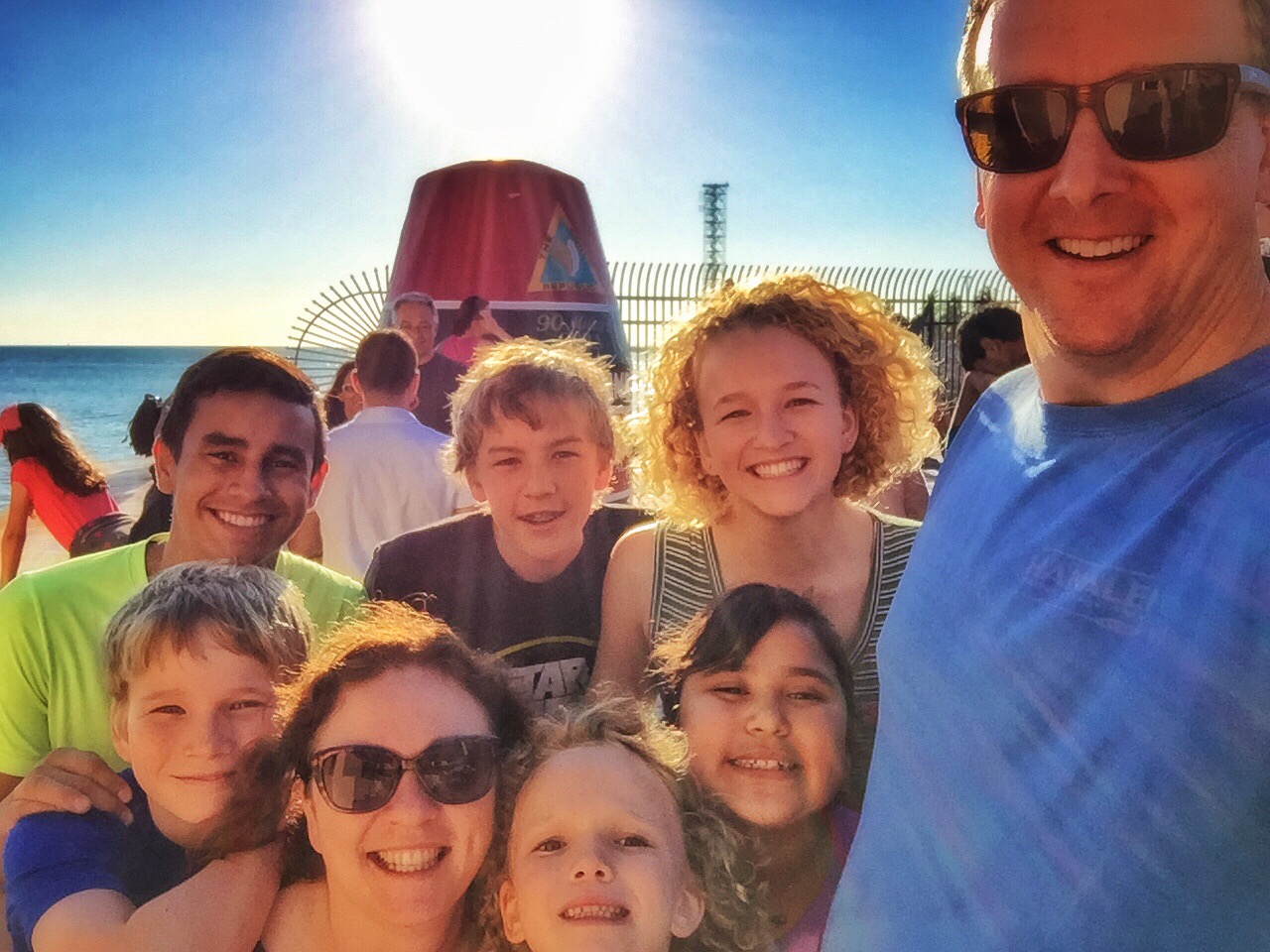
While touring Truman’s Little White House, we wowed our guide with the stories we learned about Truman from a fellow we met in San Diego recently. The guide was able to find a picture of Truman and our source’s father in a book.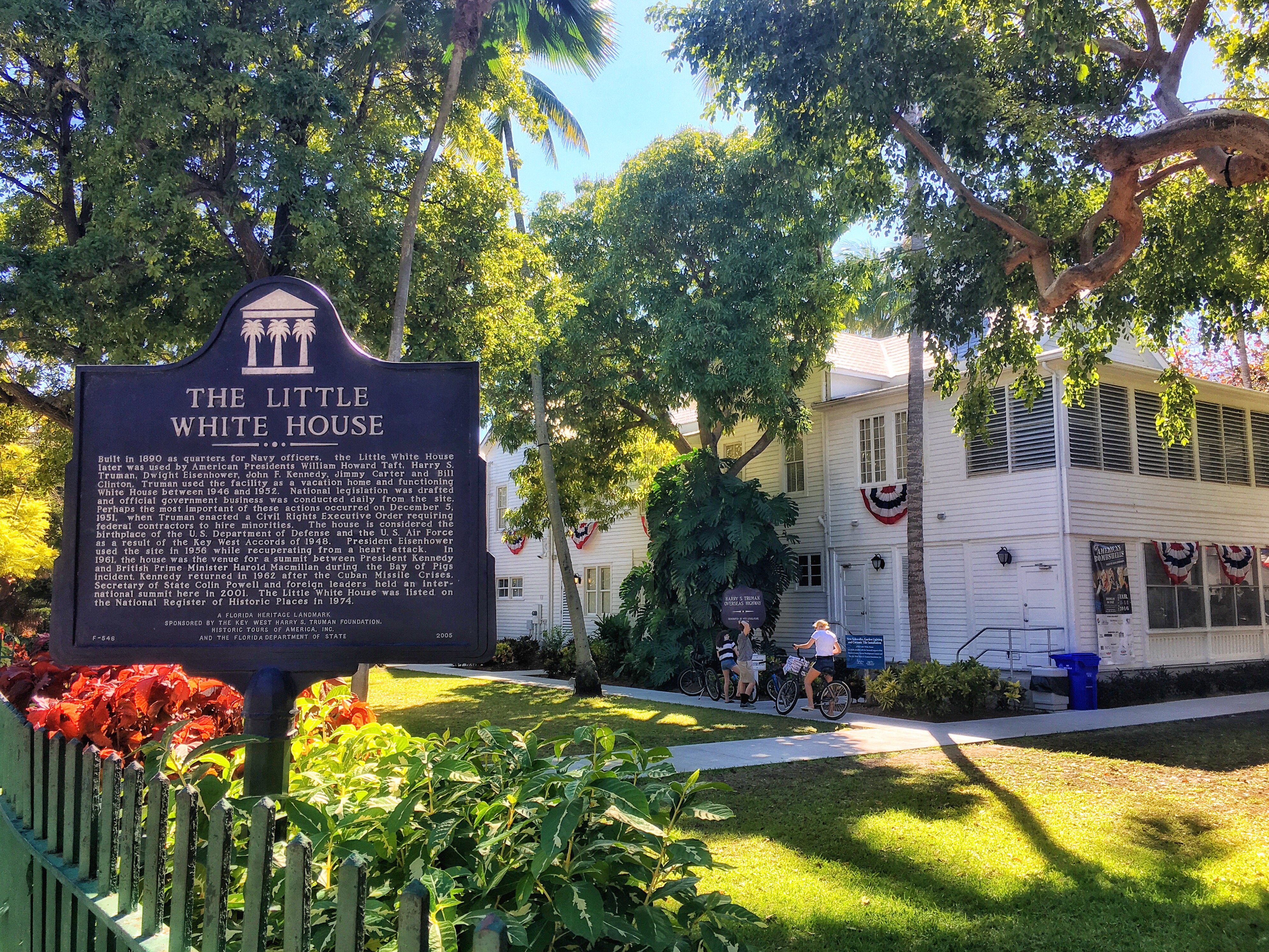
For me, the best part of Key West was all the gingerbread. 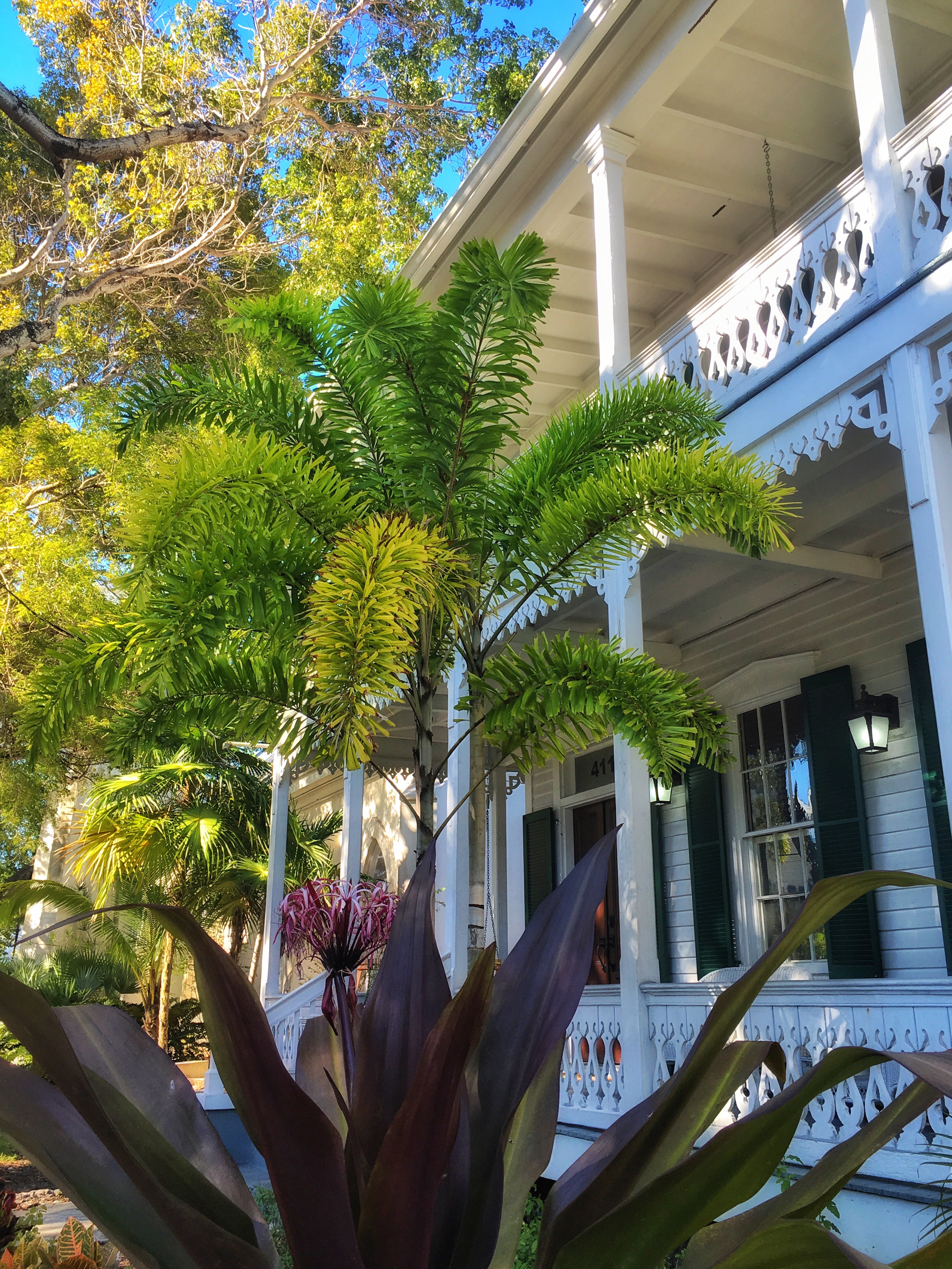
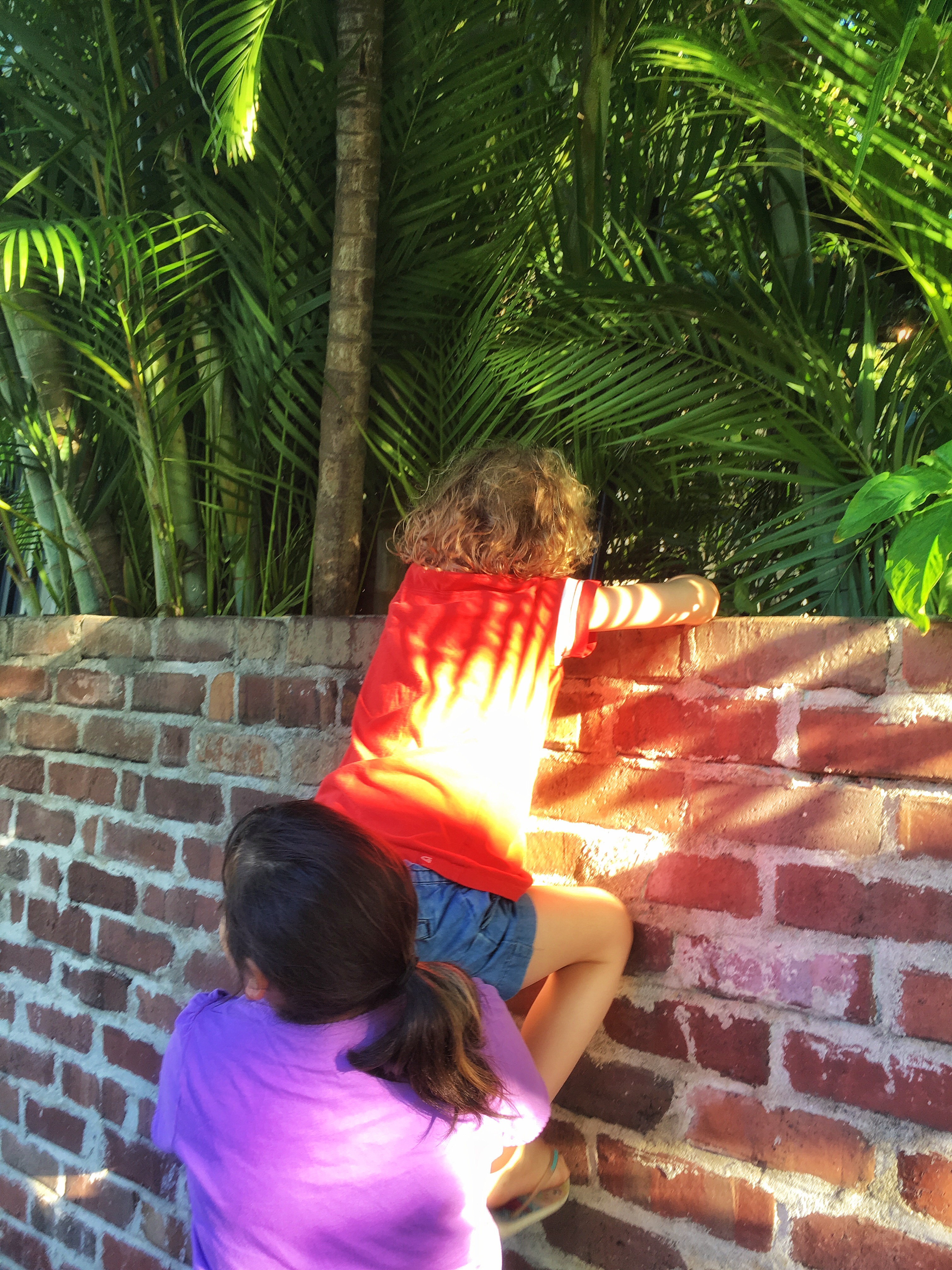 Nan was determined to get a look at Hemingway’s polydactyl cats without paying the $13 entrance fee. At the ticket booth, they thought she was cute and let her slip in briefly.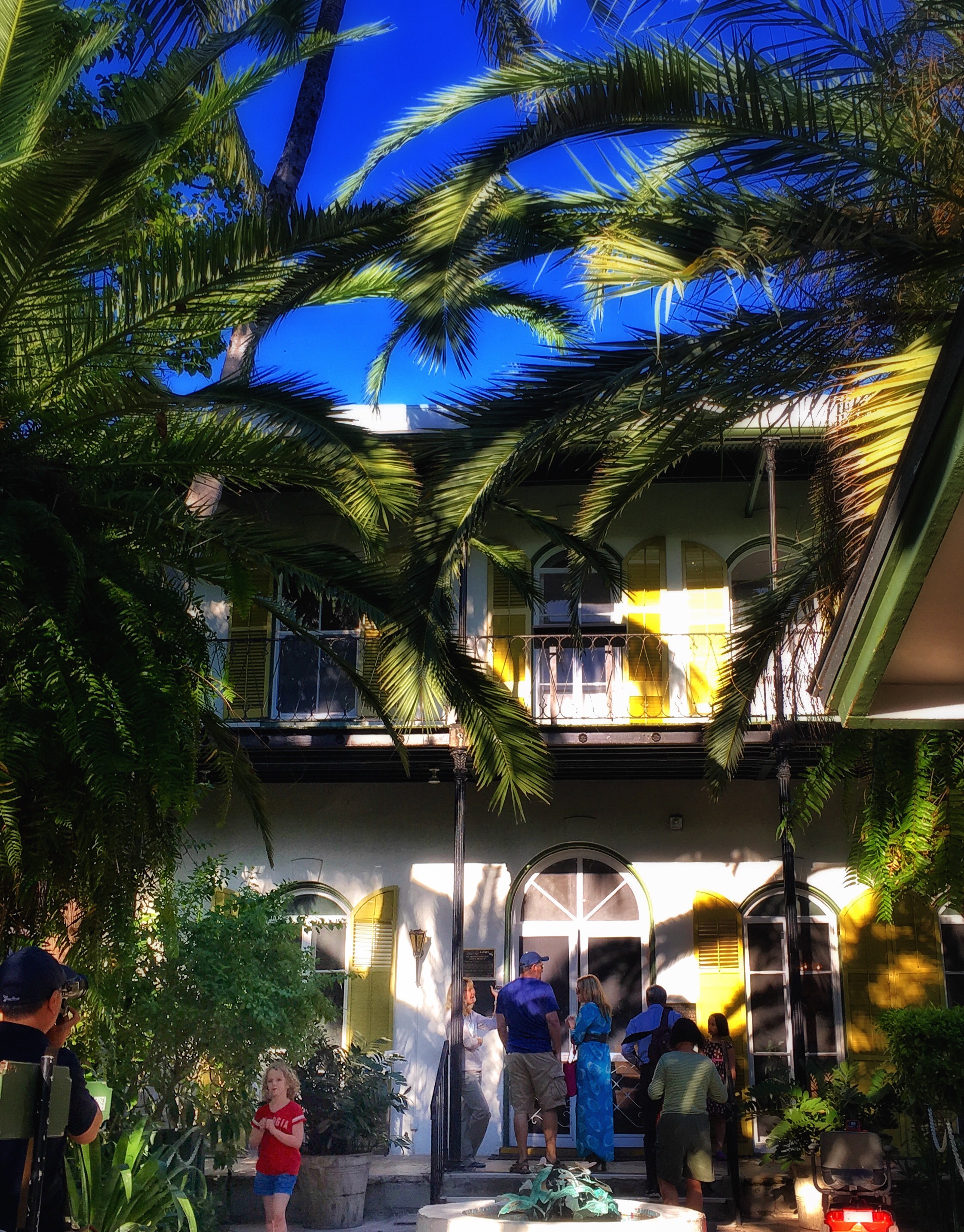
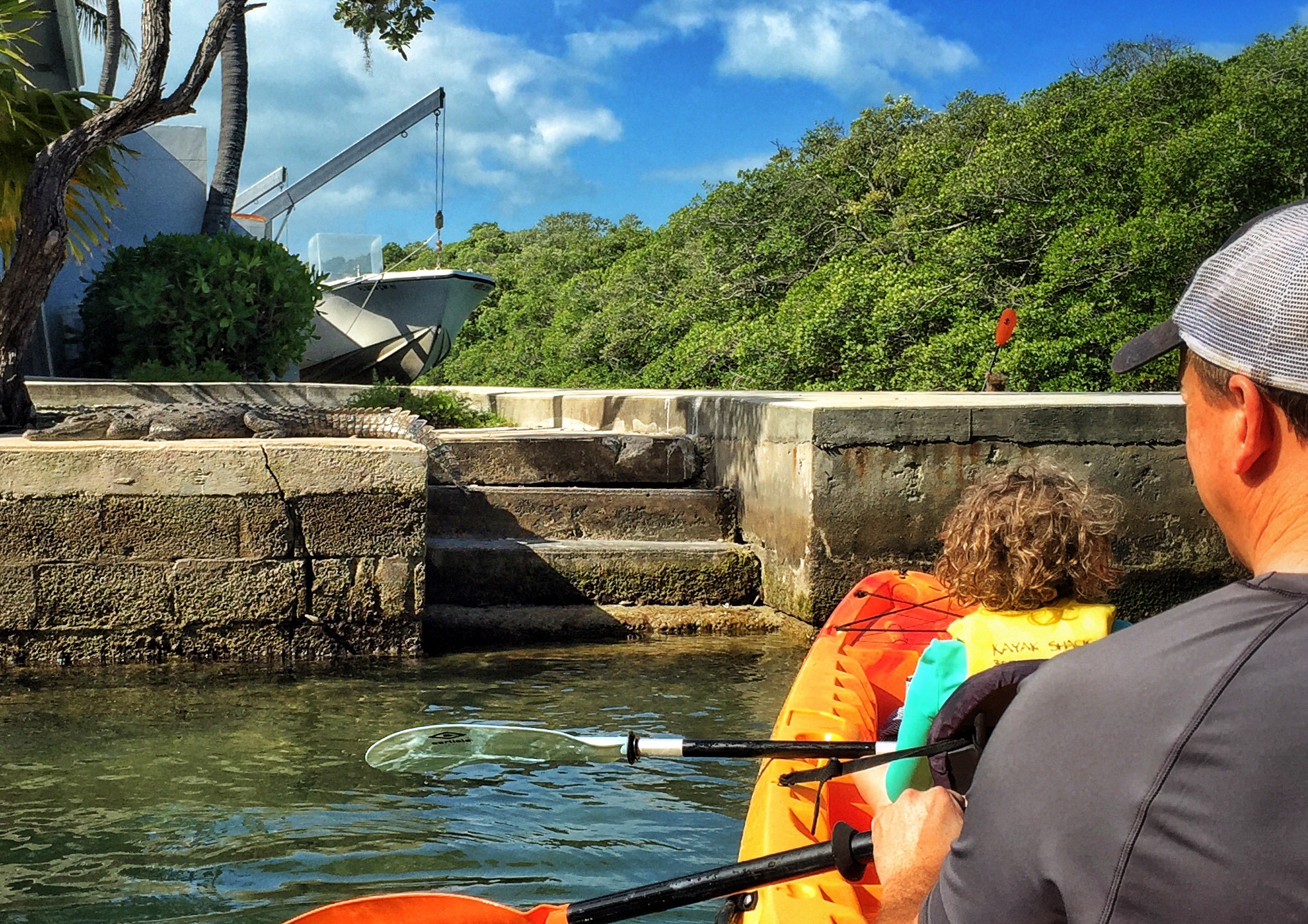 We saw a crocodile sunning itself on a dock at the start of our kayaking trip and decided not to fall out of our boats.
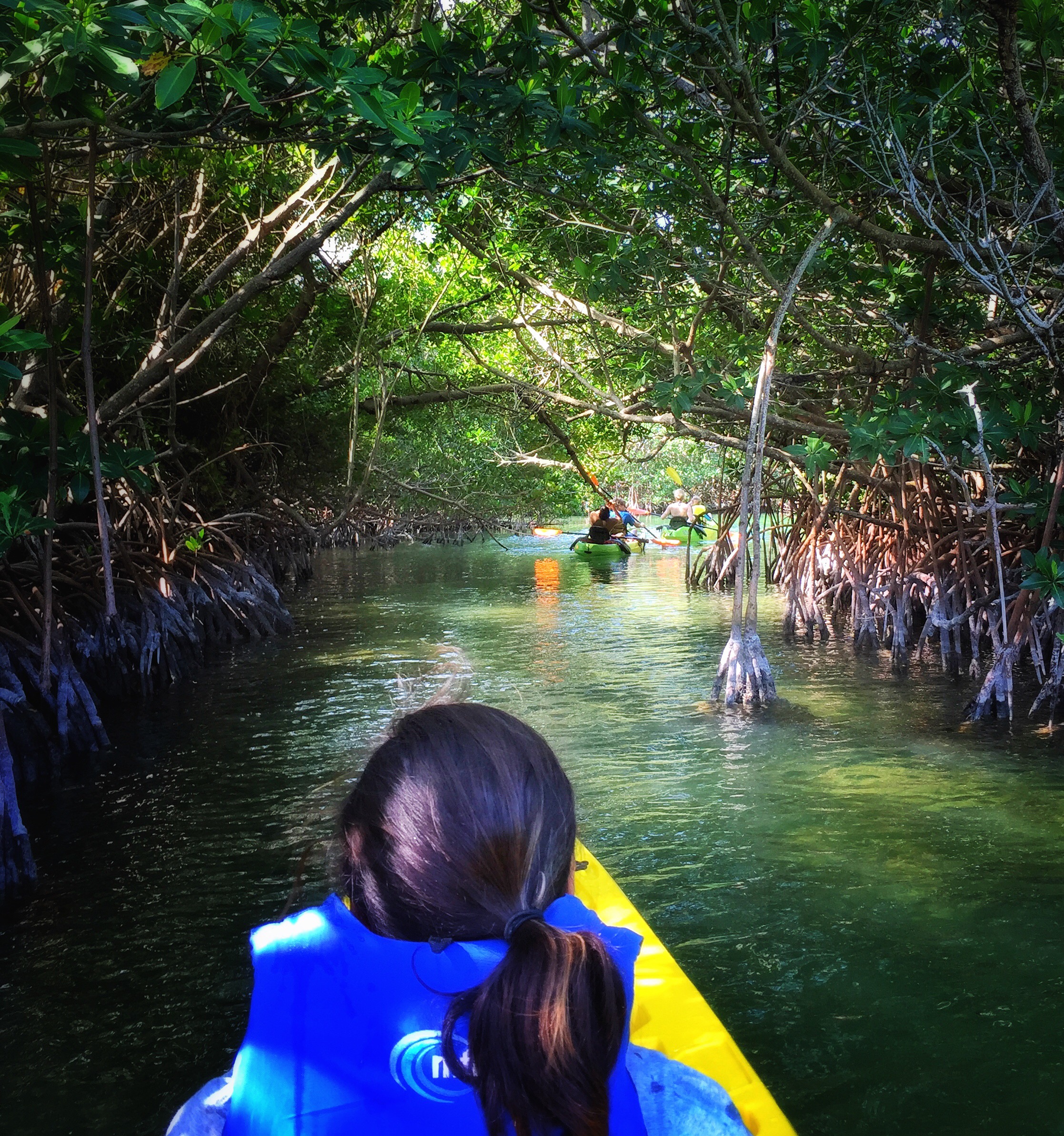
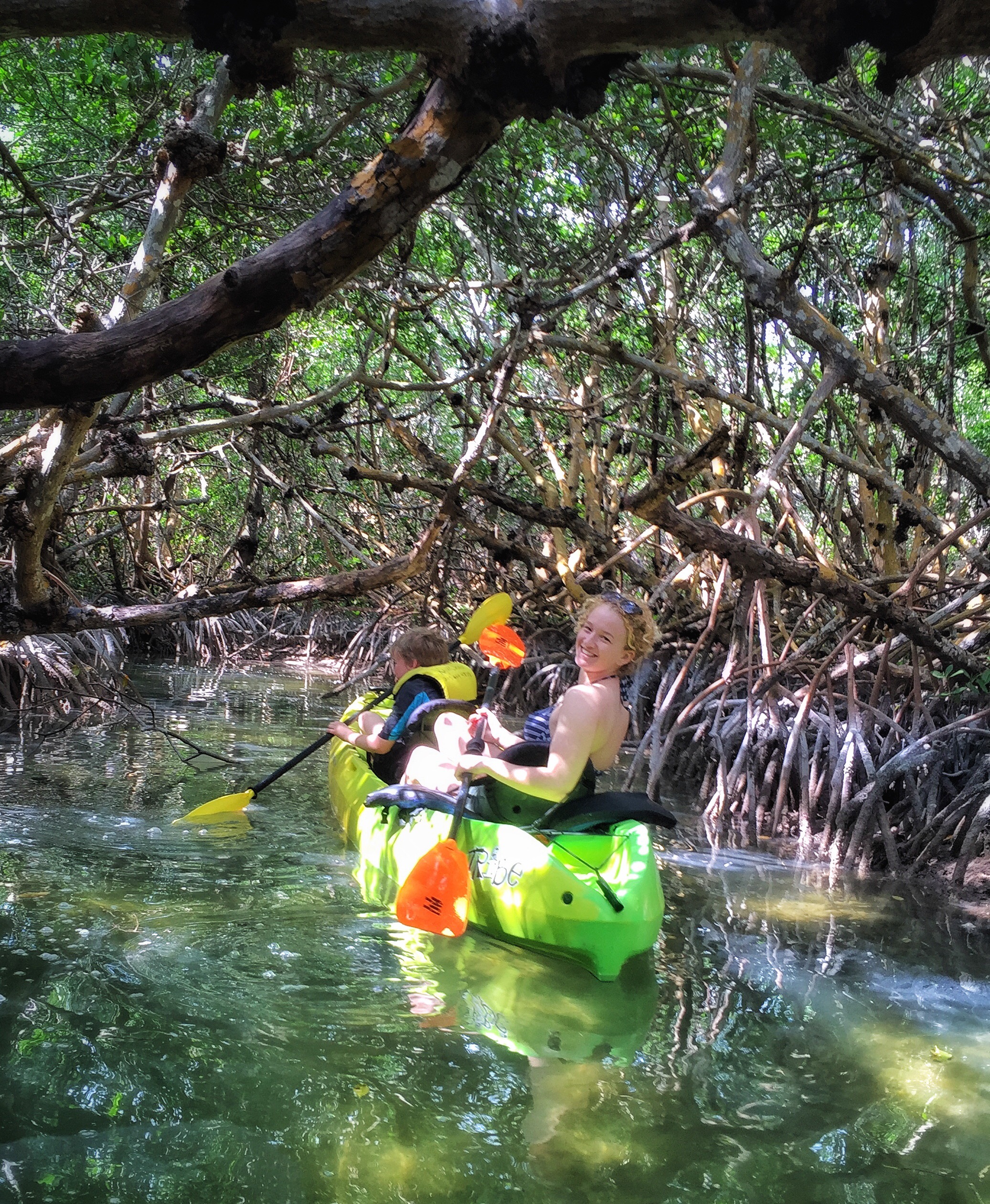 The mangroves were a little creepy, but they were full of colorful iguanas and a variety of waterbirds. In the water, we could see fish, rays, crabs, jellyfish, sea urchins, and corals.
After we turned-in our kayaks, we ate lunch and fed the huge tarpons at Robbie’s Marina. No one lost a finger.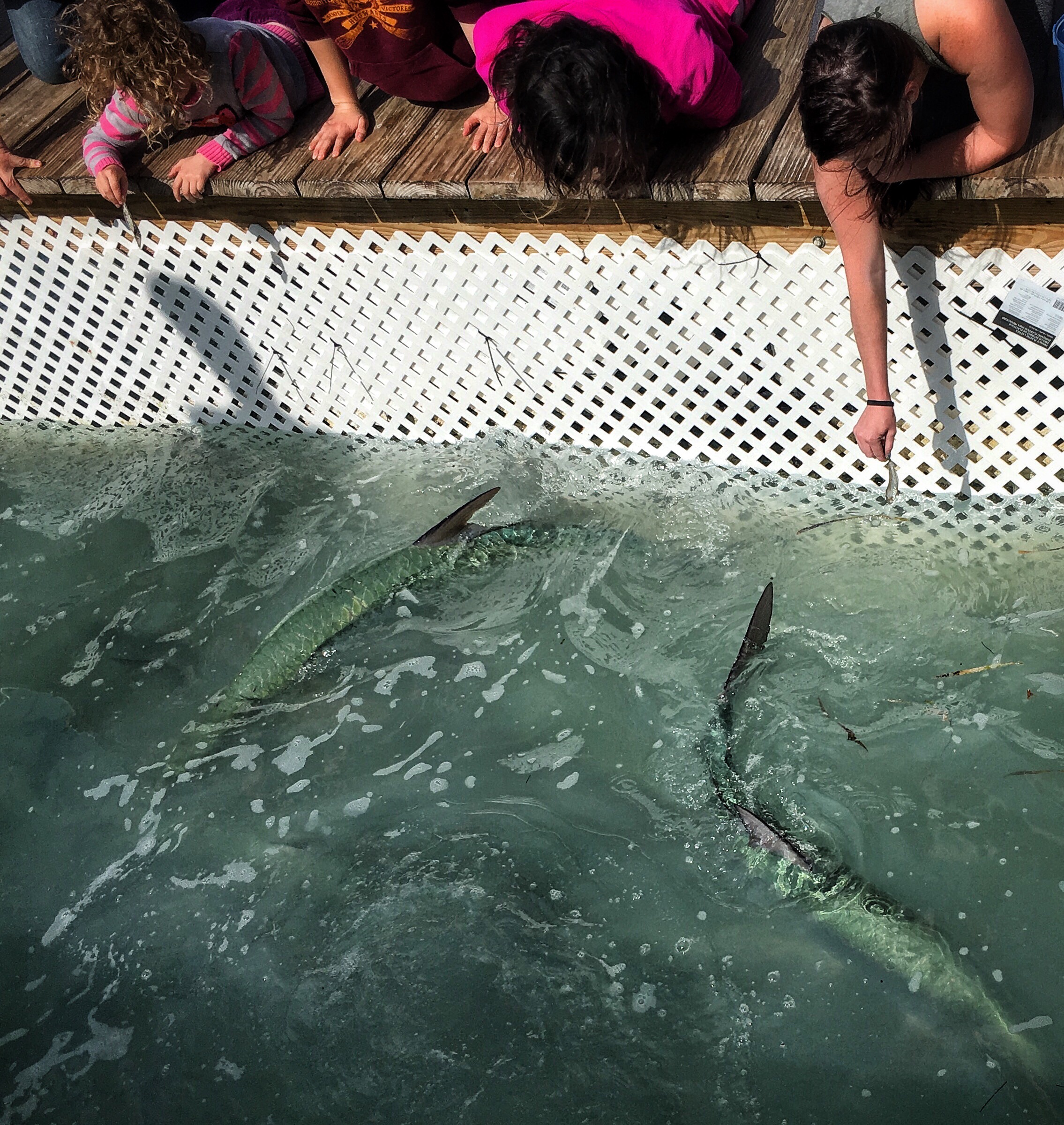
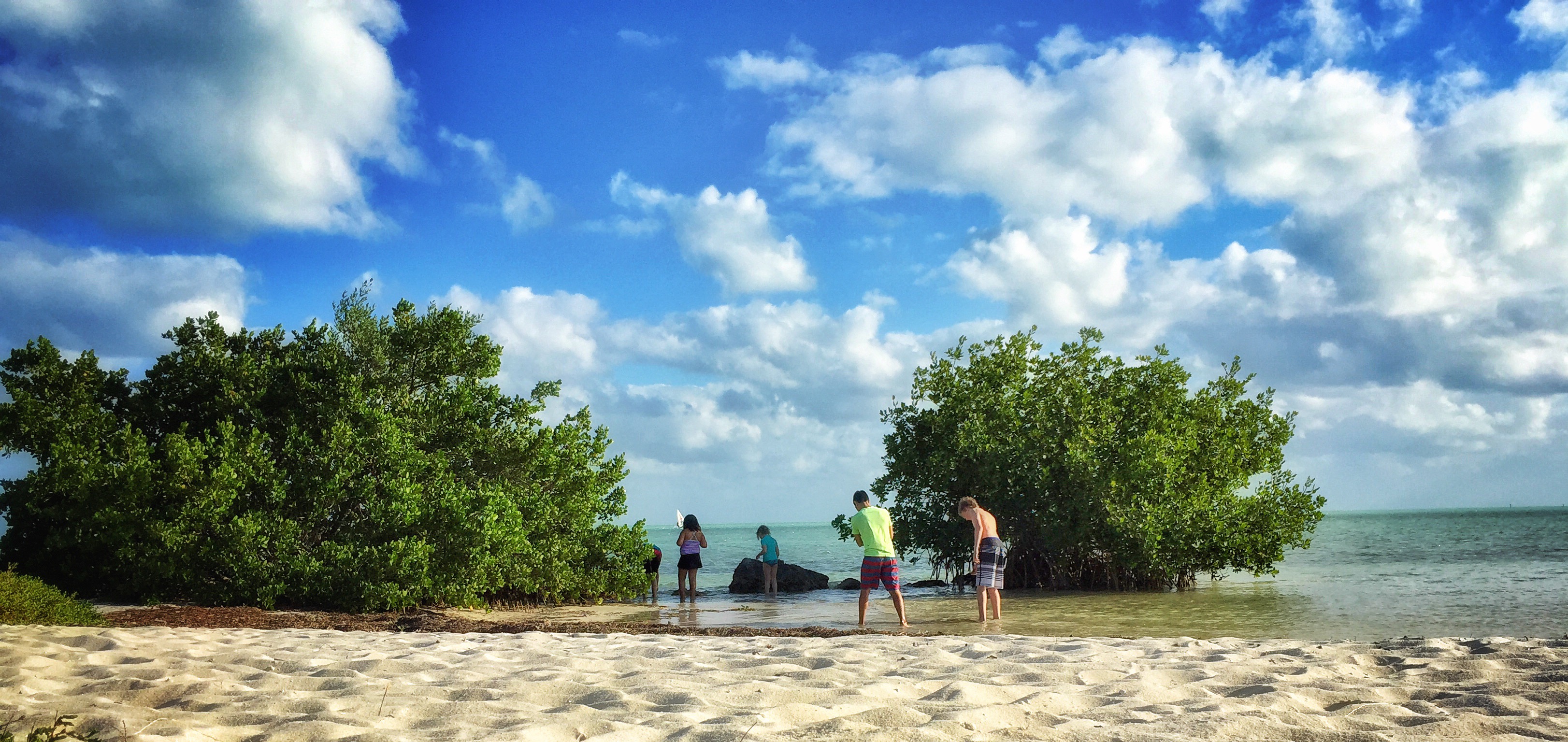 Our biggest find on the beach was something we initially dismissed as plastic. Fortunately, the tentacles and electric-blue color warned us not to touch it. It turned out to be a Portuguese Man-O-War.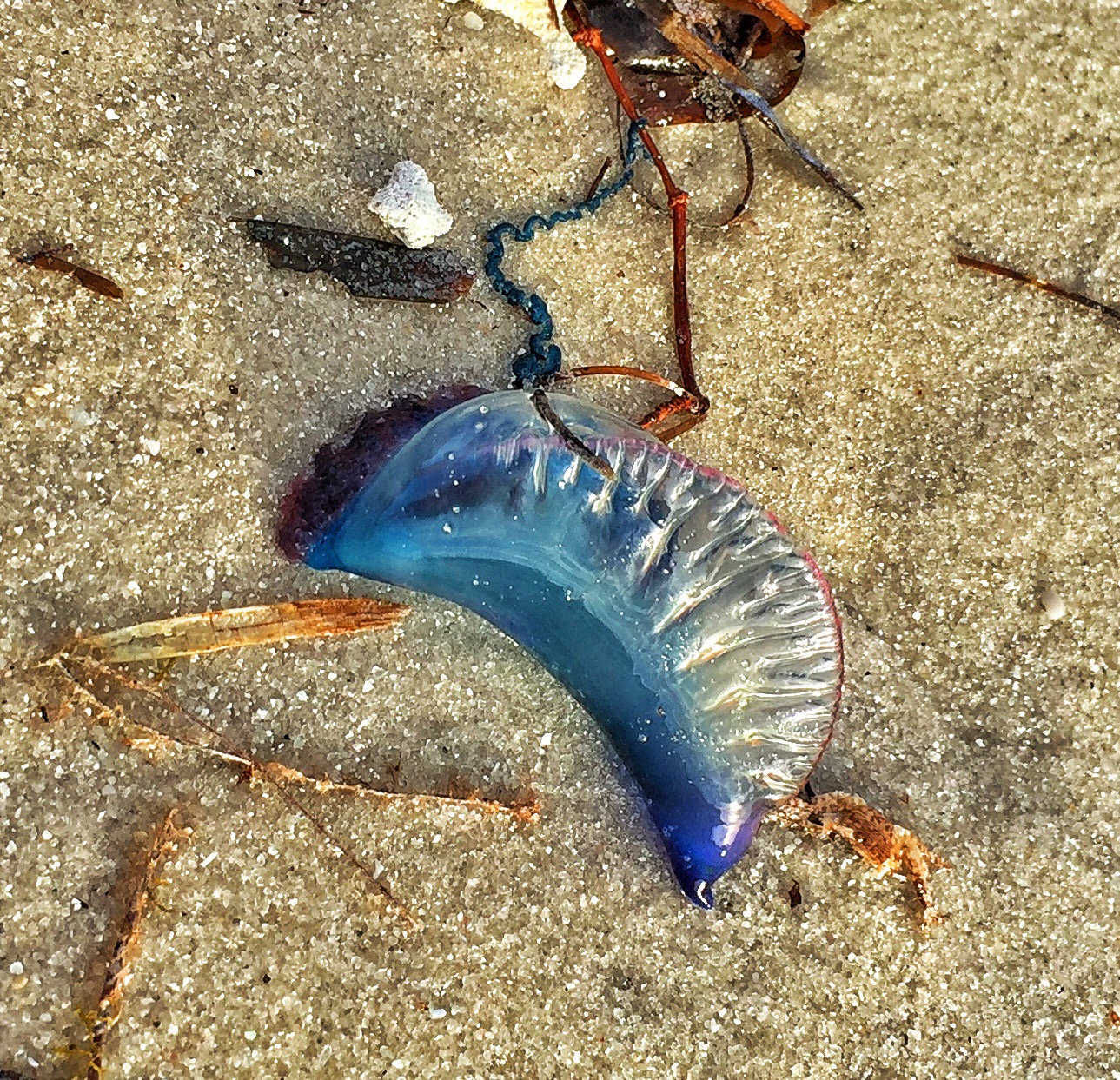
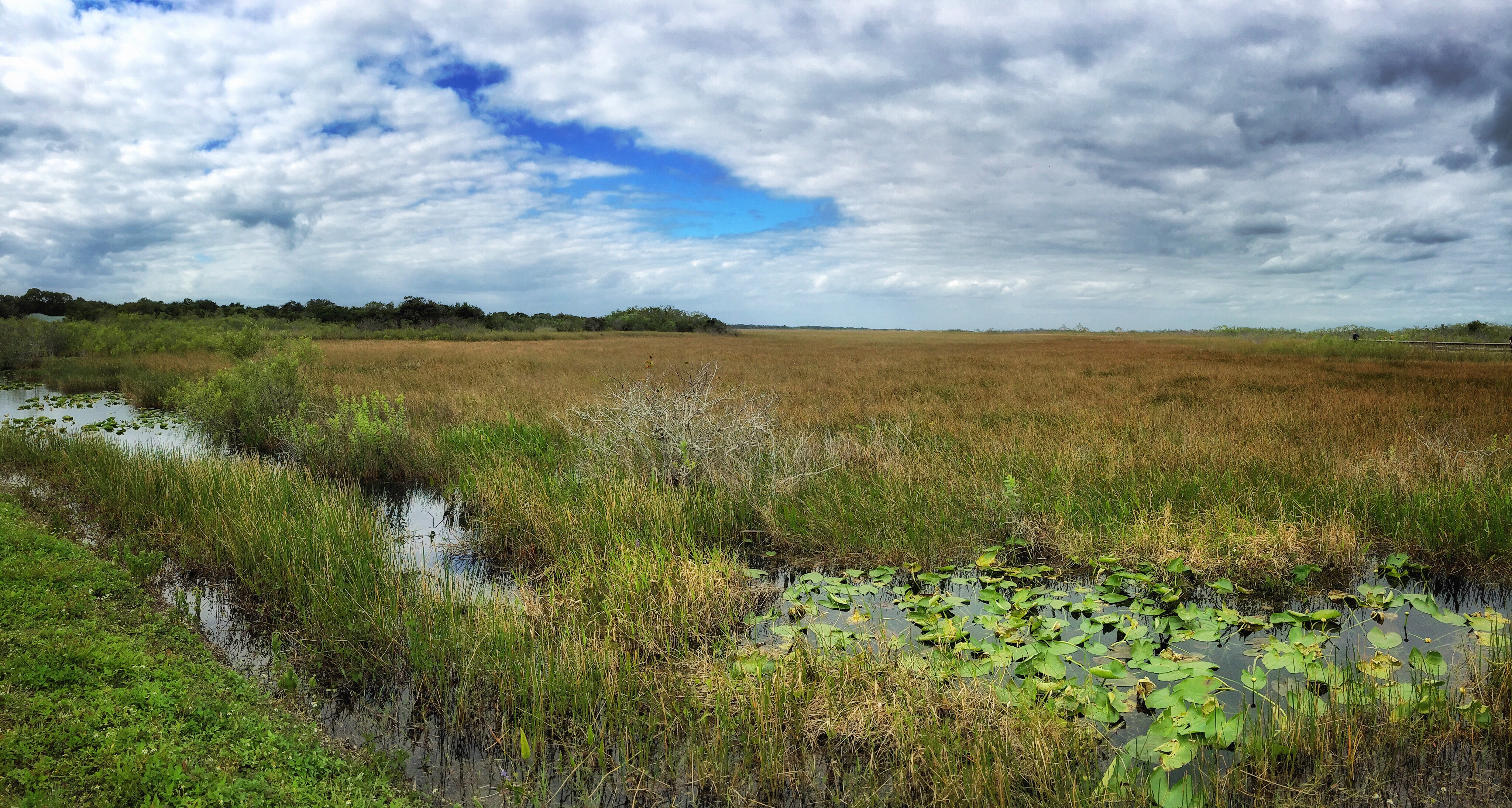
Throughout our trip, I read headlines about Lake Okeechobee spillage into the estuaries below the lake. There were huge aerial photos of the polluted, brown water (some say too polluted to ever correct) flowing into the Gulf of Mexico. I thought about the McIveys, and how many of the good-faith efforts to prevent flooding disasters, along with irresponsible industrial and agricultural pollution, have turned the pristine sanctuary that was Lake Okeechobee into a pariah. I like to think I’d have done better, but I’m not sure I would have. The McIvey’s didn’t have bad intentions; for a long time they were just trying to survive. But collectively, they changed Florida for good and ill. 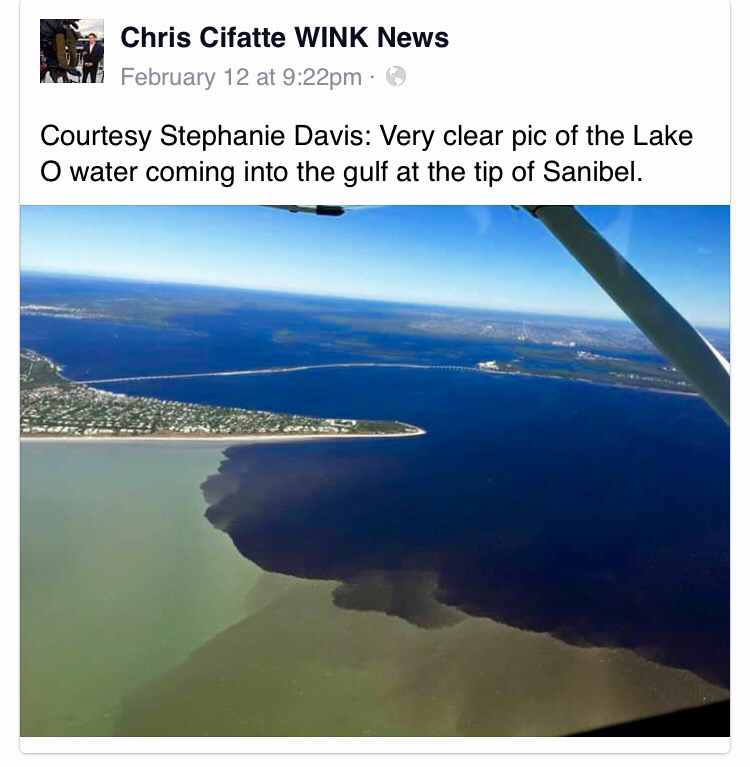 We wrestled with this dilemma—how to utilize natural resources without destroying them–as we drove through miles of farmland between Everglades park and the vast, concreted entertainment center of present day Kissimmee. We didn’t solve the problem, but we won’t be forgetting this cautionary tale anytime soon.
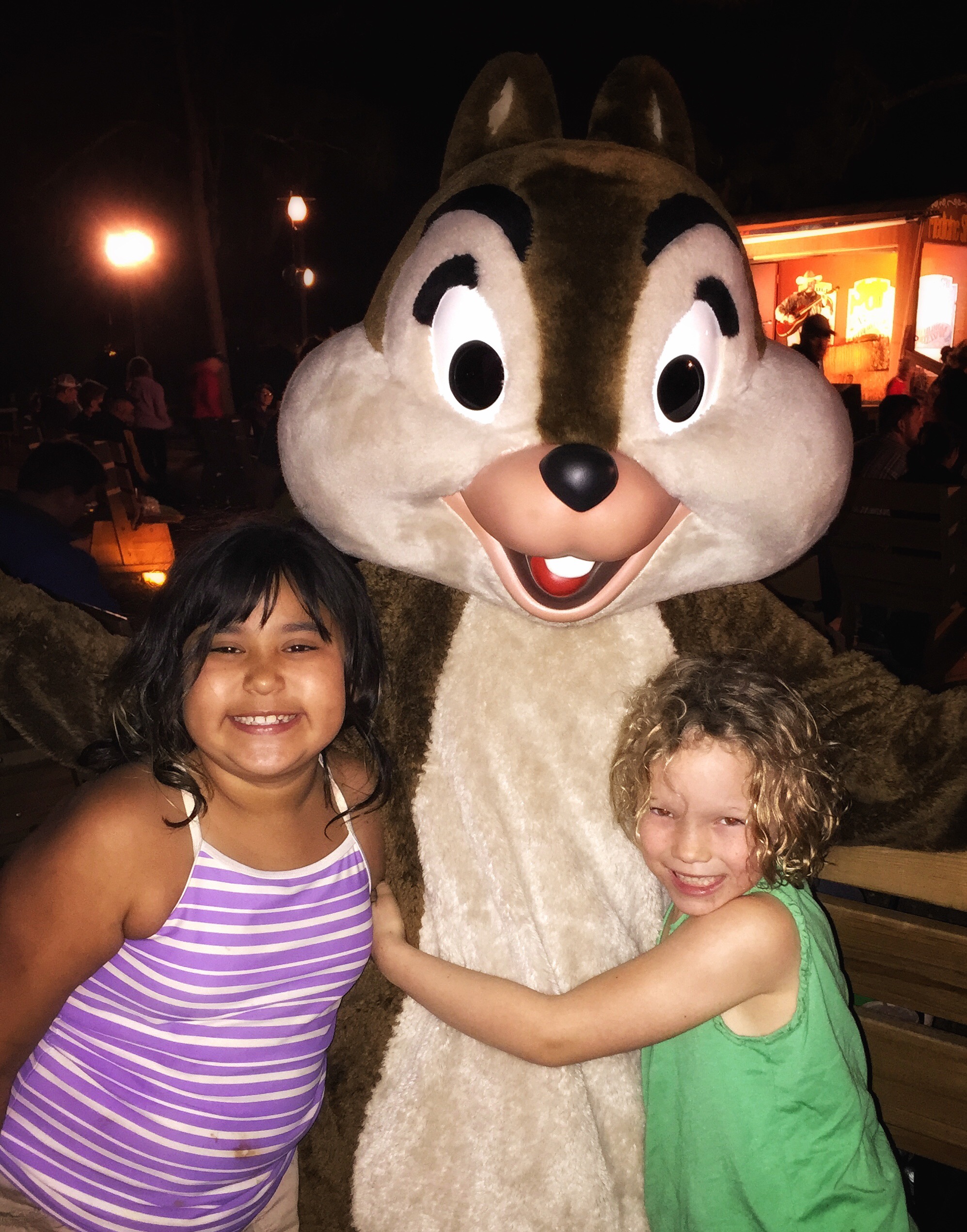
Brandon had a conference in Orlando, so he dropped us off at Fort Wilderness, the campground at Disney World. Our campsite was visited by turkeys and armadillos, and we sang campfire songs with some friendly chipmunks.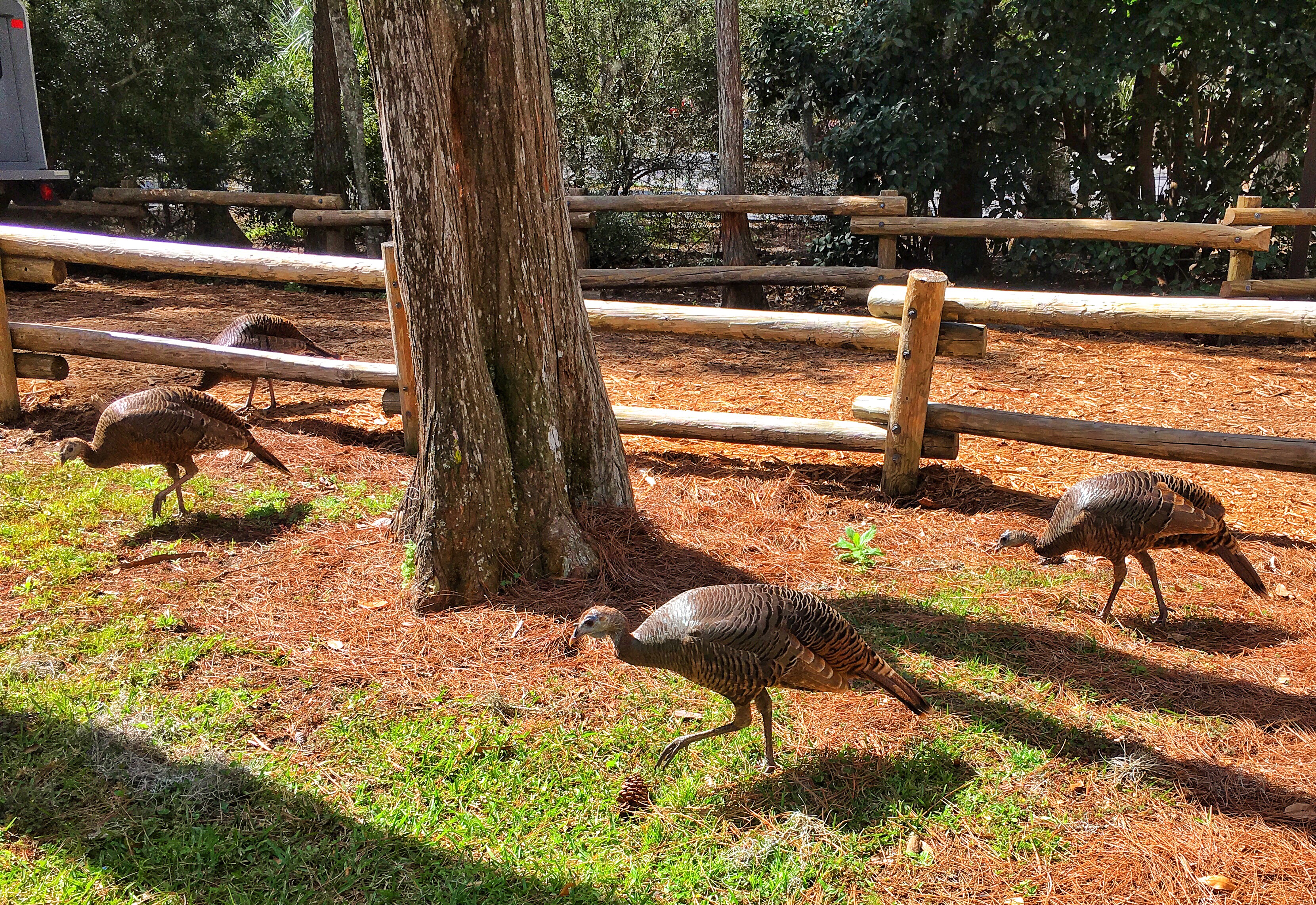 Fast passes, magic bands, character encounters–the place just overwhelms me. Thankfully, our friend, Stacey Gross, is a Disney vacation planner, and she helped us make reservations and buy tickets for a couple of parks. We came, we saw, we Disney-ed.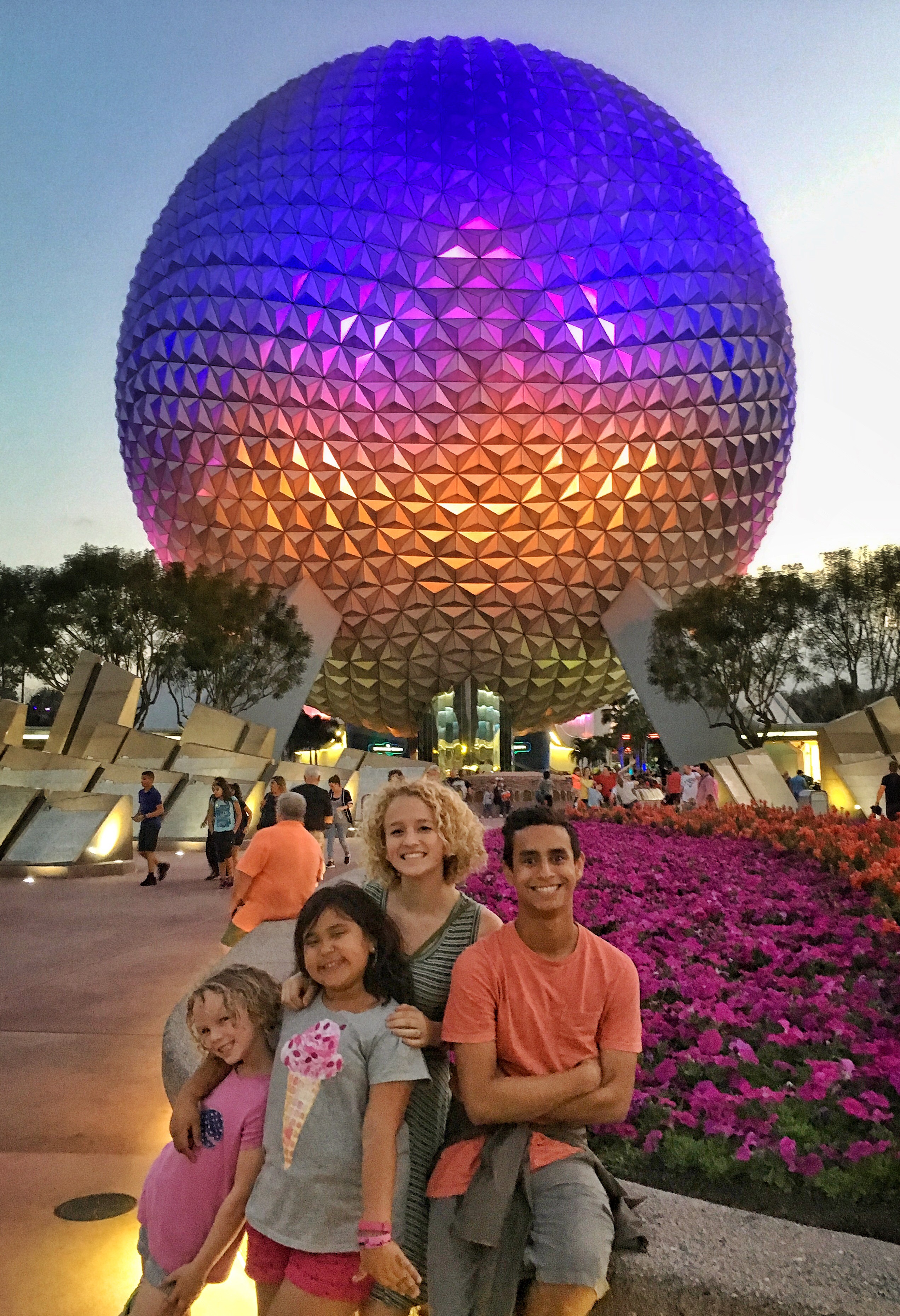
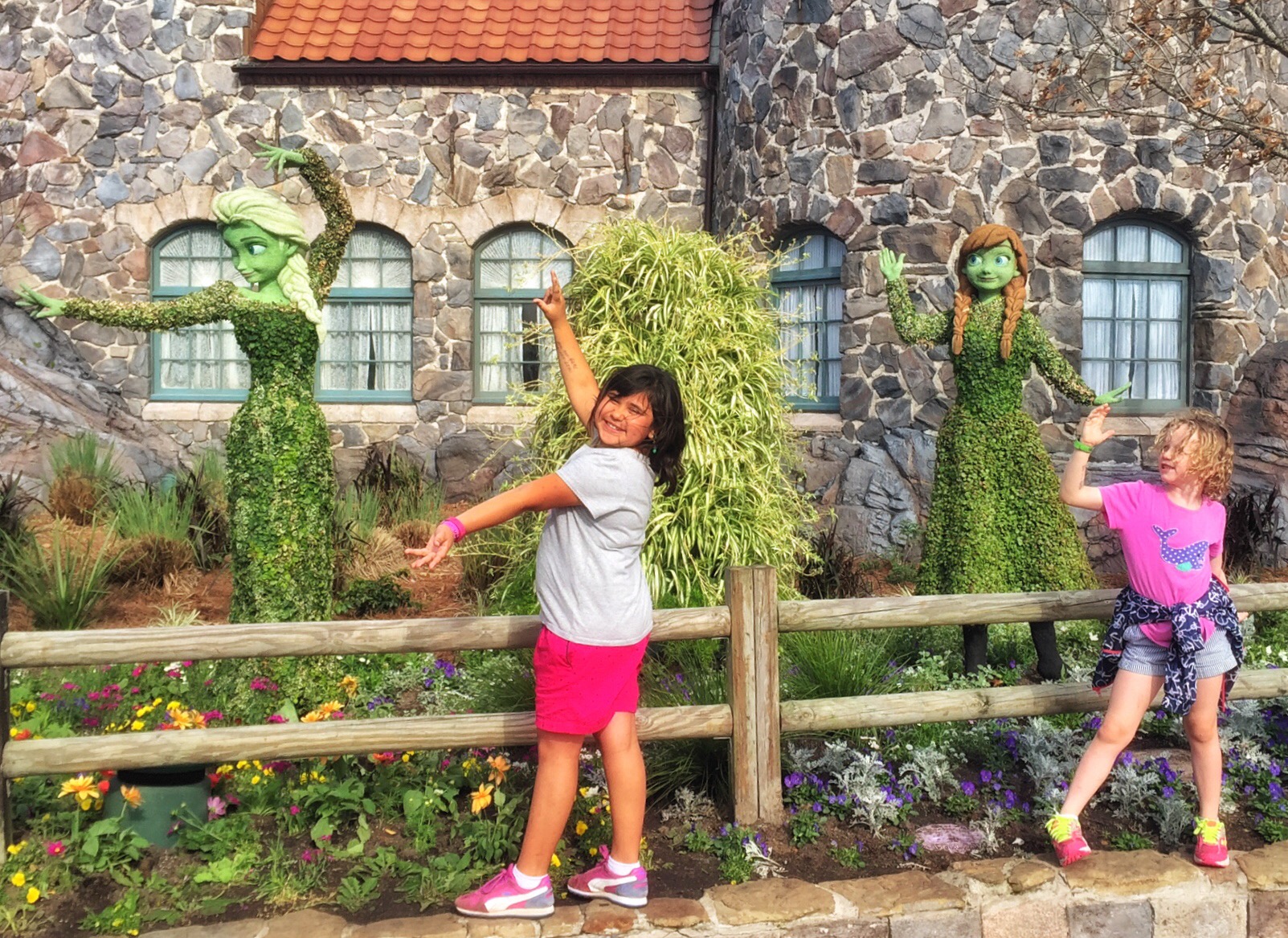
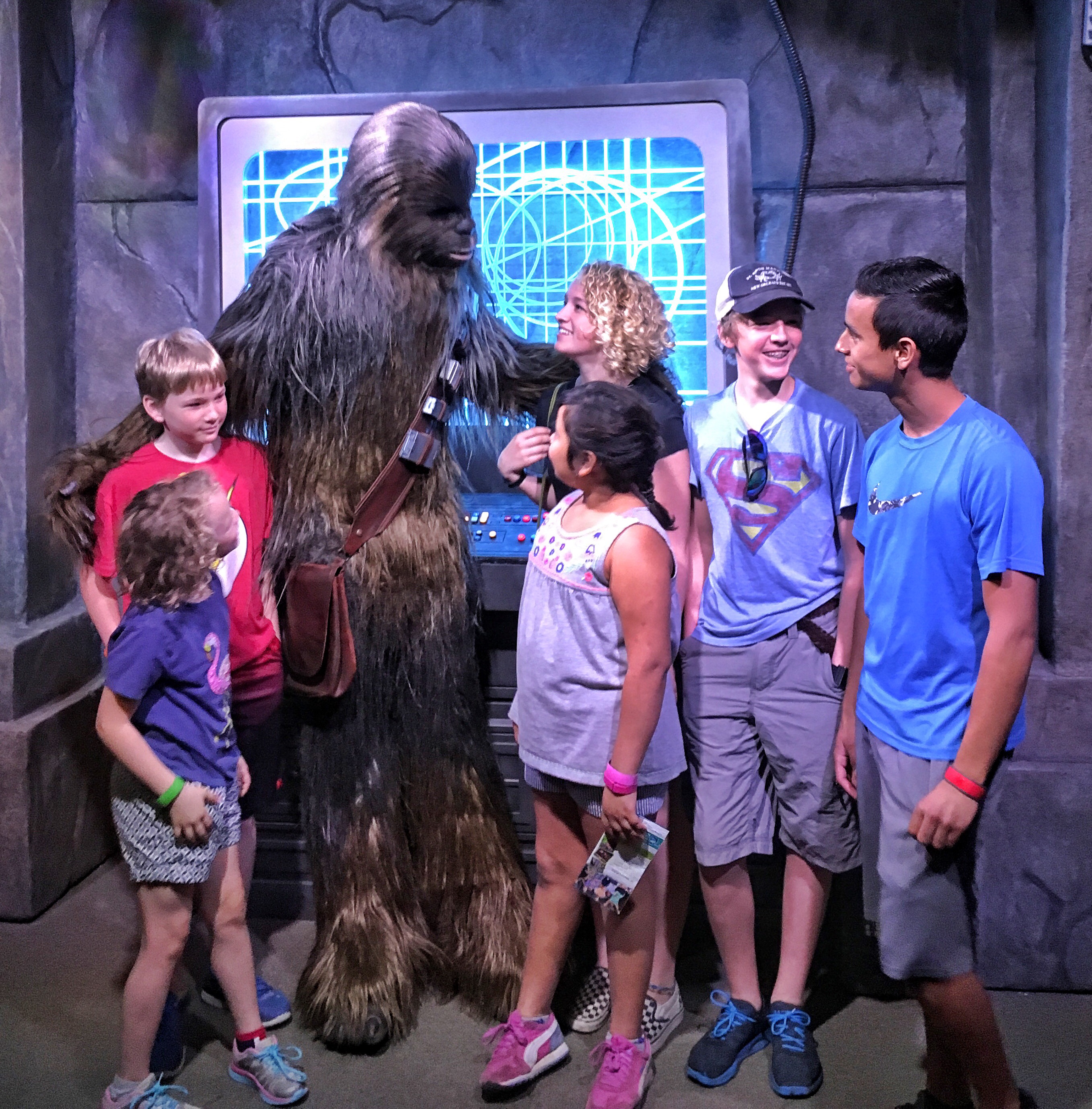
Everything was great until the Tower of Terror ride. Jake and I were too ill to be photographed.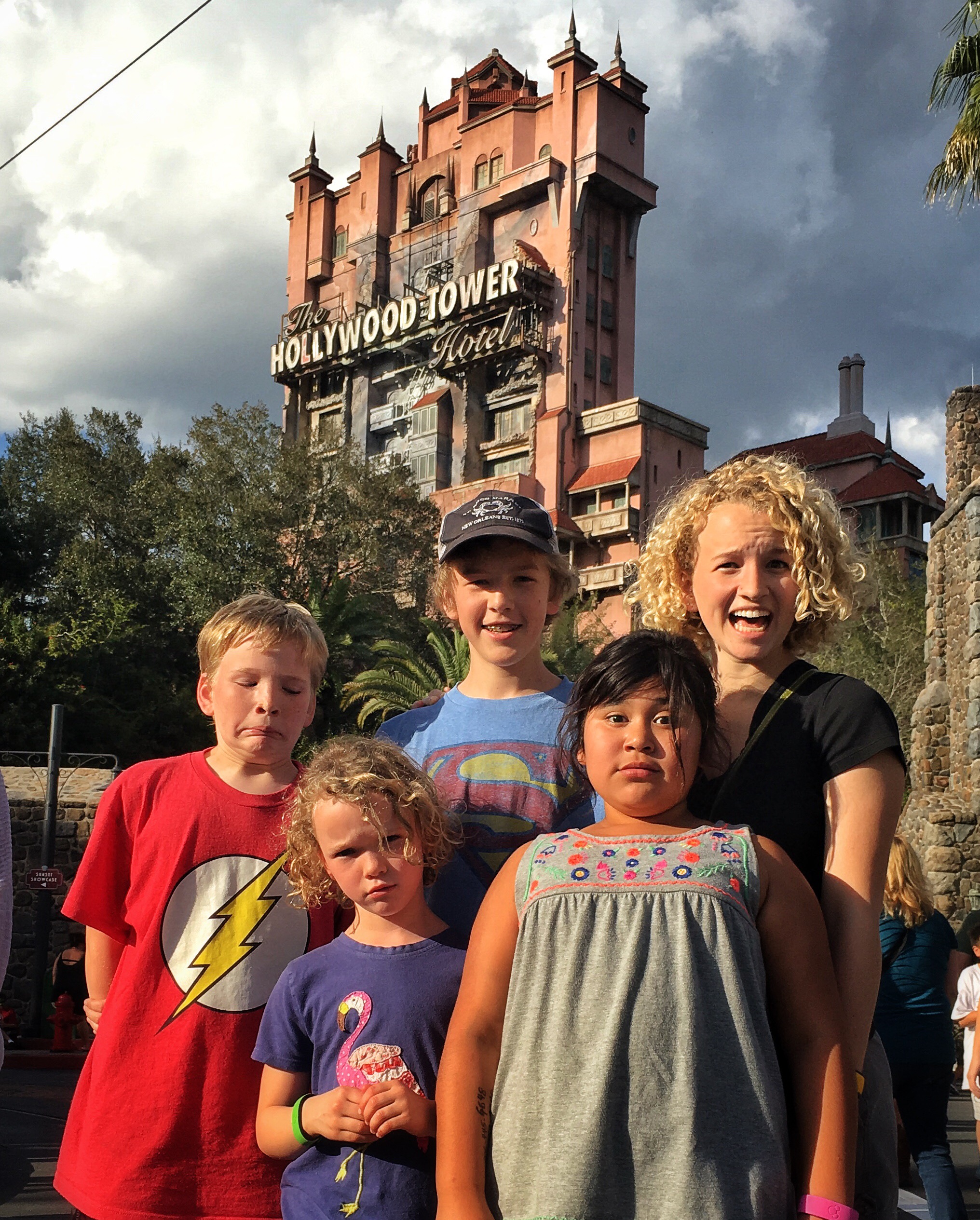
As we headed west toward home, we made one last Sunshine State stop. During winter, manatees migrate from the Gulf of Mexico into spring-warmed waters of the Crystal River. Local guides outfit visitors with wetsuits and snorkel kits, and then they ferry them to popular manatee hangouts. Tourists are allowed to float on top of the water and watch the protected mammals, and sometimes a curious manatee approaches a snorkeler.

 On the Road with the Archangel