Visiting national parks during the centennial celebration and in the middle of the summer is not a solitary endeavor. (Thankfully, as it turned out.) Jackson, WY, fifty miles from Yellowstone, was the closest camping I could find. A motel with an RV park in the back grudgingly granted us a little sliver of earth next to the road, and we were glad to get it. Hearing horror stories about the crowds in the park, we rose before the sun to ensure a good spot in front of Old Faithful. We hadn’t calculated the fifty miles further we’d have to drive to reach the geysers and thermal pools, but we had a favorite western, Ralph Moody’s Little Britches, to entertain us as we drove along with our faces pressed to the windows.
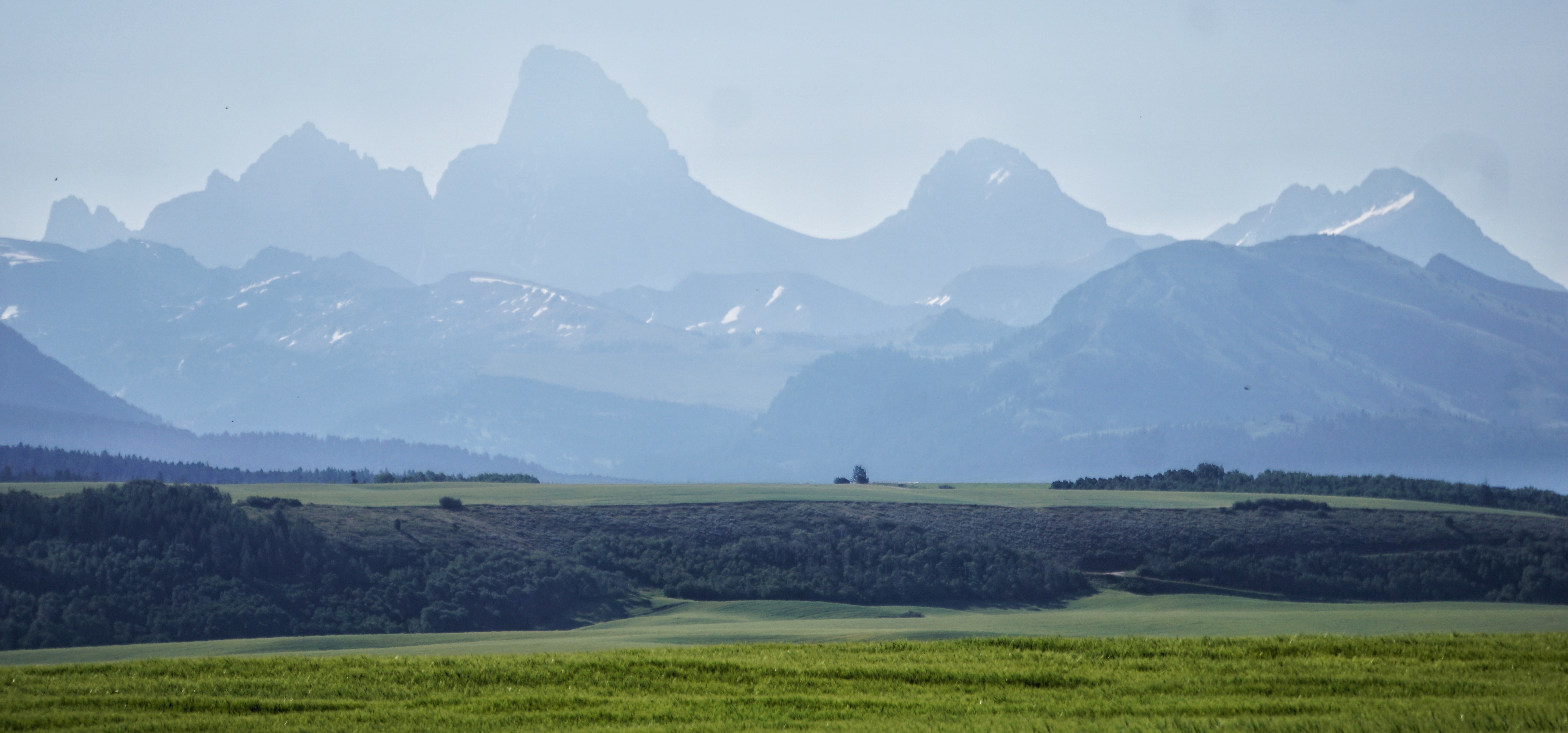
My dad worked in the Tetons for two summers during college. He said he mostly cleaned toilets and emptied garbage cans, but he had a lot of fun. “What kind of fun?” I asked, as we were planning the trip. “The kind of fun college kids have,” he winked. I was a little alarmed at this vague confession, but he smoothly filled in the murky blanks for us. “I was a bad guy in a Wild West shoot-out for the tourists.” He demonstrated a dramatic demise for the grandkids.
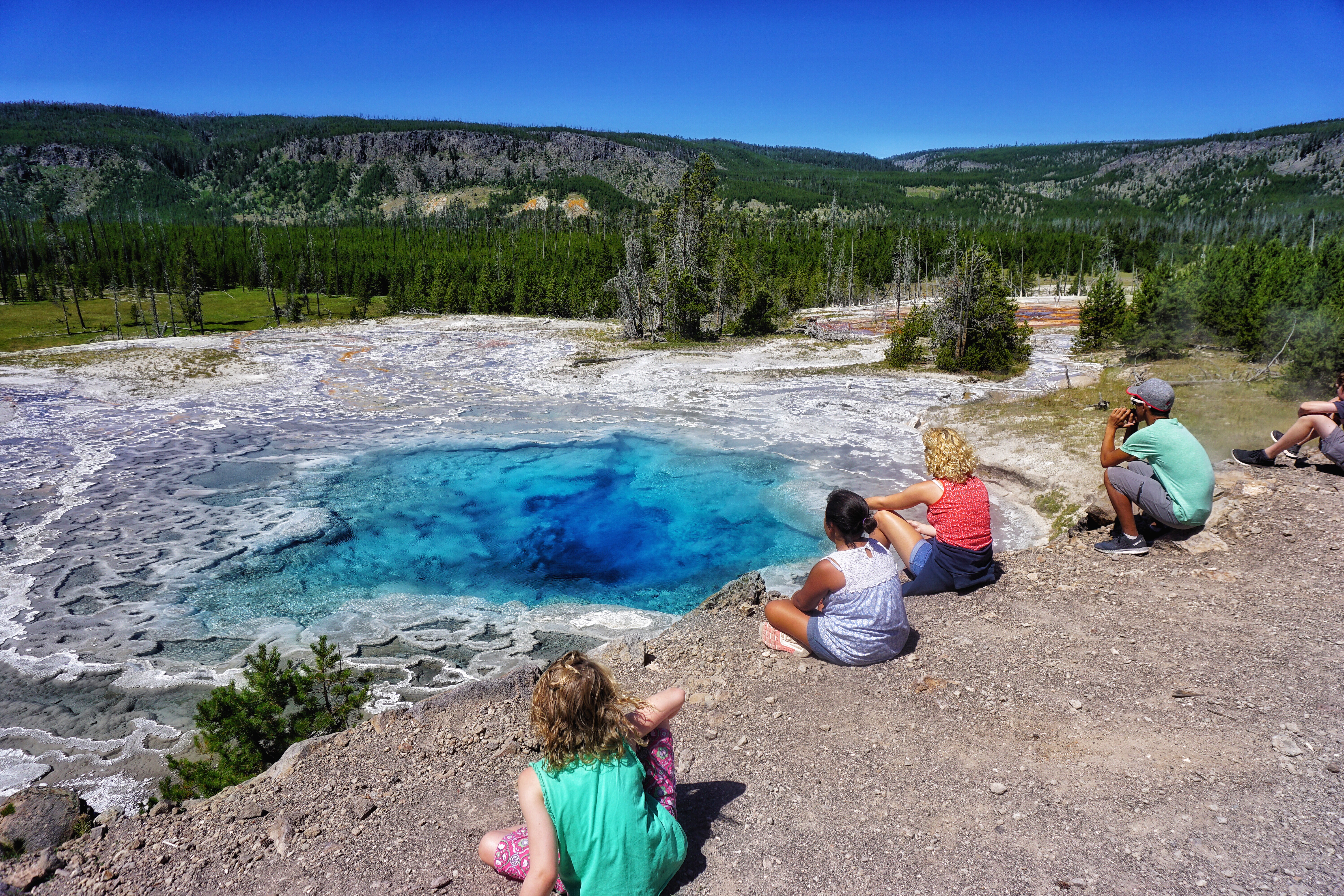
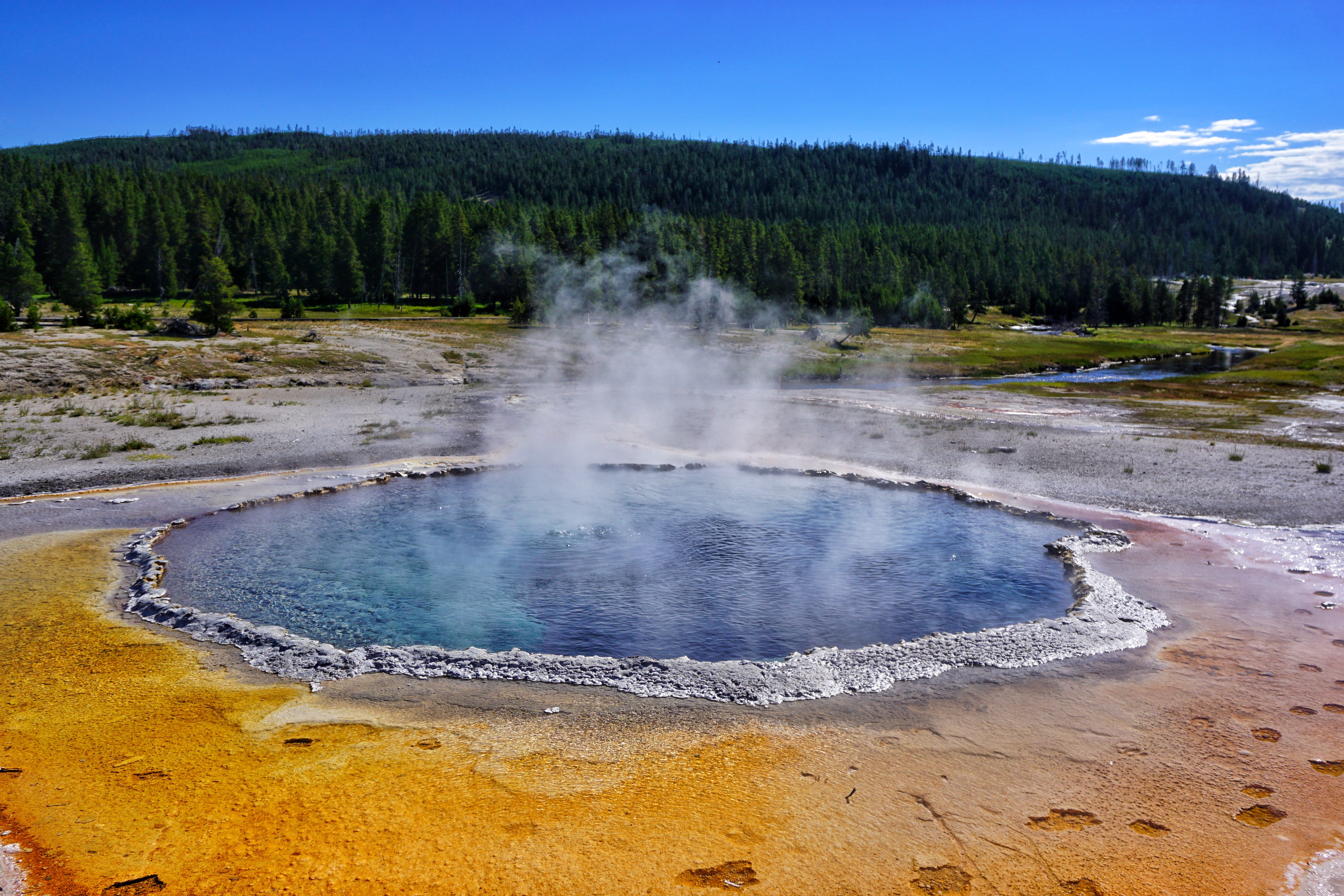
The brilliant blues in these thermal pools are created by heat-loving blue algae.
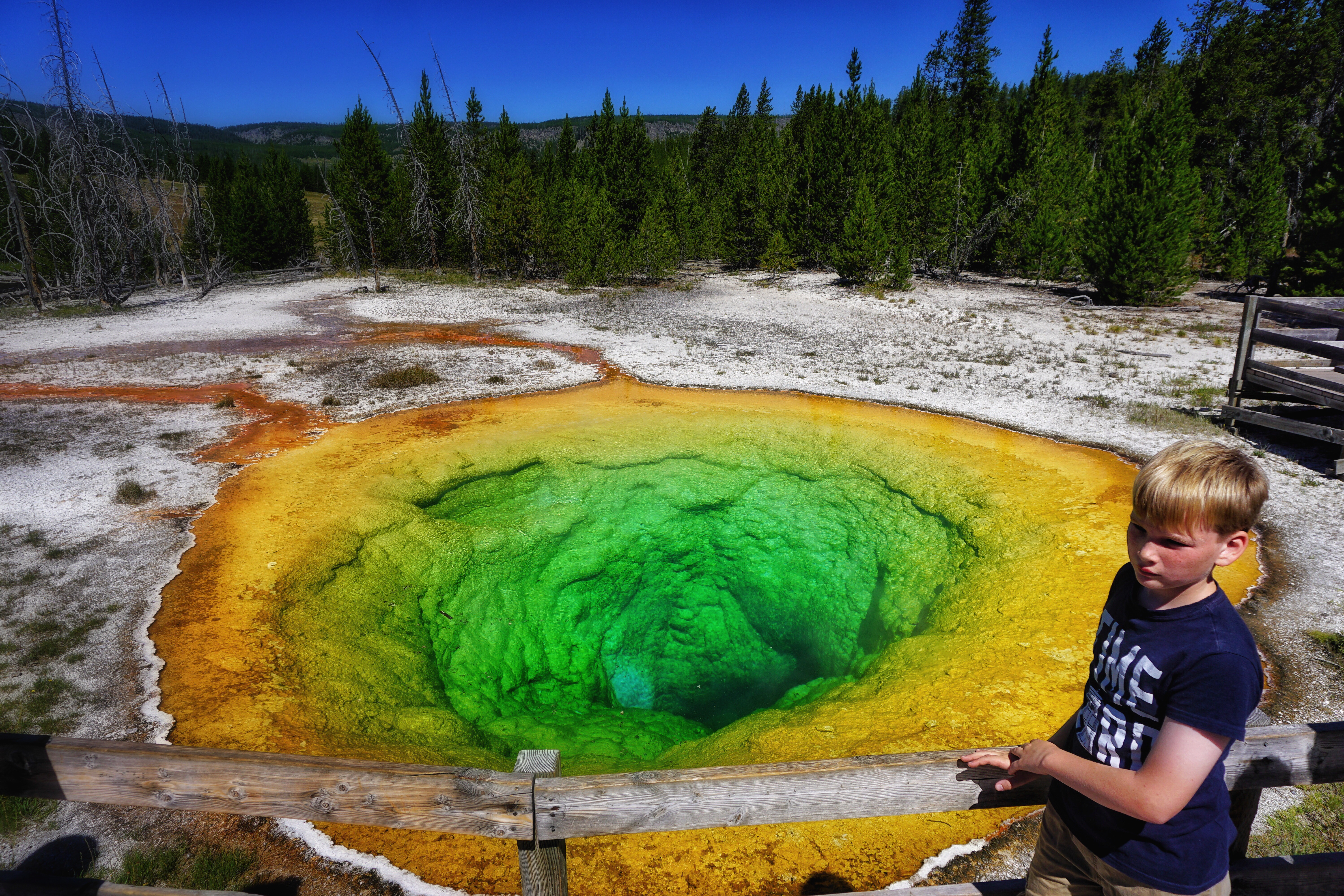

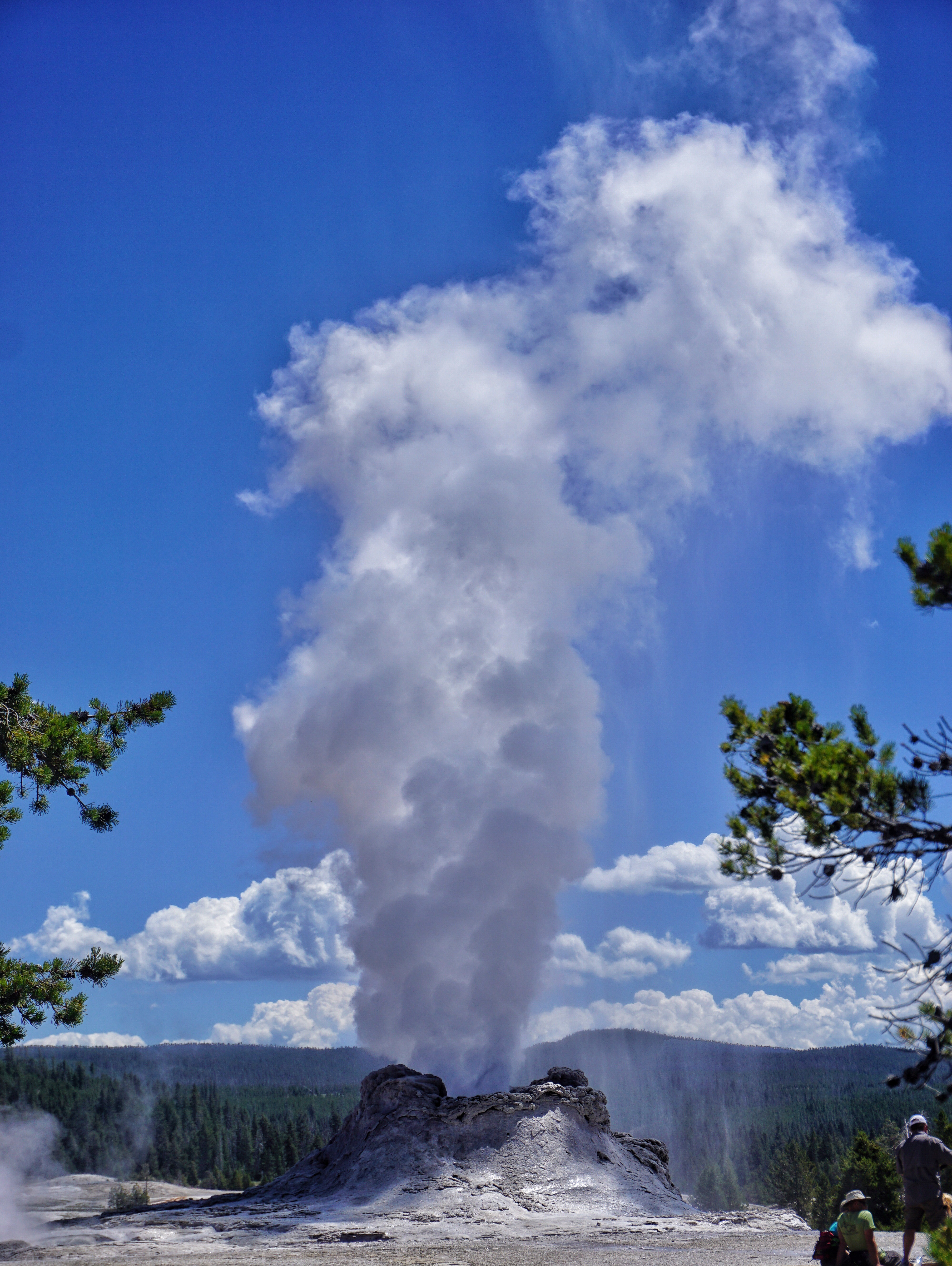
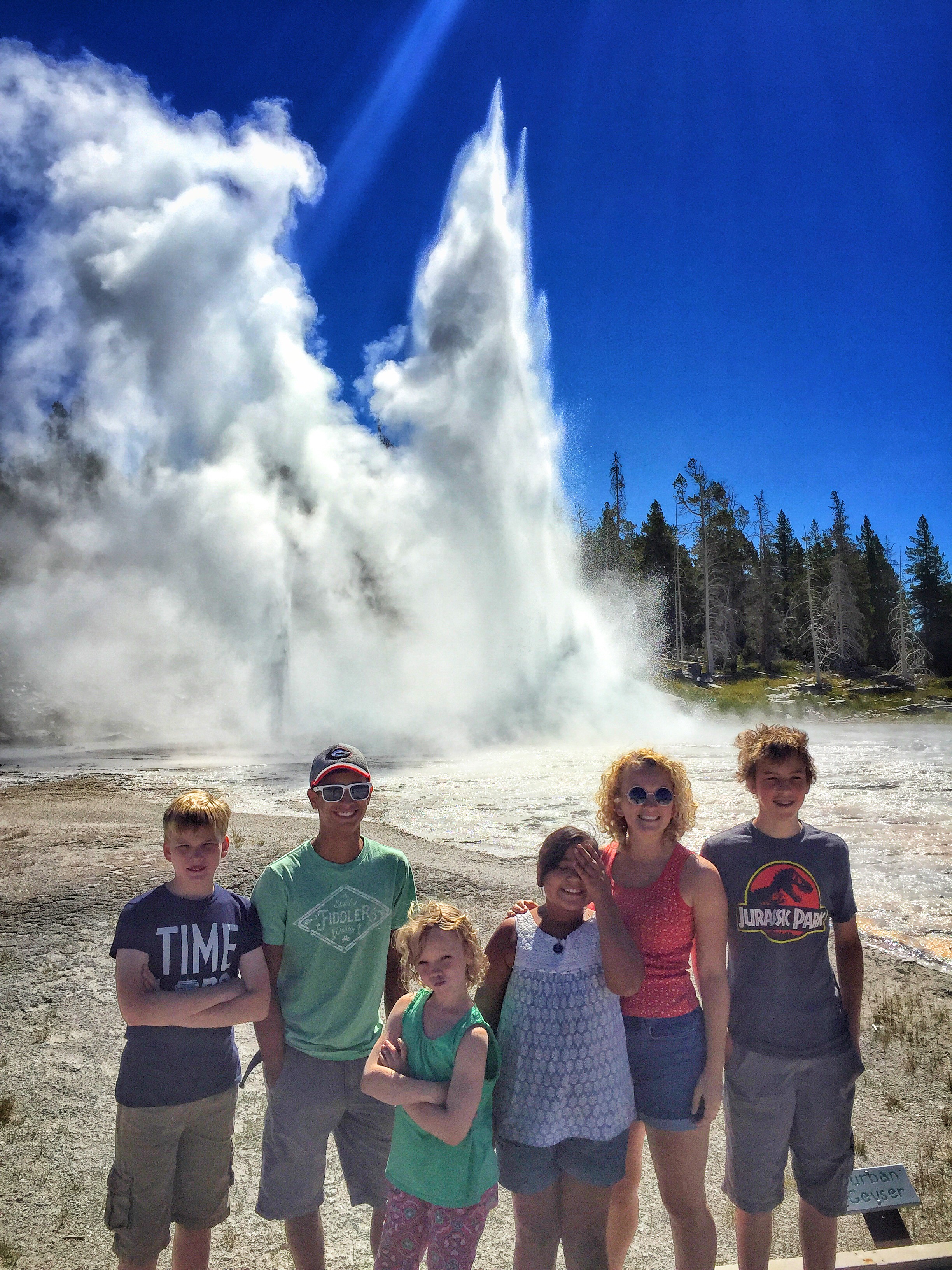 Since we’re visiting several parks on this trip, we decided to focus on the geothermal features: hot springs, geysers, mud pots, and fumeroles. We followed a park restaurant employee, who seemed to have inside information on when then geysers would go off. She’d brought along an umbrella and a fold-out chair. “When I’m not working, I like to watch water boil,” she quipped.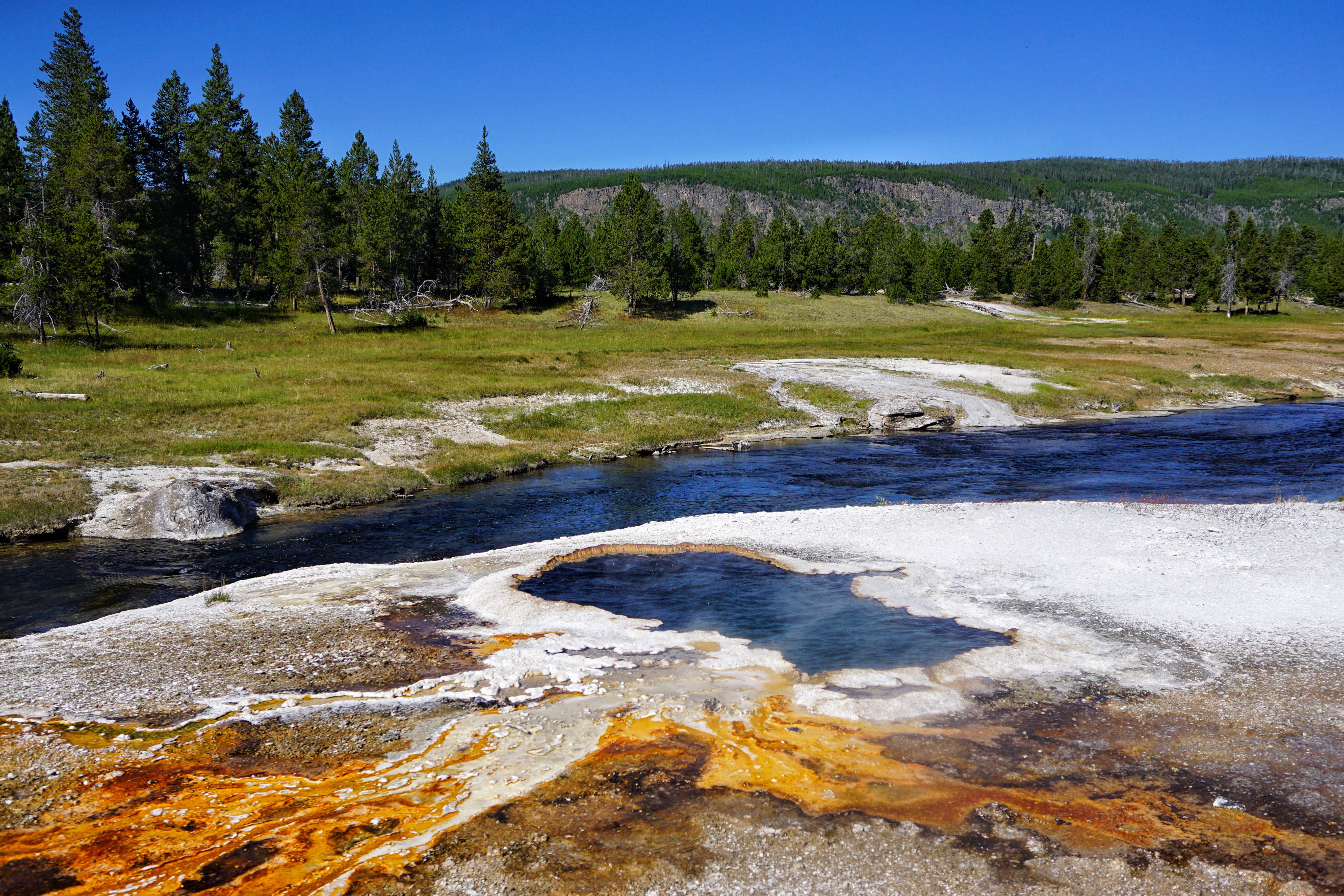
Our Lubbock friends, Kyla and Tom Sell, were traveling back from Montana as we were heading up from Utah. We had decided to meet at Yellowstone and see the park together. Again, we underestimated the size of the 3,500 square-mile park. Approaching from opposite entrances, there was no way to spend a whole day together, but we did finally meet up in the afternoon at Old Faithful.
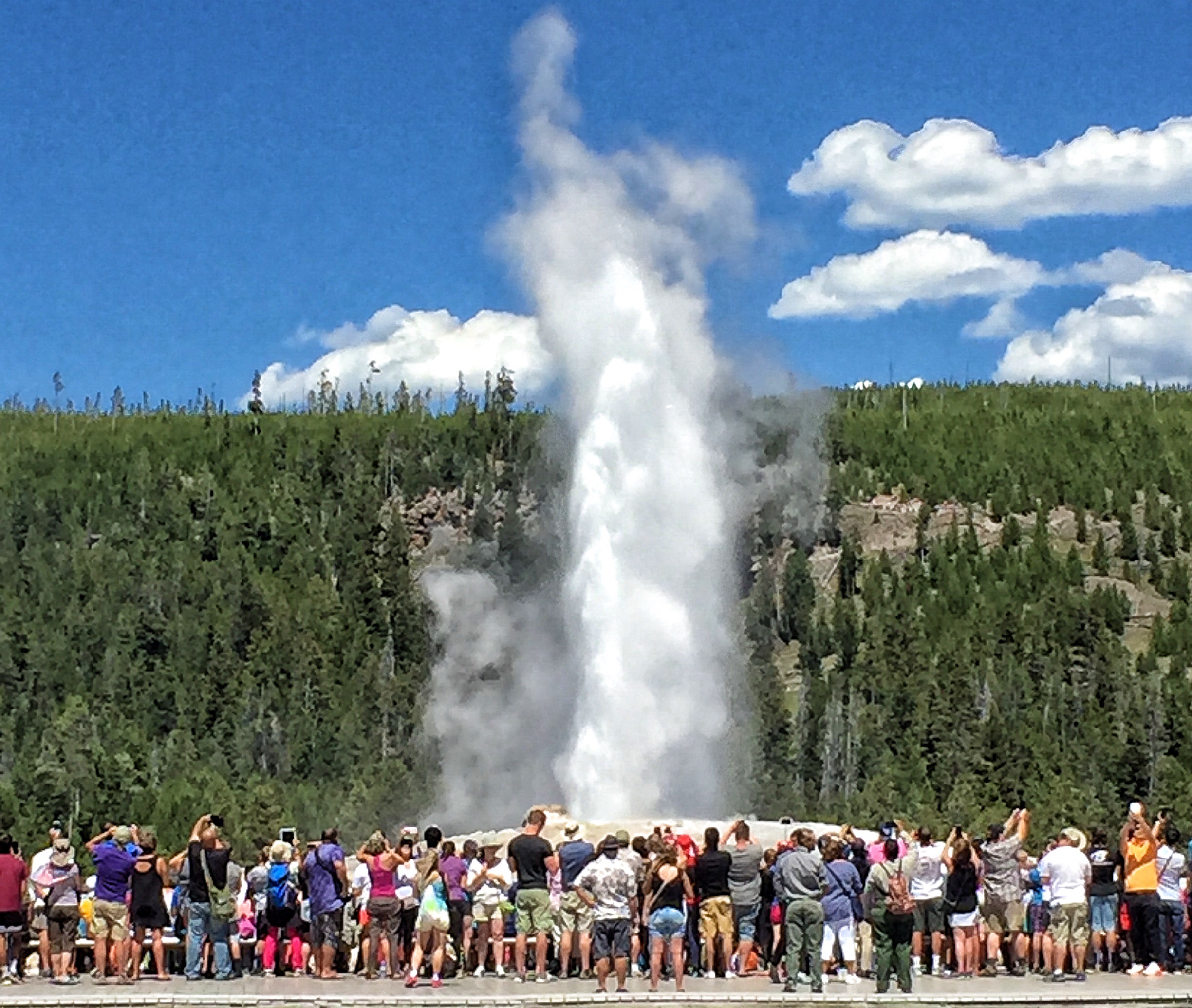 30,000 people per day visit Old Faithful.
We made plans to go rafting together the next day, since both families would spend the night in Jackson. Then we headed back to the campground, while the Sells did a little more Yellowstone exploring. A few miles out of the Old Faithful parking lot, an approaching car honked at us. “Do you think we forgot to strap something down?” I wondered aloud. There was a paved pull-off area just ahead, so we stopped to check the RV. Everything looked fine. As Brandon began to roll back onto the road, the engine croaked out death cries and came to a halt. “That sounded bad,” he said, and climbed out to check under the hood, his head already hanging. He came back with a large, broken circle of metal. “This is the main pulley for the engine. We’re in trouble.” It was about 3:30 in the afternoon.
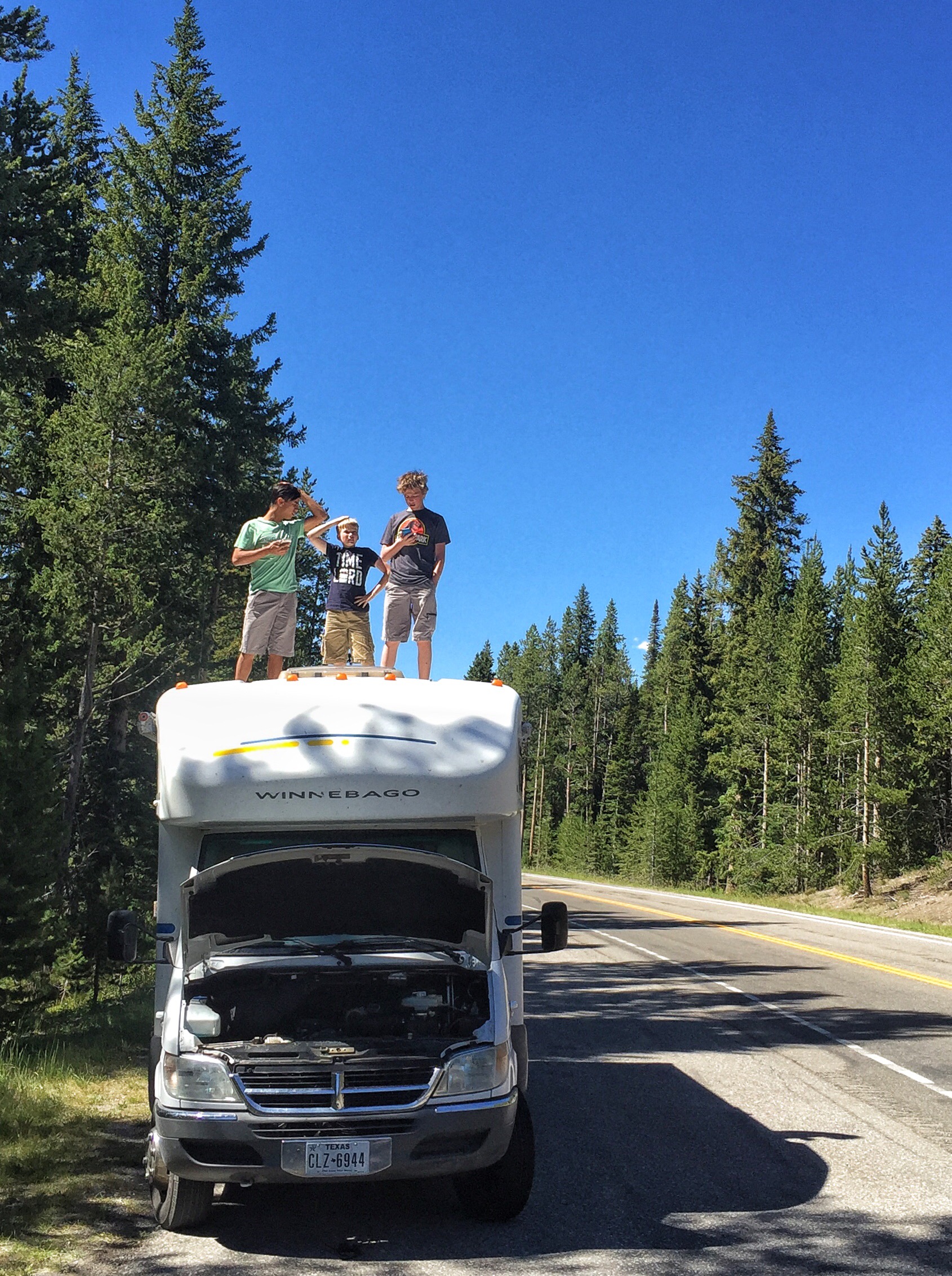
One of things that made our rendezvous with the Sells difficult was the lack of cell phone service anywhere in Yellowstone park. The boys stood on top of the RV hoping to catch the attention of a stray satellite that might communicate our problem to some helper out there in the universe. I prayed with the same goal in mind. Finally, Brandon decided he should hike the three miles back to a service station we’d seen at Old Faithful. I opened a bottle of wine and started a movie for the rest of the family.
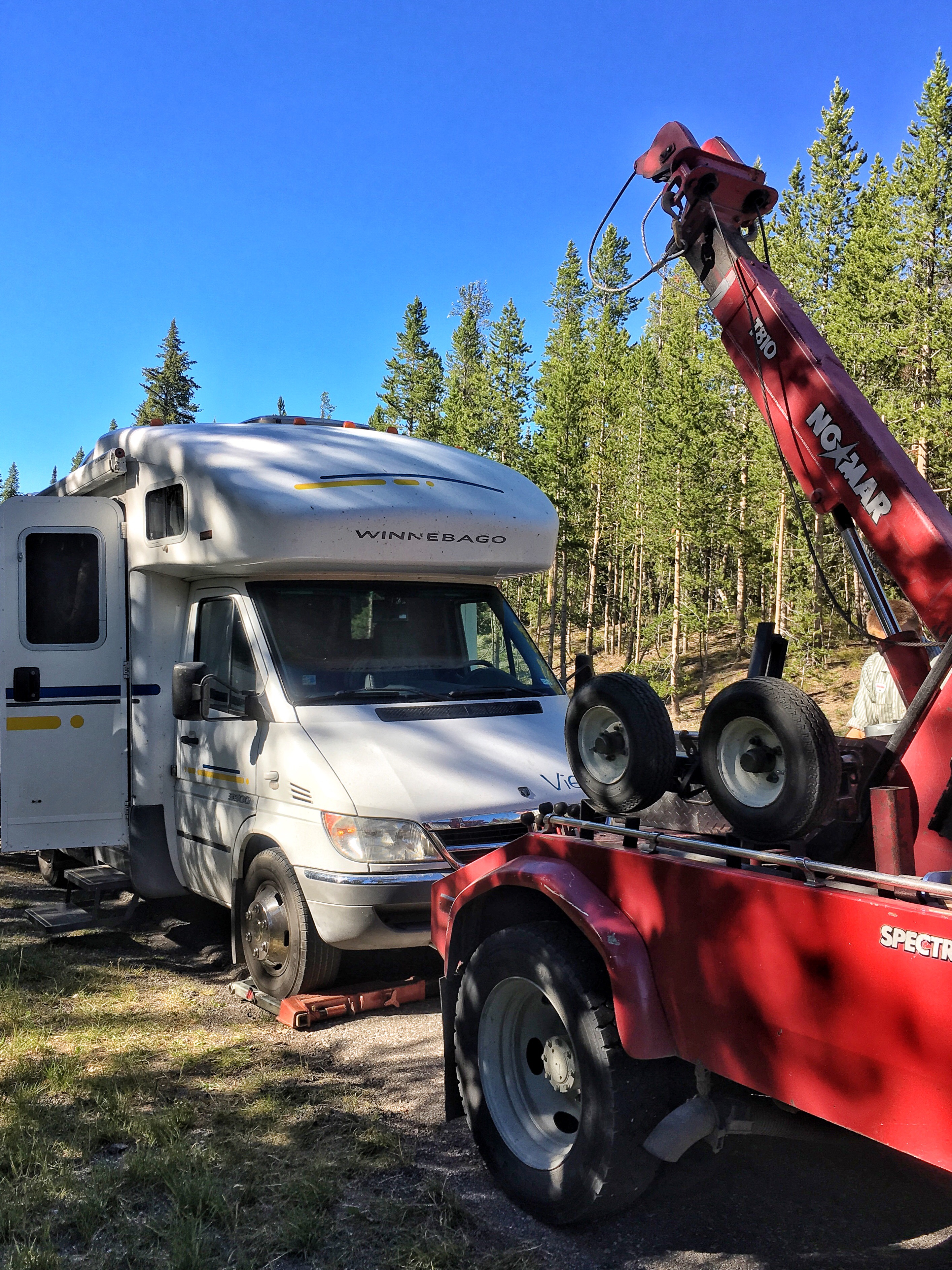
An hour and a half later, salvation appeared in the form of Tom Sell. As they were leaving the geyser area, the Sells spotted Brandon and Jacob walking along the road, turned around, and picked them up. Tom emptied his vehicle of his own family, and drove to the RV to pick us up. The Sells reloaded and squeezed the four members of our family with the skinniest hips into the car along with them for the two hour drive back to Jackson. They fed everyone and rode around vainly searching for a vacant hotel room for our family. The rest of us made the slow trek back to Jackson in not one, but two tow trucks. (I should mention that the reason we stuff ourselves into this tiny RV instead of, say, our regular vehicle pulling a trailer, is because I’m terrified of towing.) The tow truck from the Yellowstone service station could only haul the RV to the edge of the park. Another truck from Jackson reloaded the RV on a precariously high trailer and bounced down the hills at an achingly slow pace, but with no injury to us or the RV. The driver said their company picks up about seven vehicles every day during the high season. Once the RV was resting at the Dodge service station in town, Tom Sell picked us all up and deposited us at the motel in front of our RV park, which miraculously received two room cancellations just as we finally came into cell phone range outside Jackson.
 Everyone crawled into bed around 12:30, and we went to sleep immediately. We were tired, and worried, and pretty sunburned, as well, but this trip was not gonna beat us. We were determined to go rafting at 7 the next morning.
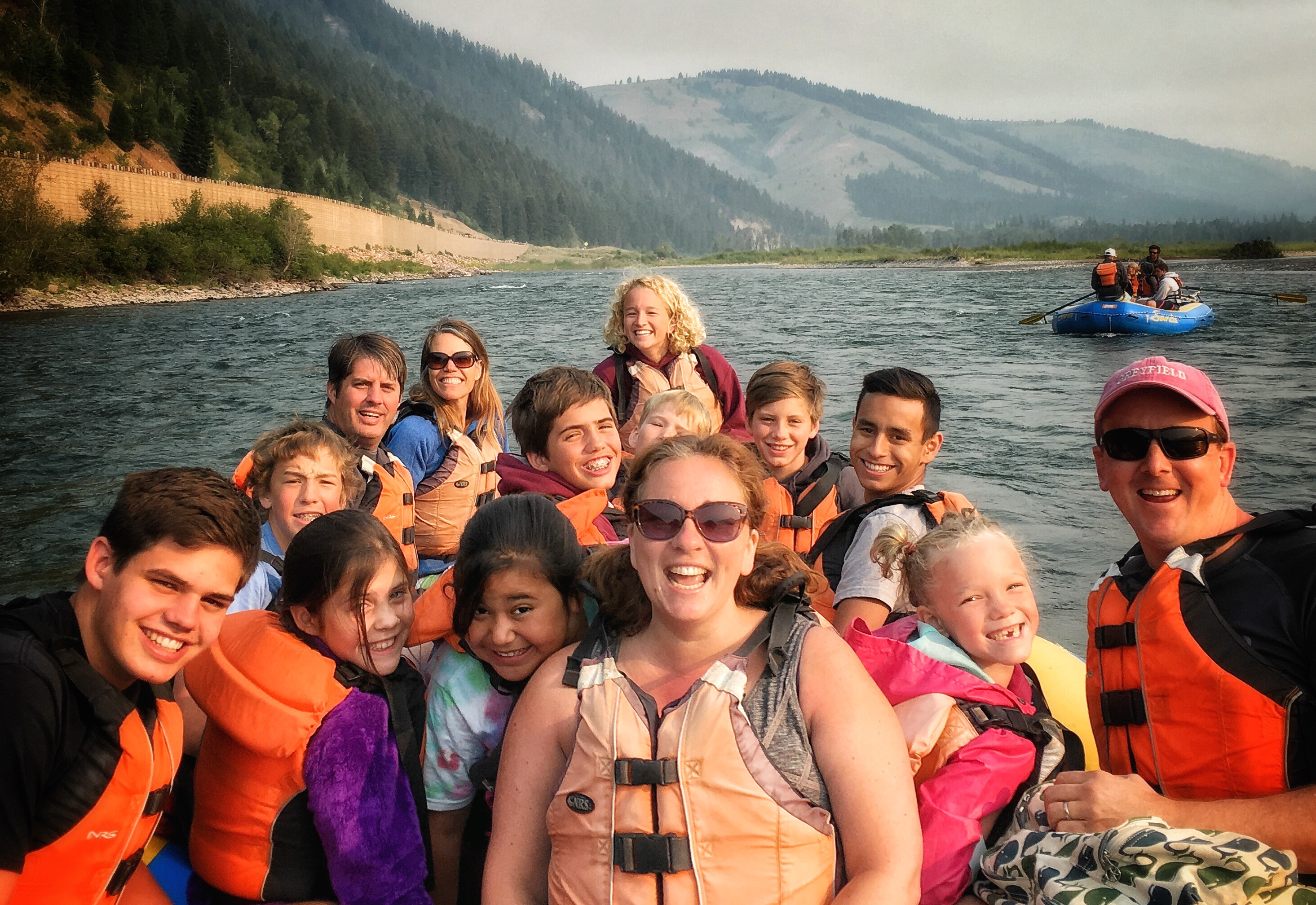
You’d think the Sells would have had enough of the Mulkeys at this point, but they pride themselves on conducting their vacations in true Griswold style. Apparently, we were the cherry on top of an already ignominious trip of their own. They picked us up from our motel, undeterred by a sky smokey from the three fires burning around the Jackson area, and we embarked on a whitewater escapade. We were sore afterwards, but more from belly-laughing than working hard to paddle.
We napped the rest of the day, and then we met at Teton Village to ride the gondola up the mountain and eat supper. It’s the most fun I’ve ever had being stranded.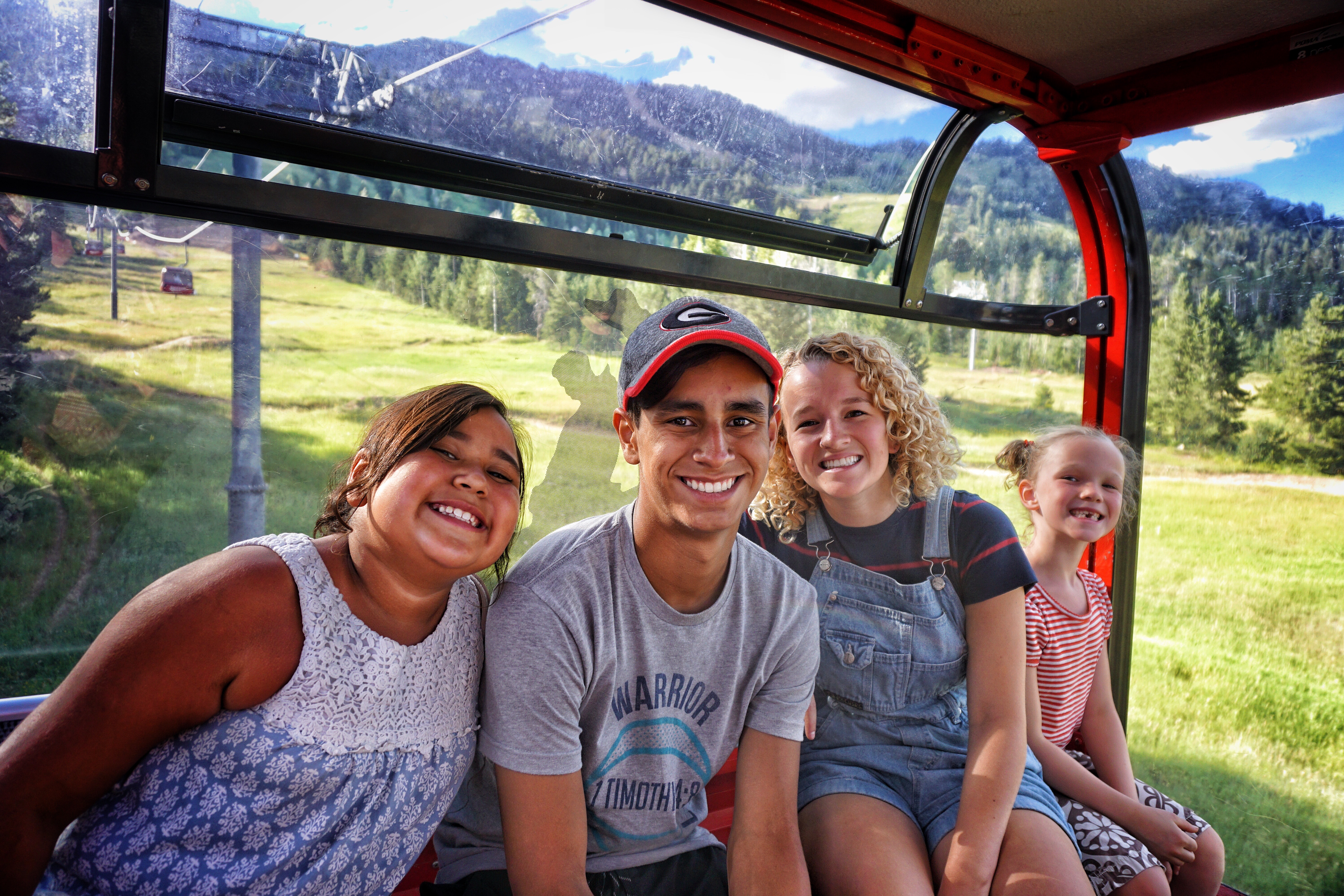
The next day we rested, and low and behold, the RV was fixed. When we picked it up, the repairman said that in all his years of working on these engines, he’d never seen that part break. “It’s a miracle the replacement only had to ship to us from Denver, ” he mused, “It ought to have been in Germany.”
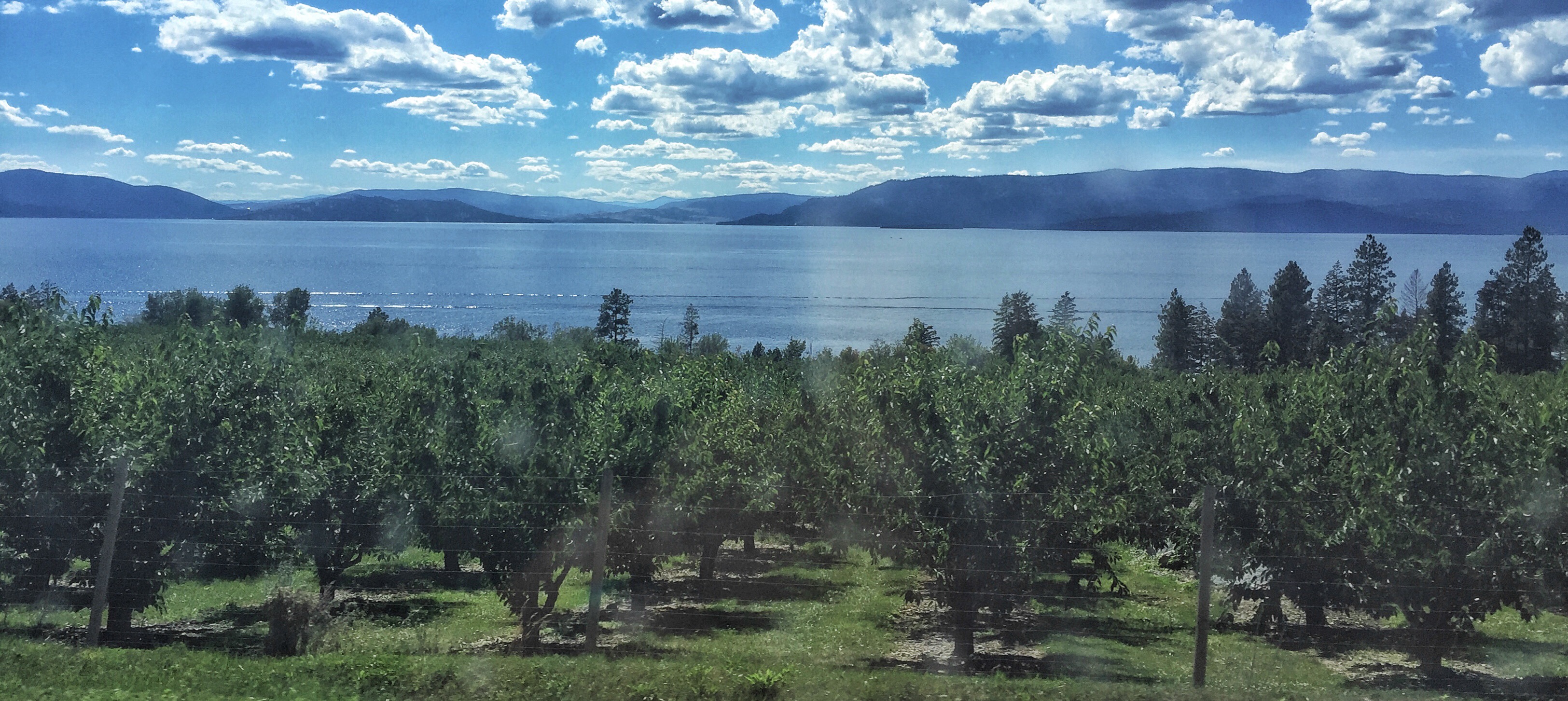
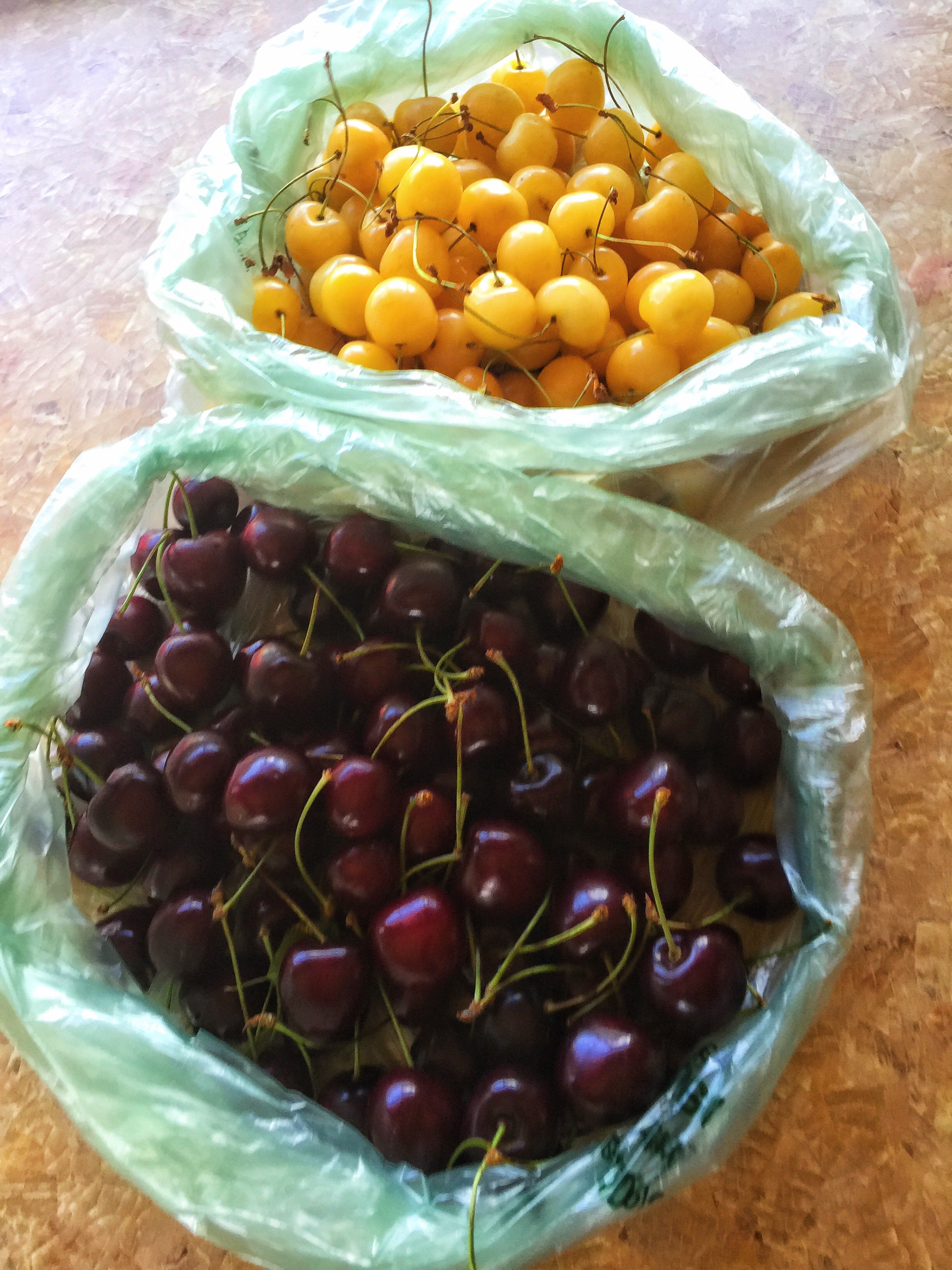
A day of driving brought us to the Flathead Lake region of Montana. The lake was trimmed in cherry orchards, and we made ourselves a little sick feasting at a roadside stand.
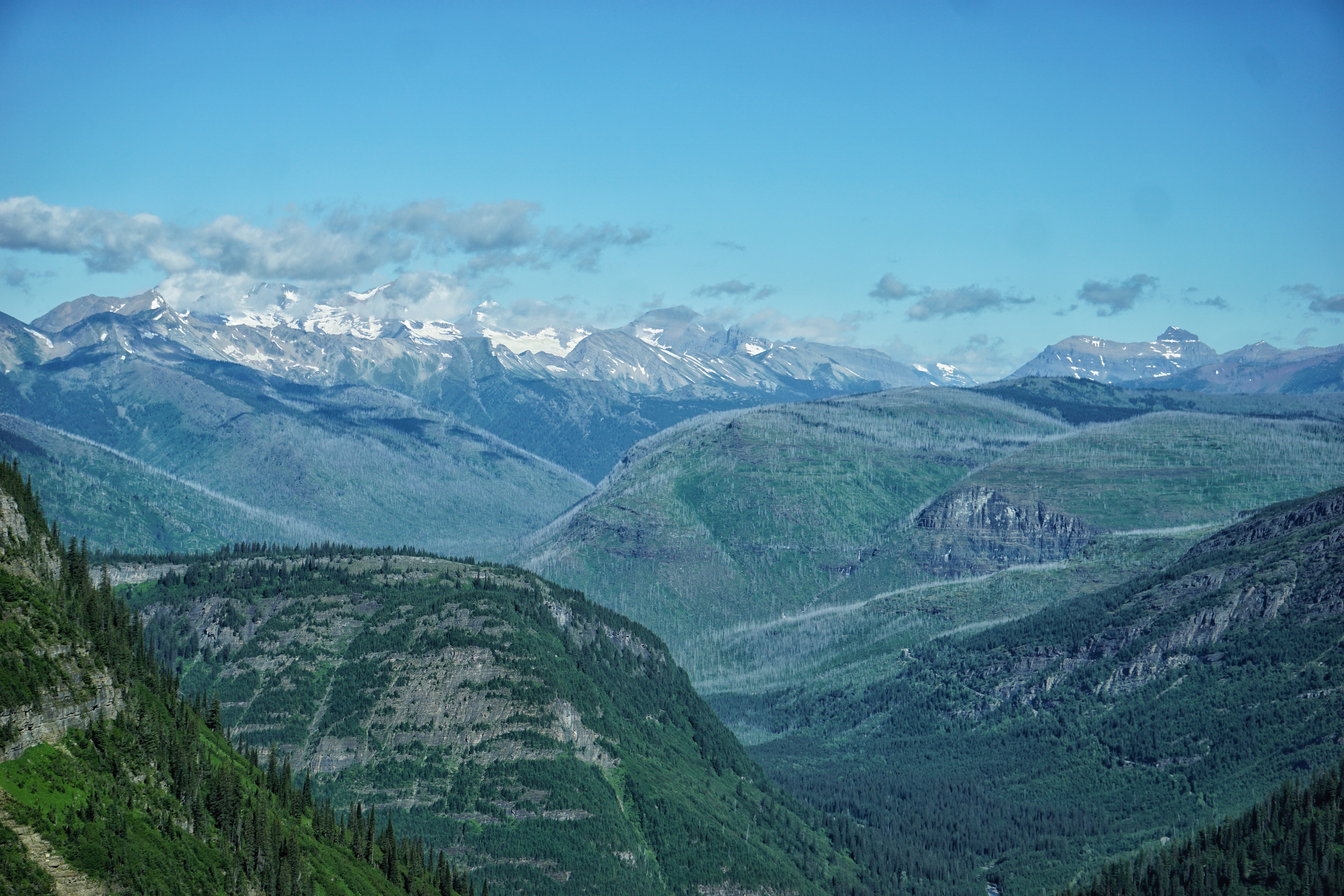
Shuttling two million visitors through Glacier National Park within a two-month window is a daunting project. Since our RV was too big for the narrow Going-to-the-Sun road that winds across the park, we parked at McDonald Lake and joined the masses on buses, which toiled up and down the road all day, pausing at trailheads and scenic overlooks. In the crowds, we met a couple who have a brother in Jane’s major at JBU, and at our campground, we were surrounded by a large group of UGA students on a geology trip.
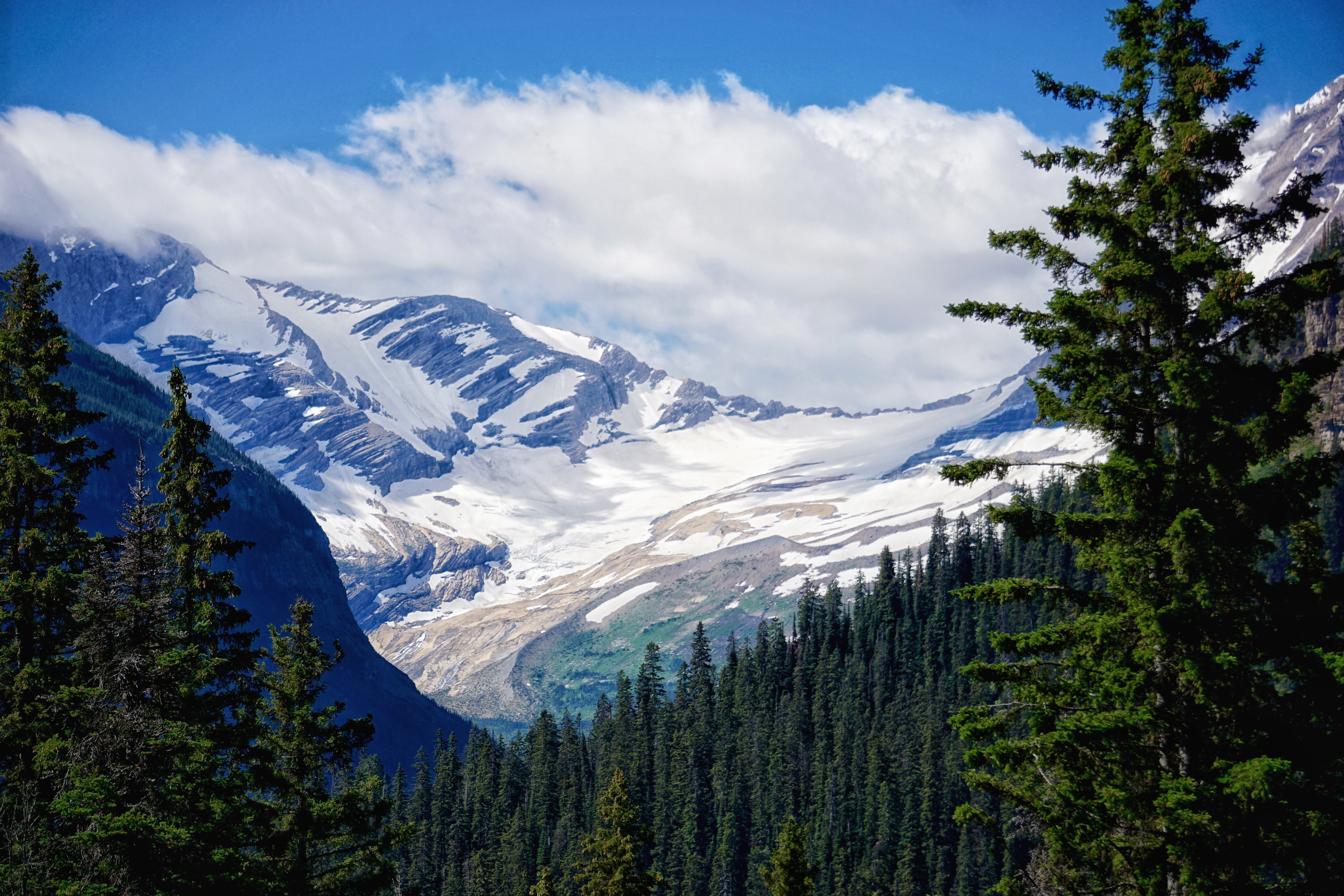
Jackson Glacier, one of 48 little alpine glaciers. (The park is named for the giant glaciers that carved the park.)
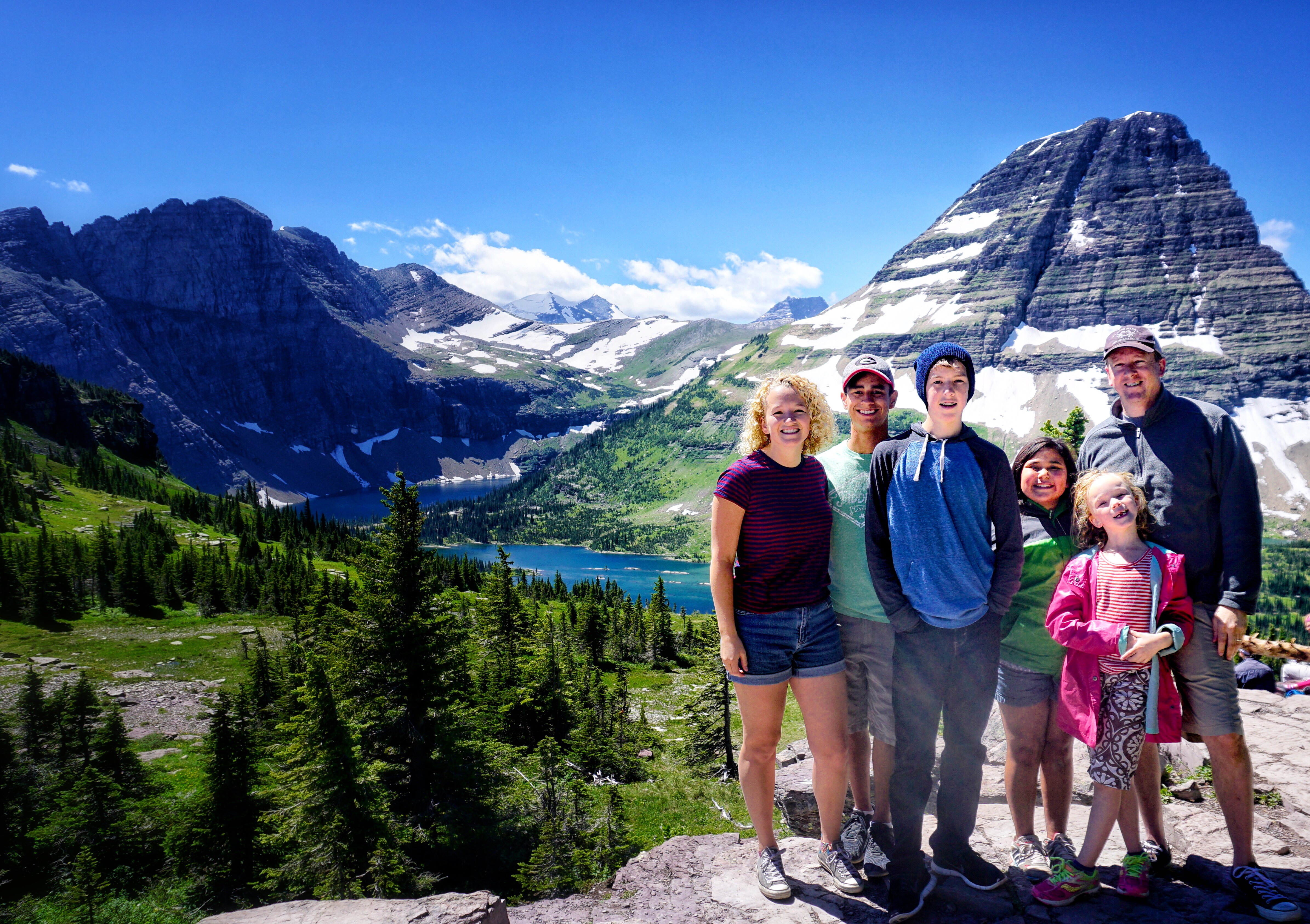
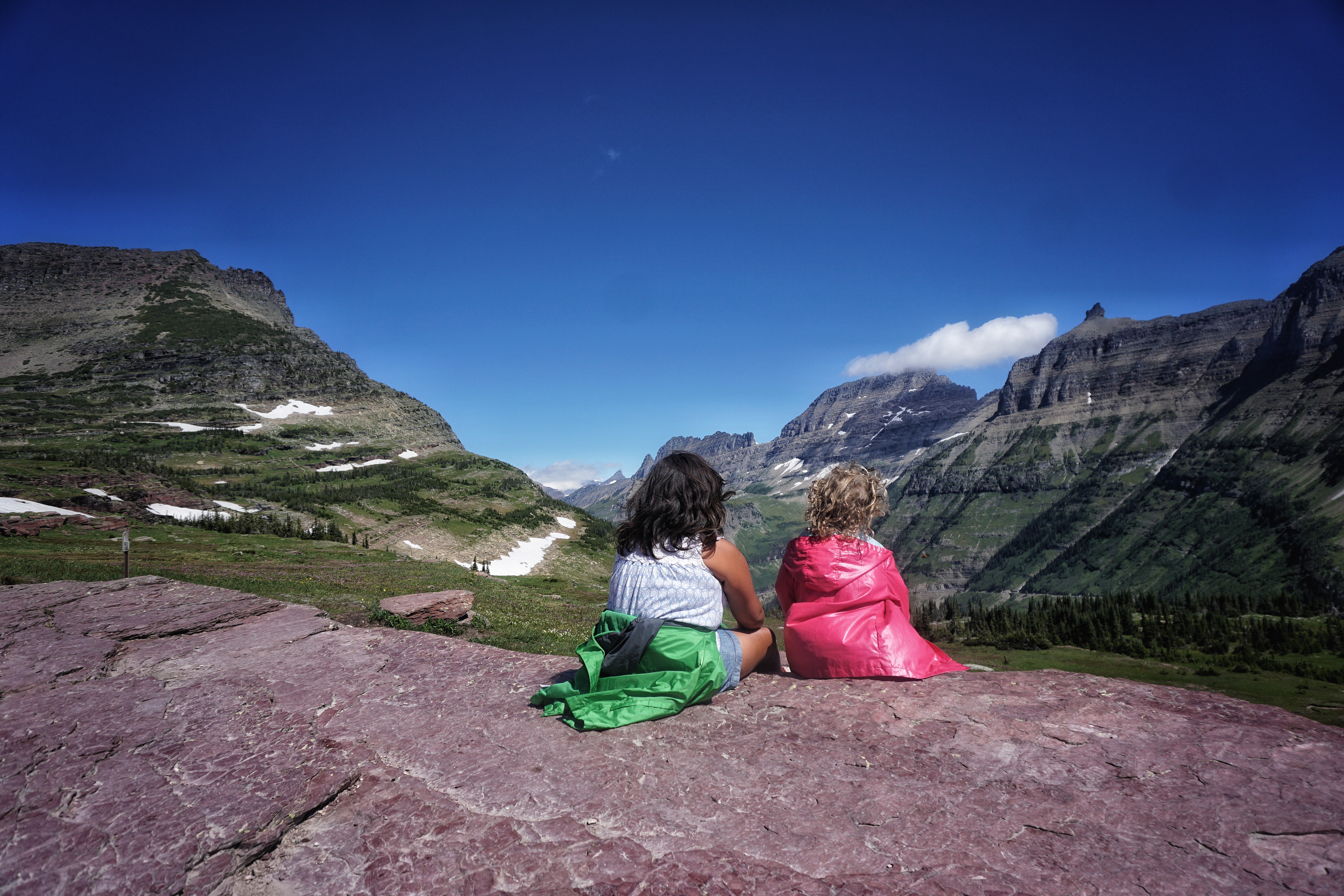
The girls were delighted by all the mountain goats grazing along the trail to Hidden Lake.
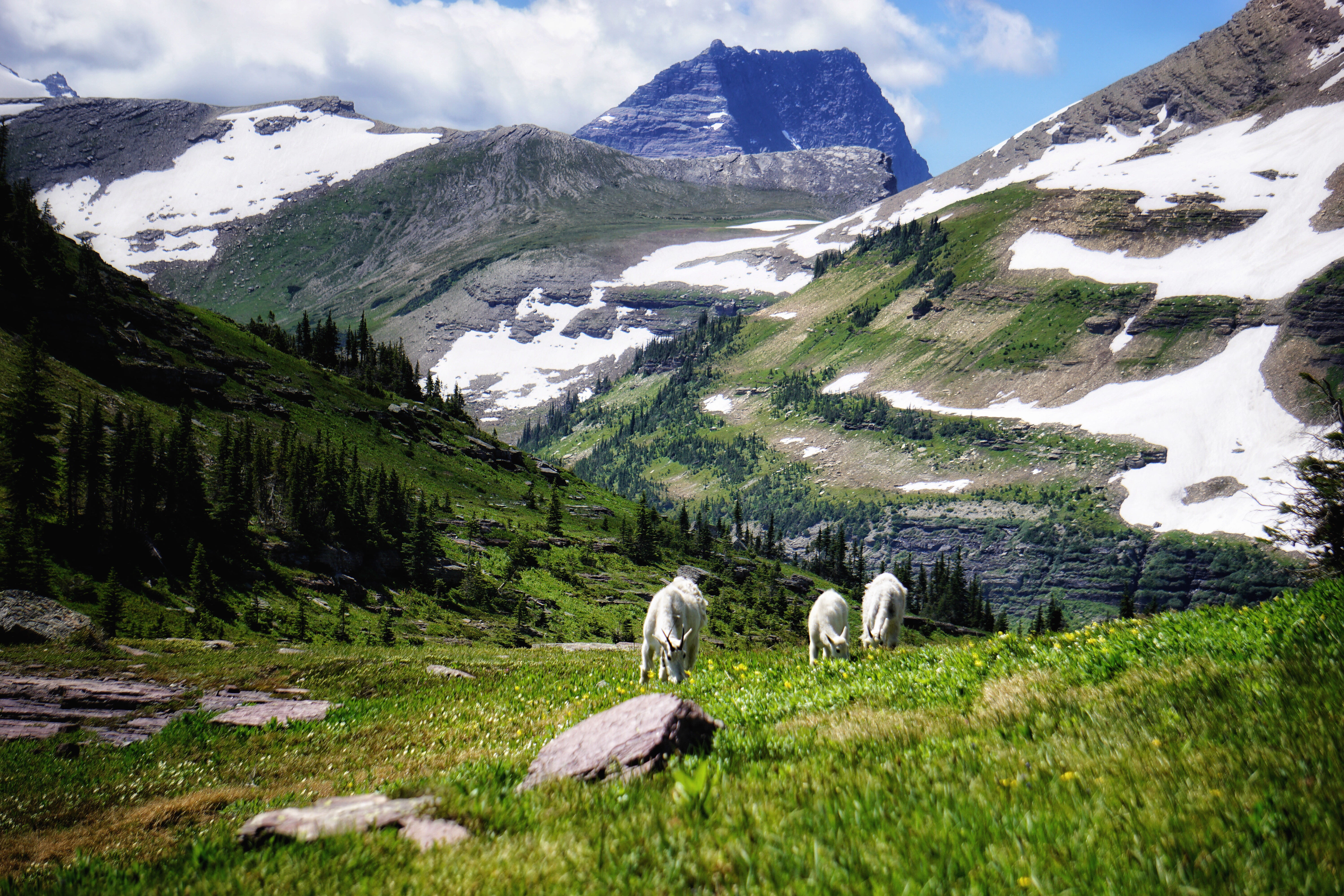
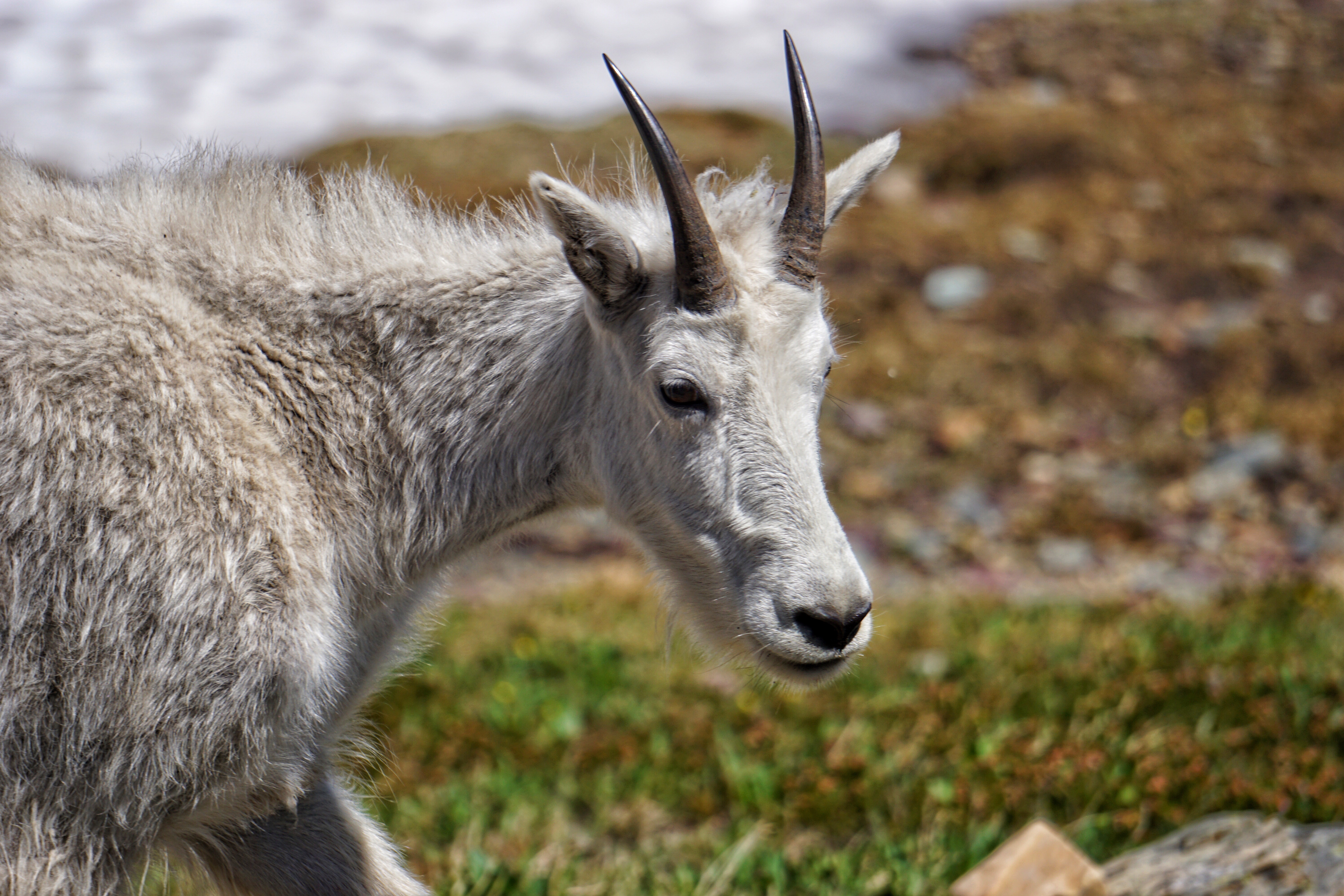
Besides the gorgeous landscape, my favorite part of Glacier was chatting with the local folks, who drive the park shuttles. One man said his great-great grandfather came to Canada from France in the 1870s, and he trapped his way to Montana to homestead. He married into the Blackfeet tribe. Another woman’s family emigrated from Sweden, but most of the family couldn’t tolerate Montana and settled in Kansas, instead. She drives a school bus and works in home healthcare after the tourists depart. She said her father worked side jobs in construction in order to hold onto their little sheep farm. “He used to say ‘Flathead is a millionaire’s paradise and a working man’s nightmare.’ That was the 1950s. Not much has changed,” she sighed.






 On the Road with the Archangel