 At low points during our travels, I’ve wondered, “Why are we doing this?” Especially when the source of the dark moment was a sullen, tearful, or frightened child, the patent “It’s for them!” didn’t always sound convincing. This summer, I blushed to see an answer to my question in print when I read Adam Gopnik’s Through the Children’s Gate: A Home in New York. In one chapter, Gopnik describes the earnest, hilarious efforts of private school parents to produce the best-yet kindergarten production of Peter Pan. The parents are captivated with the idea of making their little actors fly on stage: “The flying children haunt us; we see them hovering overhead at night, free of wires and entanglements, launched without obvious trickery or cheap effects.” The ridiculousness of the situation is not lost on Gopnik. He asks, “But do the children really want to fly? This is kindergarten, after all, they’re doing well just to tie their shoes and use the bathroom. Is the whole elaborate apparatus we construct ‘to keep from disappointing them’ for us or them?”
It’s a question I frequently ask, not only when planning routine-disrupting, year-long excursions across the country, but whenever I’m slogging through the various rituals of “the good life” as prescribed by suburban American culture. Is all of this necessary? Gopnik continues, worrying that the child’s response may not be what we hope for at all, but something more like: “You made me fly, and there I was, so happy on the ground.” Gopnik has hit the mark; this is the exact response of one of my children to our great adventure. He tells people who ask how he liked our travels that he will never leave Lubbock again.
Sometimes, it’s delightful to find kinship with a character or situation in a book; other times it’s horribly convicting. “Oh, no,” one shudders, stomach sinking, “That’s me.” I laughed to see myself in Gopnik’s ambitious kindergartener parents, but I’m shaken to think about the implications of another book we listened to recently. Toward the end of our final road trip, we played some stories to prepare for the upcoming start of school. Tom and Jake will read Inferno this year, and I thought listening to Rod Dreher’s How Dante Can Save Your Life would help them see how relevant the poem can be to modern readers. What I didn’t realize is that the context for the story is Dreher’s personal battle against making an idol of his family. In the book, Dreher confesses that he has made family relationships, rather than God, the object of his worship to the point that he is physically ill. I’m not new to this dilemma! I have a difficult time loving a thing without enthroning it in my heart. Think Gollum, moaning after his “precious.”
Had the prospect of family change–Jane leaving for college–so terrified me that my instinct was to shoo everyone into an escape pod and exit the situation? I thought this must be at least a little true. It didn’t invalidate the experience; there were many rewards over the course of this year, but it disturbed me, nonetheless. And now, like Job, the thing I dreaded was upon me.
The week before Jane left was mercifully busy, and the parties, visits, notes, and texts from well-wishers were a soothing balm. I kept my tears in check.
Like many parents, I slept more soundly before having children. Now, I often wake in the night, for no apparent reason, and feel compelled to check on the kids sleeping down the hall. There I was, at 4 A.M. on Jane’s last morning at home, peering worriedly into her dark room. It was still remarkably messy despite being almost empty! This made me smile, but I couldn’t go back to sleep.
The narrow ribbon of highway winding through the Texas Panhandle is loooong. We drove in silence for awhile, still recovering from the first wave of grief that followed last goodbyes to Tom and Jake when Jane dropped them off at school, and the waving, receding figure of a friend, who lingered in the driveway as we pulled away. I kept thinking that I should be imparting some nuggets of wisdom, since it was our last stretch of time together for awhile, but nothing sounded right in my head, so we turned on the radio and sang loudly. Thank goodness for 80’s pop.
As we pulled up to Jane’s dorm, cheers erupted, and a hoard of undergraduates surrounded our cars. In thirty seconds, Jane’s belongings were lifted from the vehicles and deposited in her room. Buoyed on their cheerful greetings, we floated into her room and rushed along the rapids of freshman orientation. It was loud and friendly and busy. No one seemed to notice that Jane trailed an entourage of small children wherever she went. We met nervous parents, giddy students and cheerleading RAs, DDs, and OLs. A staff member, who used to work with a friend at our Lubbock church, stopped by the room to meet Jane and invite her over for dinner. The owner of a shop we were visiting downtown offered her a part-time job. Strangers everywhere, on campus and off, said how glad they were she’d come. The much-adored president of the University, Dr. Pollard, provided one of his signature welcomes, quietly inspiring and reassuring.
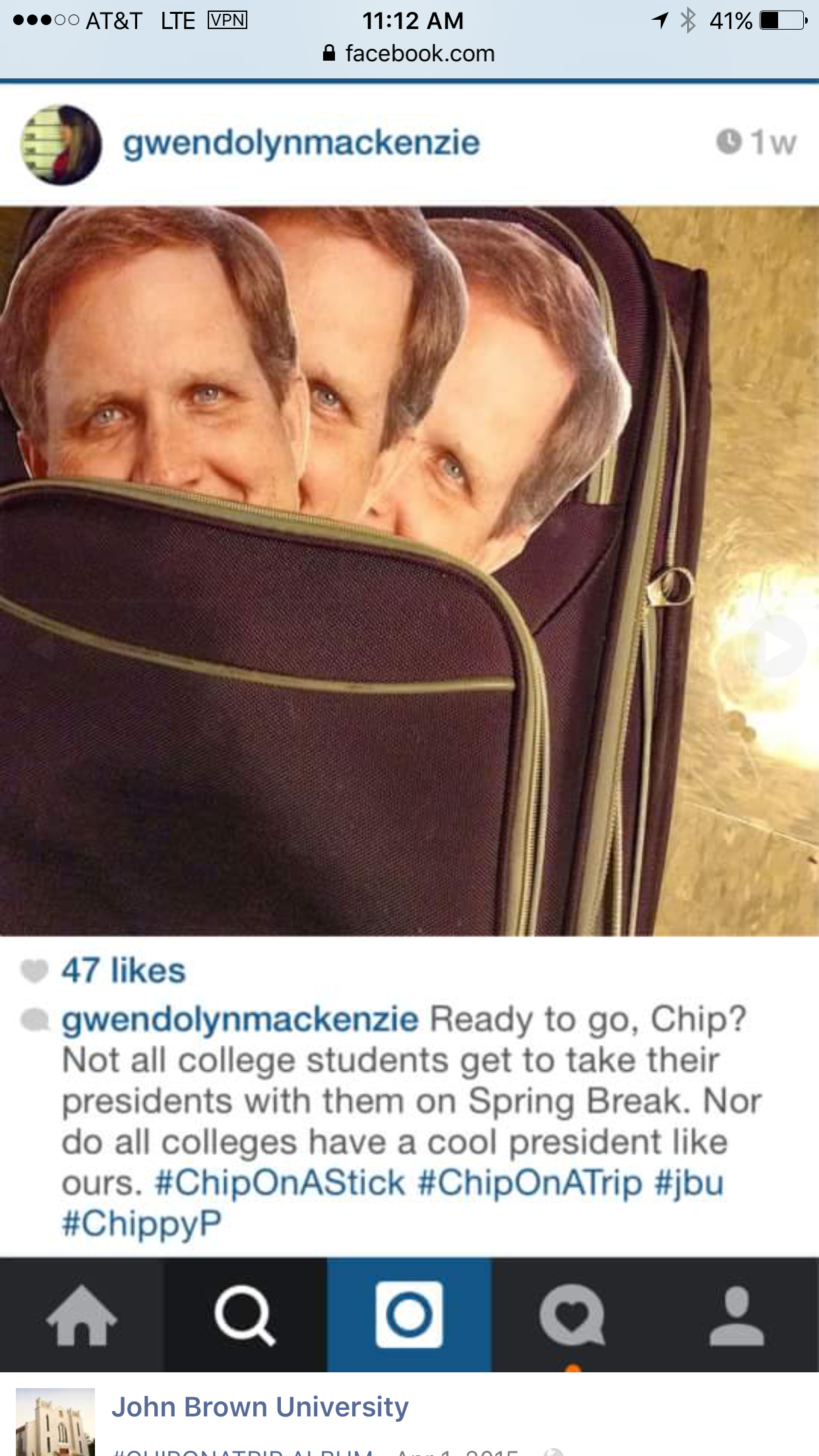
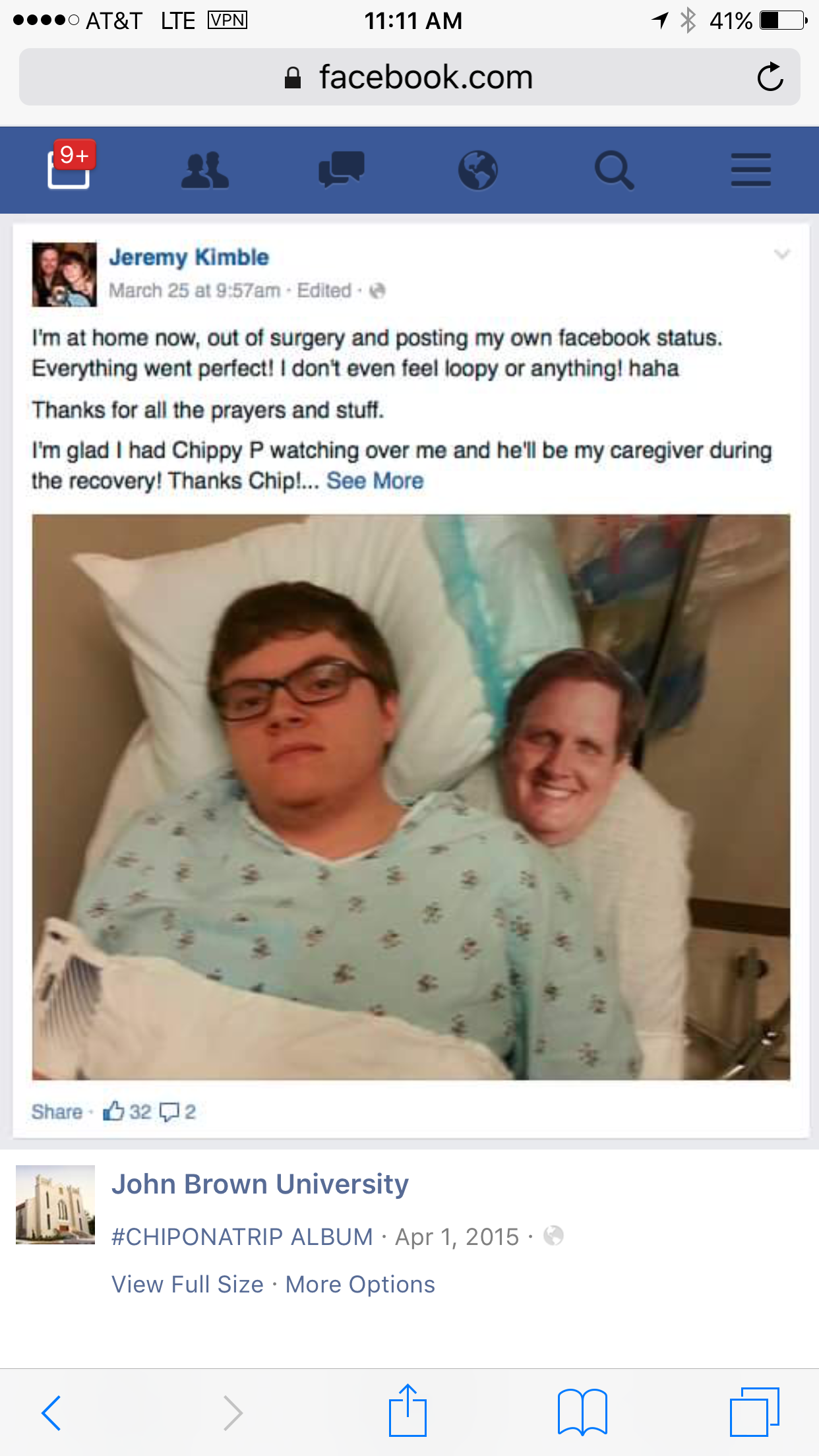
Last Spring Break, Dr. Pollard’s face was printed and pasted on sticks so that students could take him on vacation.

“This is like a big hug,” Brandon commented in amazement, remembering the sink-or-swim introduction to our big state university. (Which we both loved, by the way. But oh, the allure of a small, liberal arts college. They don’t have everything, but what they do have, they do very, very well.)
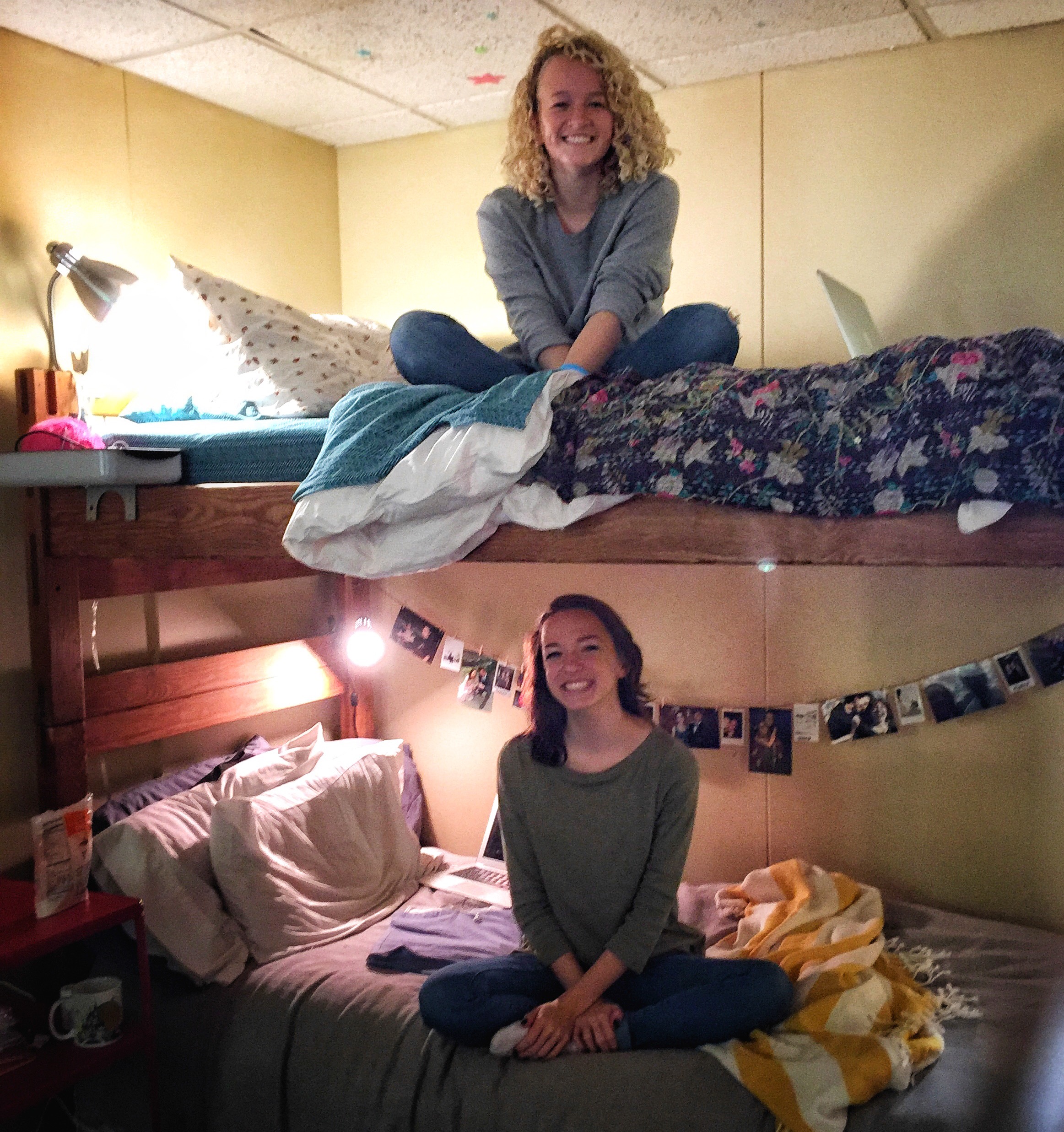
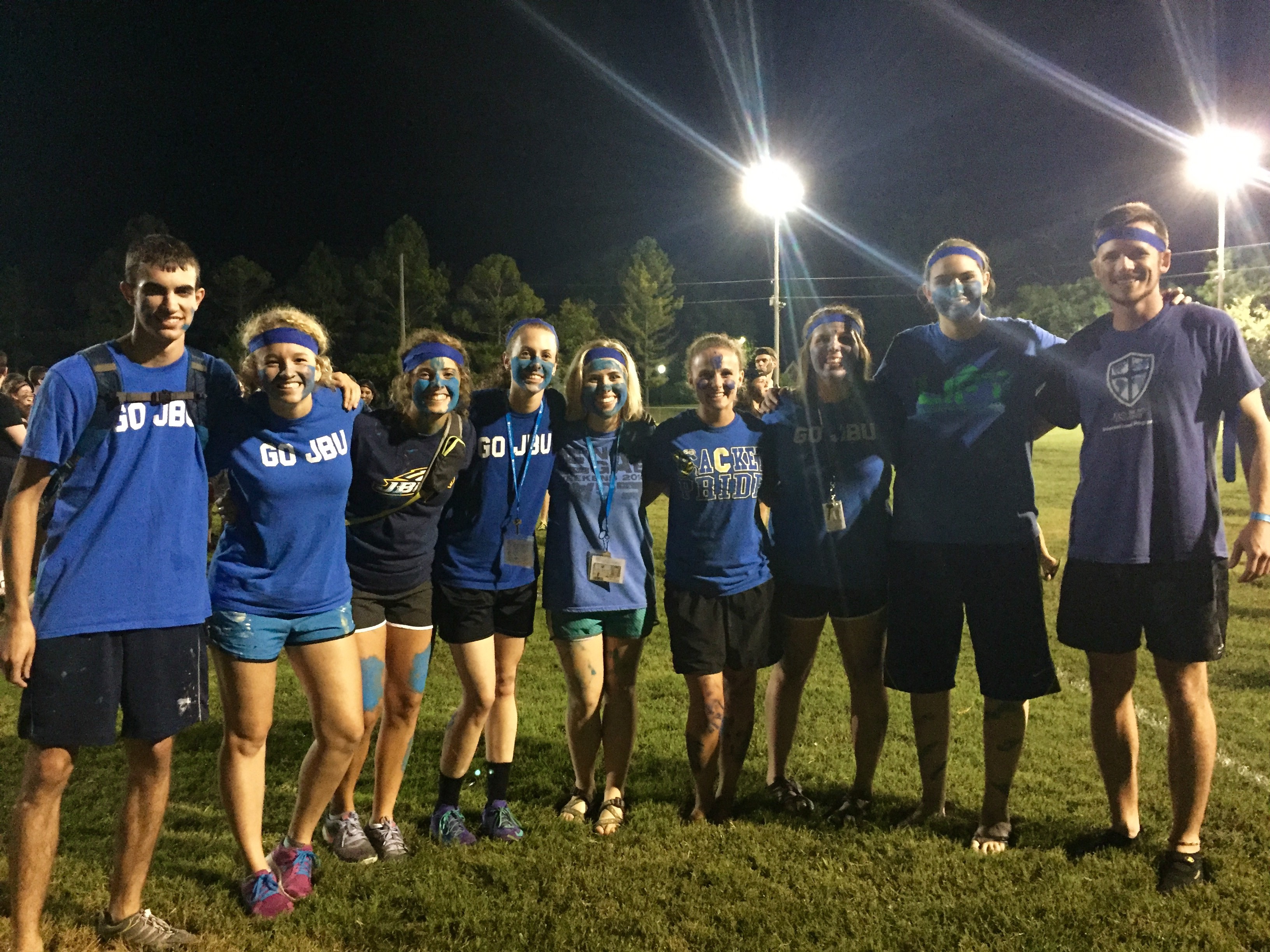
I went to bed that first night after drop-off reasonably pleased. Getting Jane settled had been a happy whirlwind. But about 4 A.M., I awoke again. Jane and her roommate, Grace, had bunked their beds, and Jane took the top. Just before we left her room, I noticed there was no guardrail for the top bunk like the ones we have at home. I lay awake, sure that Jane had fallen from her bed. Was she on the cold floor, right now, paralyzed or dead? Perhaps she was minutes from disaster, and if I texted a warning now, I could prevent the fall? Or what if my text startled her and caused her to fall? Now I was paralyzed. I poked at Brandon, who was snoring contently. He listened to my concerns with genuine sympathy, I think, but he really was very groggy. That left me with only God to appeal to. God, who I know loves Jane and me, but who also seems to work important growth through the very terrors I try so hard to avoid. Tricky. Finally, I went back to sleep with Monday’s handwriting assignment, which I’d given Georgia (cursive) and Nan (print), running through my brain: I will both lay me down in peace, and sleep: for thou, LORD, only makest me dwell in safety. It’s a psalm of David.

Feeding the campus deer, Doug. I posted a photo of Doug and Jane on Instagram, and some folks thought Doug was stuffed. Doug is alive and well, patrolling the campus. He’s also featured on a series of tshirts by a local screen printer.
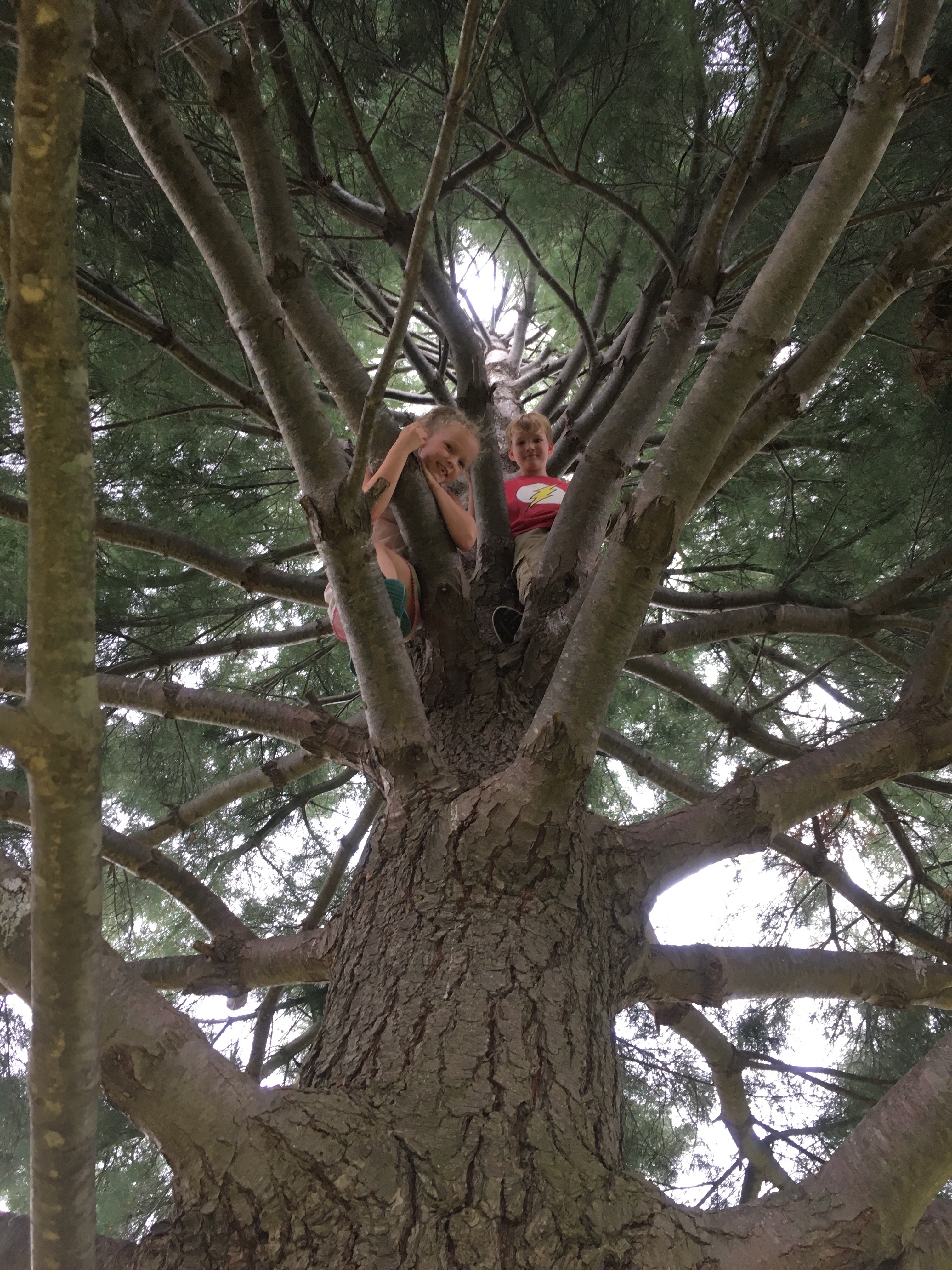
Pete approved of the excellent tree-climbing possibilities at JBU.


“Our” inn at the springs
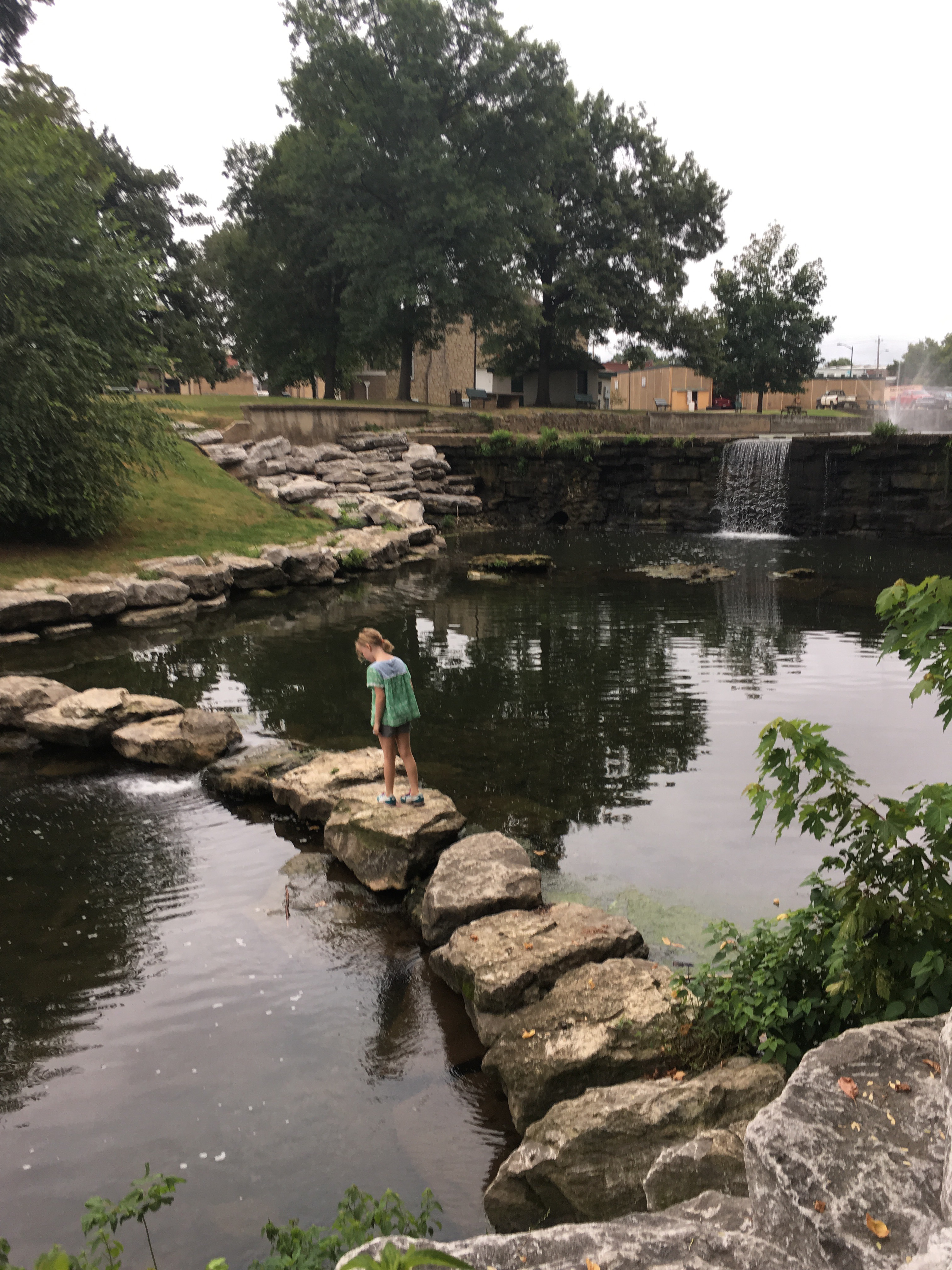

All the younger kids liked Siloam Springs. Nan, especially. As soon as she got out of the car, she announced, “Is this it? I LOVE it. I’m definitely going to college here.” I’m choosing to dwell on the cuteness, rather than the possible reality, of this statement for now.
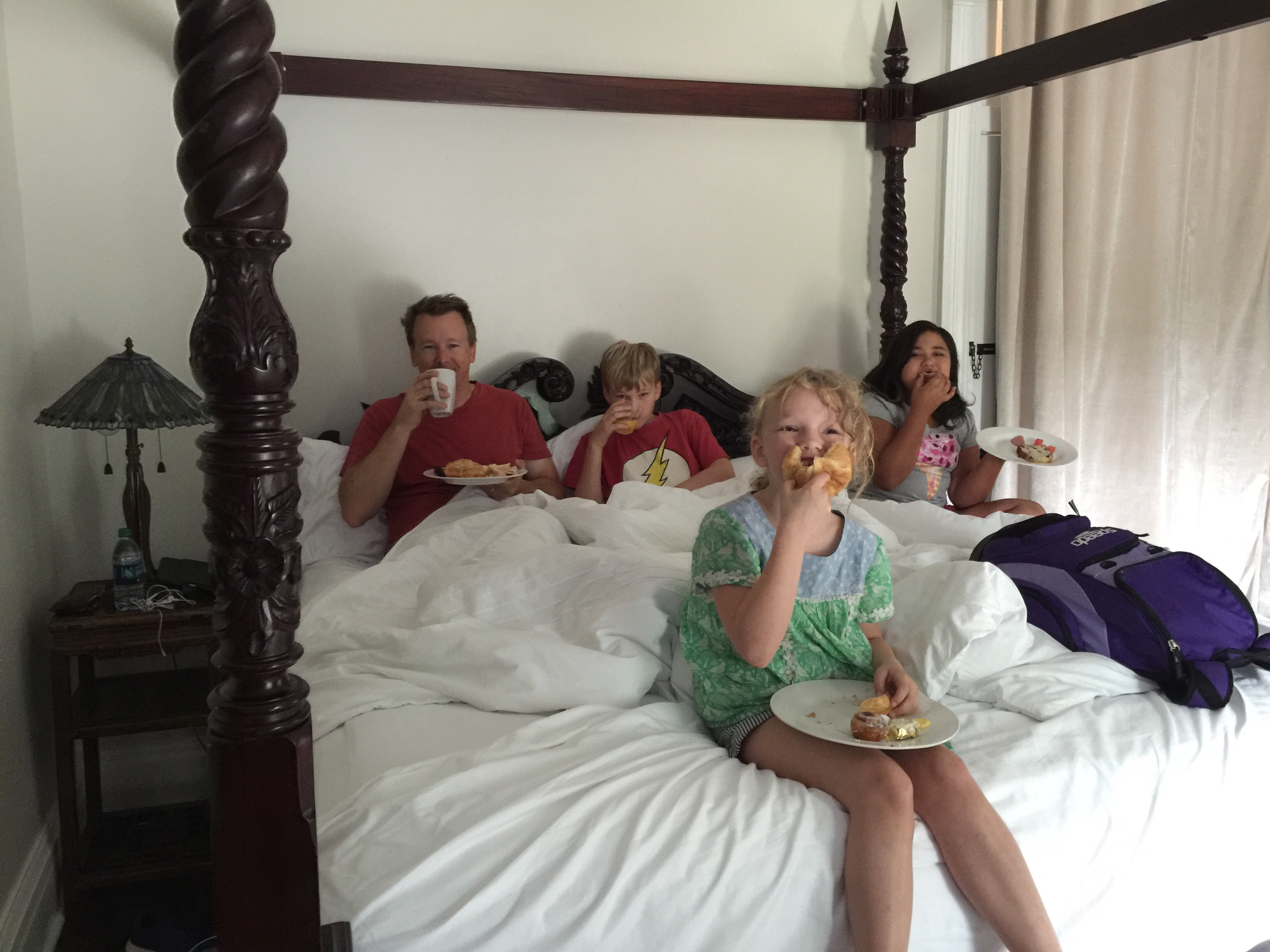
In typical Mulkey fashion, we were so busy enjoying our inn room that we missed a couple of parent events, one of which instructed parents that it was now time to leave. Oops.
Back in Lubbock the next evening, I stood in the doorway of Jane’s room, which was soon to be overtaken by eager brothers who’ve been (in their opinions) stacked like sardines in one room for twelve years. A low moan rose out of my belly, one that’s only familiar from the few times in my life when death has visited me closely, and I began to cry. Should I be this overwrought? I wasn’t, like David, being called to entrust my child to God in death, merely to sleep peacefully in Texas while she sleeps in Arkansas. Yet, I couldn’t shake free of fear.
I watched nesting birds fly in and out of the eaves outside Jane’s window. I hate fledgling time. It makes me terribly uncomfortable watching all those ill-equipped babies hopping around on the ground and flapping weak, uncertain wings. I keep my cat on house arrest, and I wonder how the bird mothers can push them out of the nest. I know, as well as their mamas do, that they can’t survive in the nest forever. They have to fly.
How to cope with the sadness that has inevitably arrived, despite my 10,000-mile long escape plan? Then David arose from the earth, and washed, and anointed himself, and changed his apparel, and came into the house of the LORD, and worshiped: then he came to his own house; and when he required, they set bread before him, and he did eat. (2 Samuel 12)
In his welcome to students and parents, Dr. Pollard addressed the anxieties of leaving home and starting something new. “Be at peace,” he urged, “You are a beloved child of God.” These are not idle words; Dr. Pollard, like so many other parents, has actually walked David’s road: I shall go to him, but he shall not return to me.
So, I will wash my face and worship. I’ll teach math and reading and go to swim team practice and football games in Texas. Jane will wash her face and worship. She will go to class and work and make friends in Arkansas. We will be at peace. We are beloved children of God.

If you’d like to know more about Jane’s college, John Brown University, here’s a link to an article written by its president, Dr. Charles Pollard:
and some fun youtube videos:
 On the Road with the Archangel