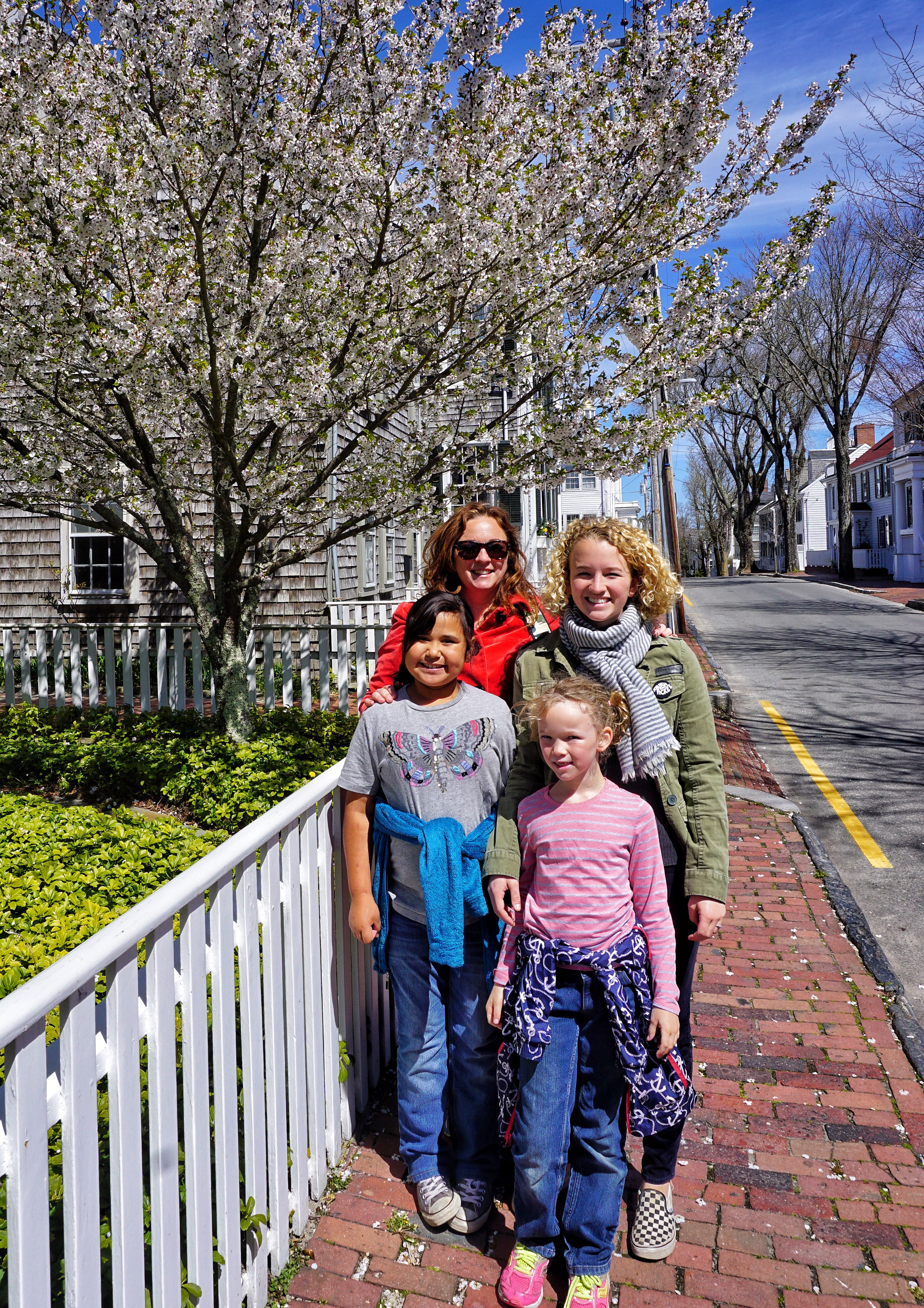
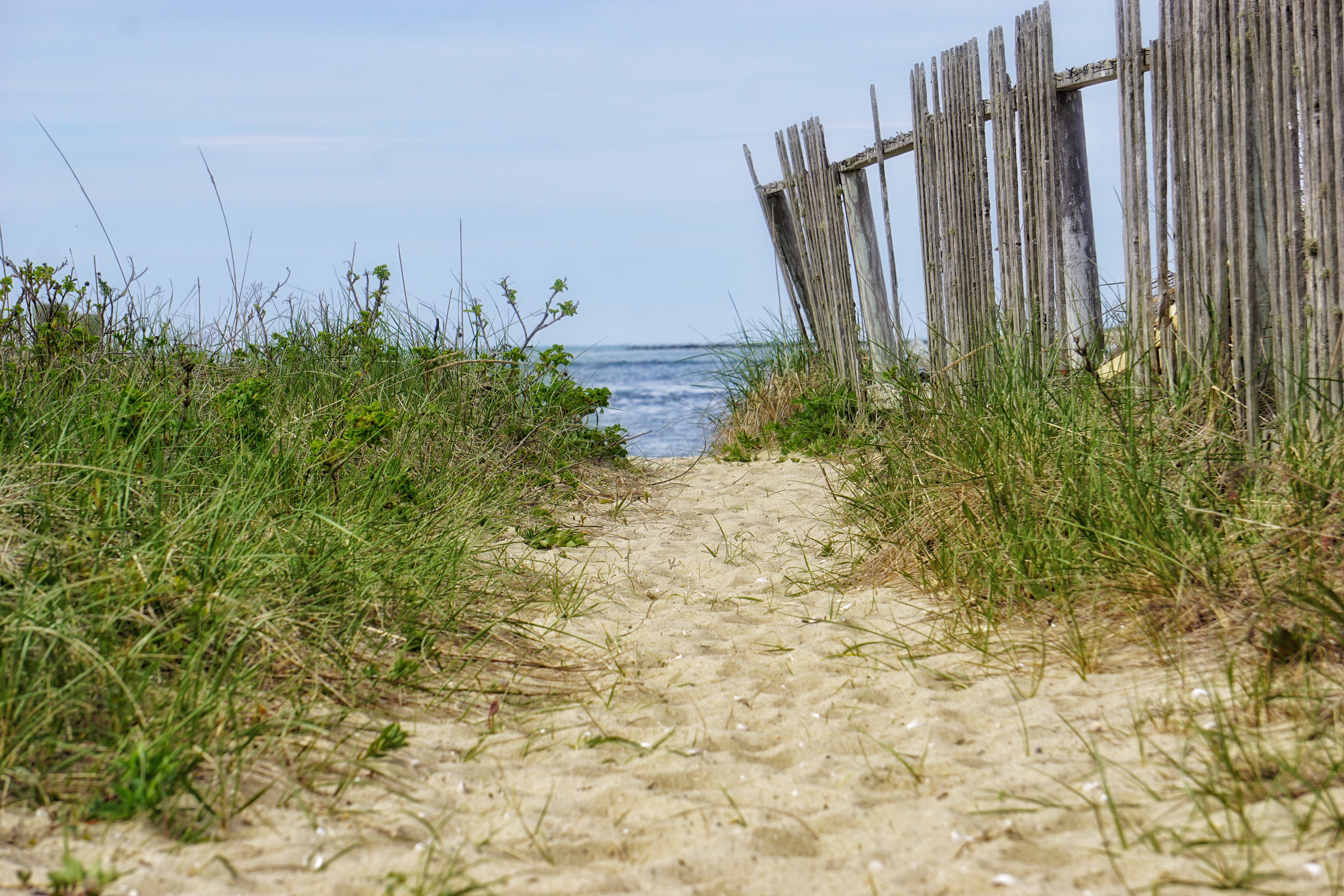
For most of our time in New England, the weather was chilly, gray, and damp. It set an appropriately foreboding mood for listening to books like Moby Dick, The House of Seven Gables, and The Witch of Blackbird Pond, as we drove through Massachusetts. However, the clouds parted for a gloriously picturesque day on Nantucket Island.


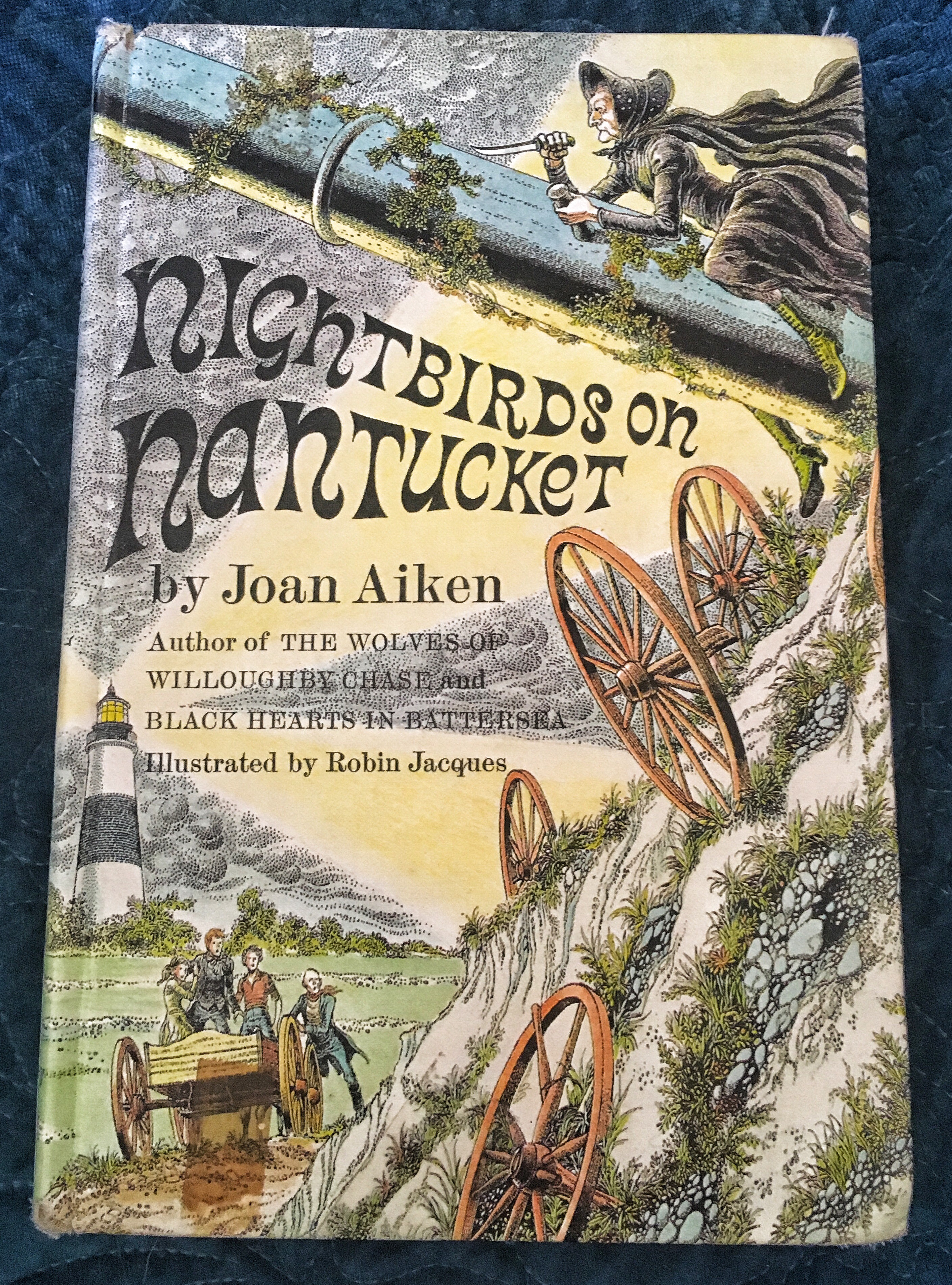
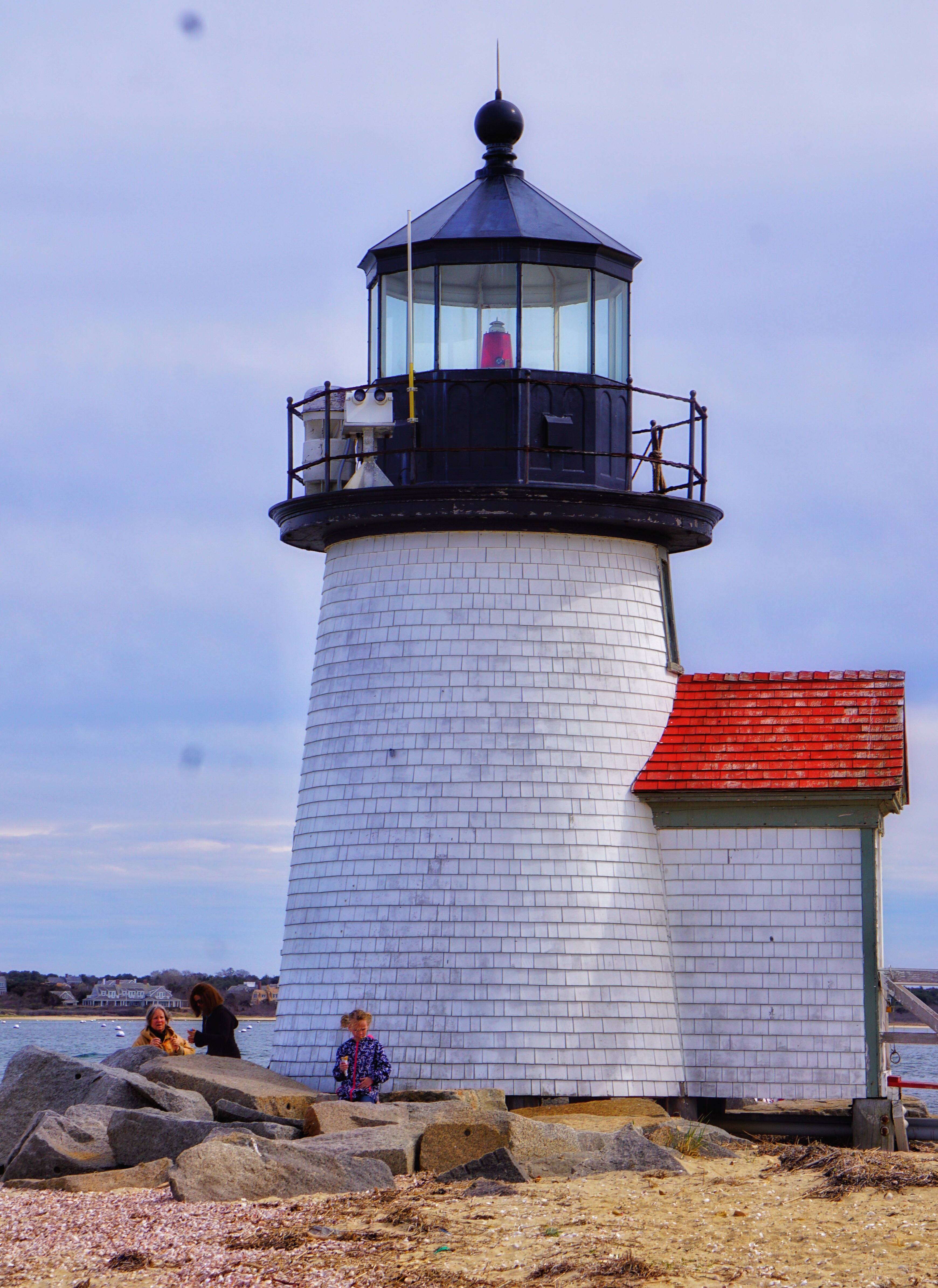 I’ve wanted to visit Nantucket ever since I read Joan Aiken’s Nightbirds on Nantucket, a delightfully cockeyed adventure tale, full of winks and nods to Mr. Melville’s big fish story. The book’s plucky British heroine, Dido Twite, is rescued by an off-course Nantucket whaling ship skippered by a Quaker captain, who is obsessively chasing a pink whale. While stranded on Nantucket, Dido uncovers a Hanoverian plot to blow up St James’s Palace by firing an enormous cannon across the Atlantic, the side-effect of which would push Nantucket Island into New York harbor.
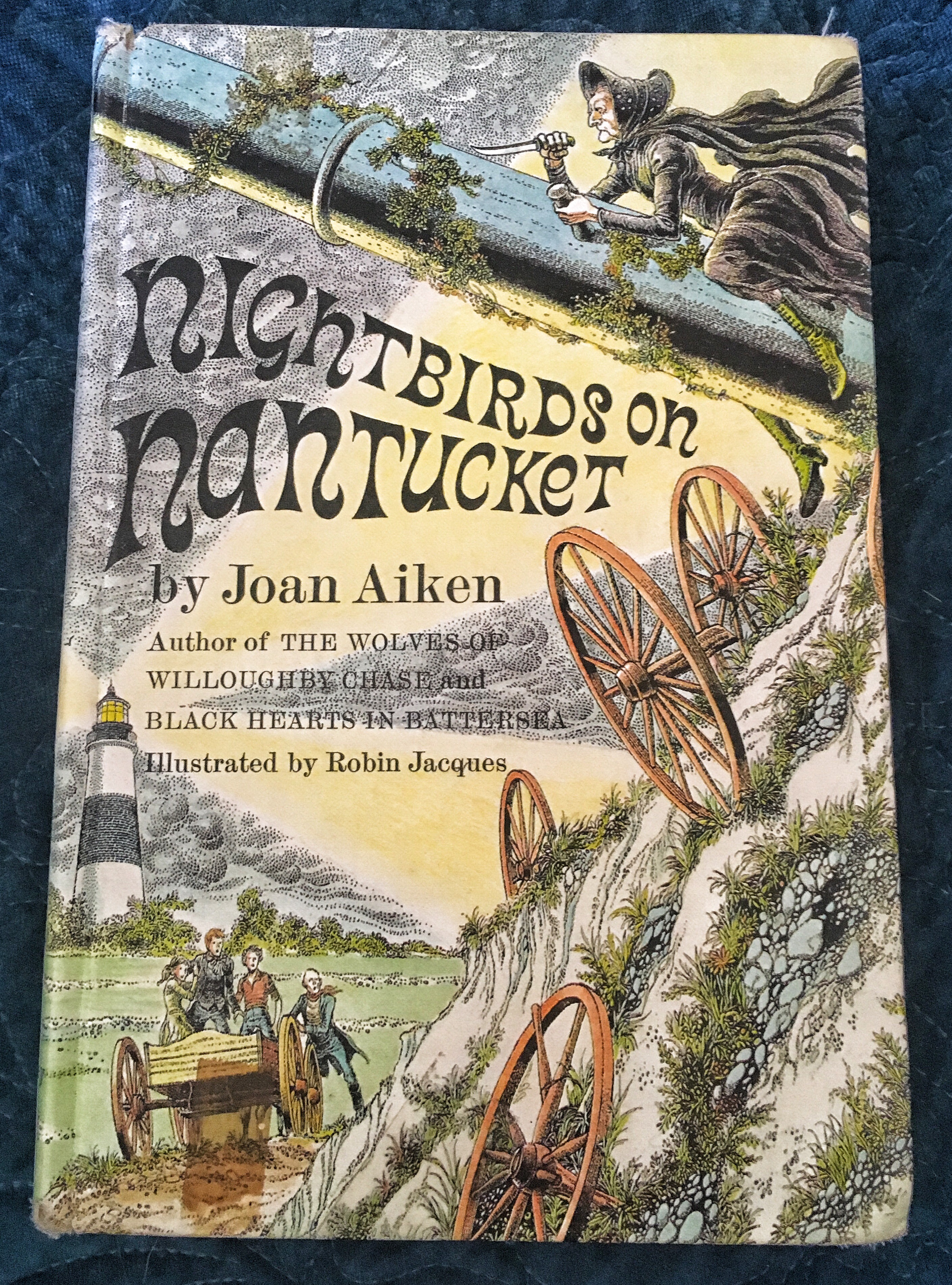
Nightbirds was the first real chapter book I read on my own. It was also the first book given to me by another woman—in this case a young schoolteacher—with the urgent instructions: “You have to read this; you’ll love it.” It set me on a search for my own elusive quarry, more Joan Aiken stories. I scoured the card catalogs of every elementary, middle school, junior high and city library of the small South Georgia towns in which we lived in the 1980s, here and there finding a new volume in the loose series of Dido books. I learned that Aiken’s father was Conrad Aiken, a Georgia poet laureate, and my feelings of kinship grew. When I exhausted all of my library resources, I wrote an admiring letter to the author asking for a list of her other titles. I addressed it: Joan Aiken, Sussex, England. She answered my letter and included a long list of book titles. I was in my thirties, when, with the help of the internet, I found the last unread title, but I’ve never given up the ritual of searching Aiken, J FIC, as soon as I visit a new library. Aiken died in 2006, but her daughter recorded an introduction to a recent audiobook version of The Wolves of Willoughby Chase, Aiken’s best known children’s story. She says her mother did not attempt fiction writing until her forties, after a career in journalism, followed by child-rearing and the unexpected death of her husband. She worked on Wolves for ten years before it was published.
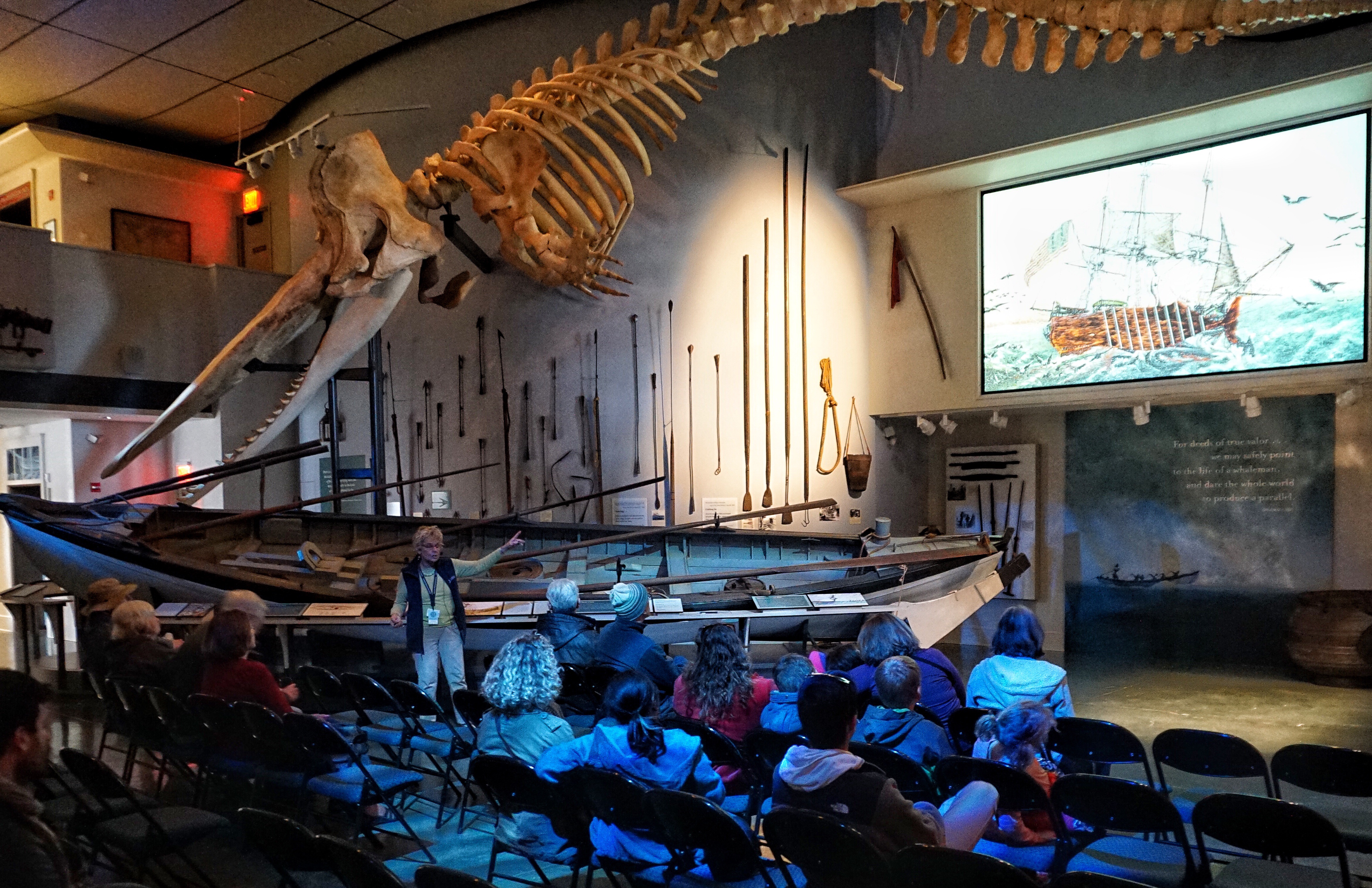
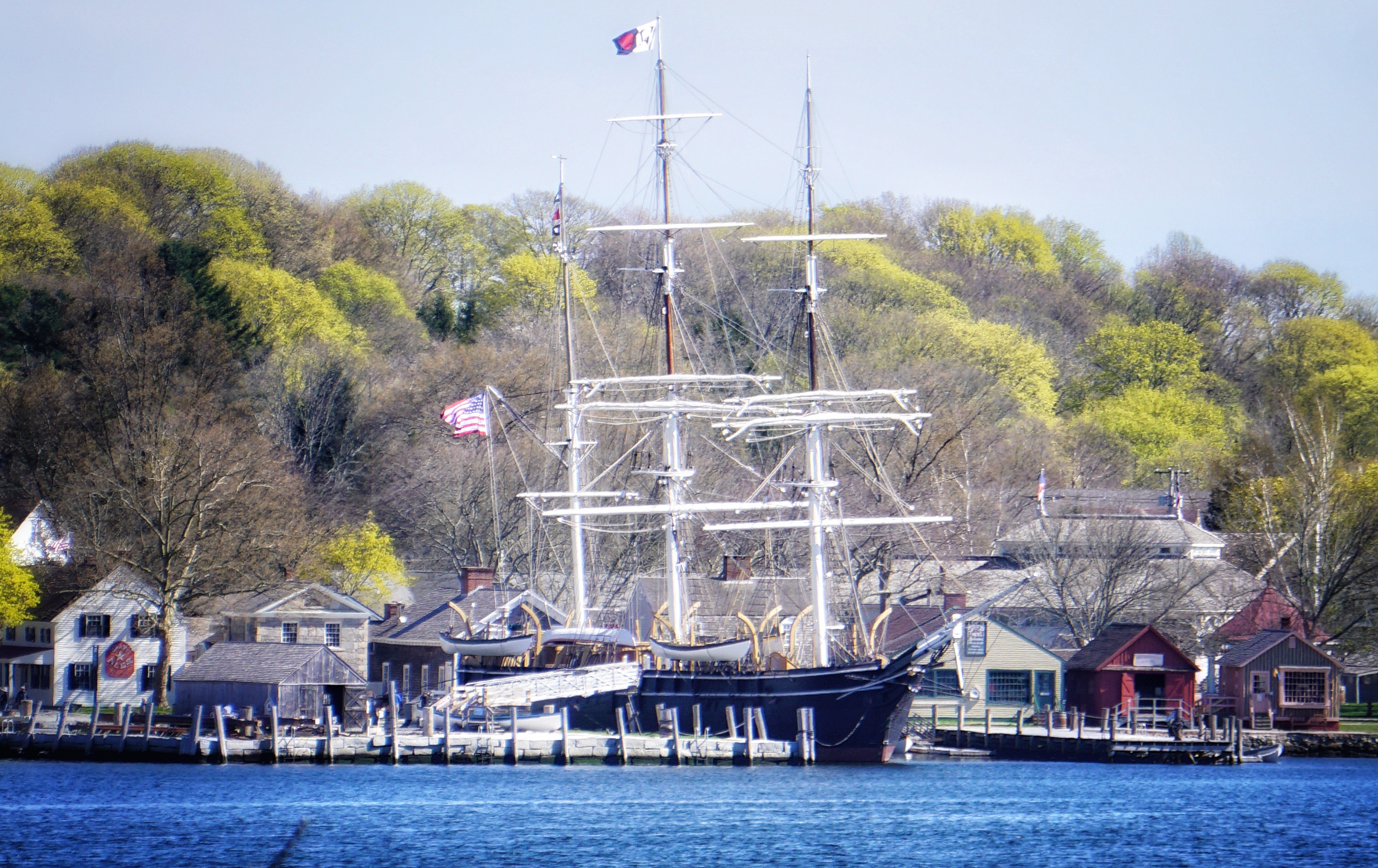
At the Nantucket Whaling Museum, we were horrified by tales of the doomed whale ship Essex; the tragedy supposedly inspired Moby Dick.
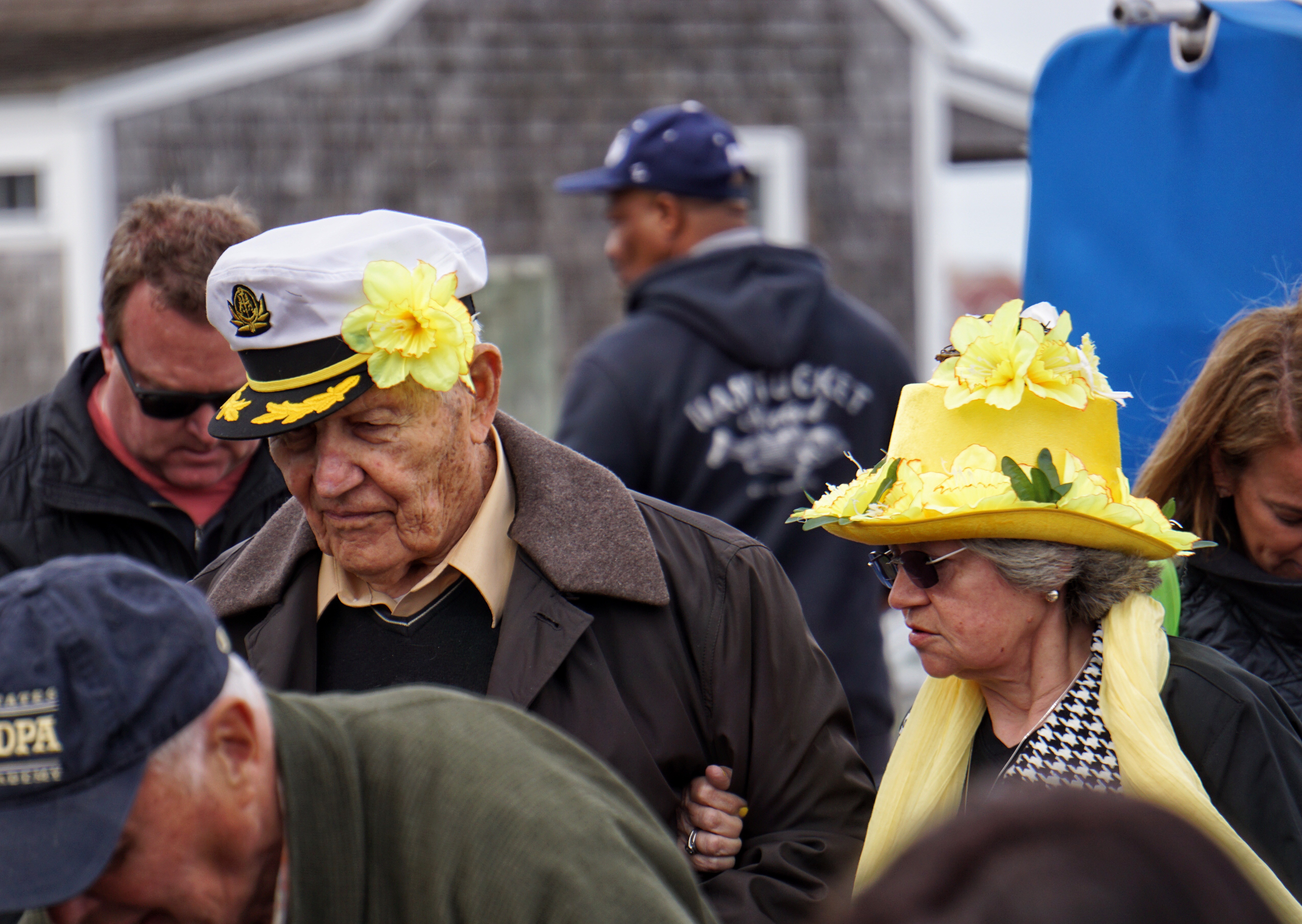 Visitors arriving by ferry for the annual Daffodil Festival.
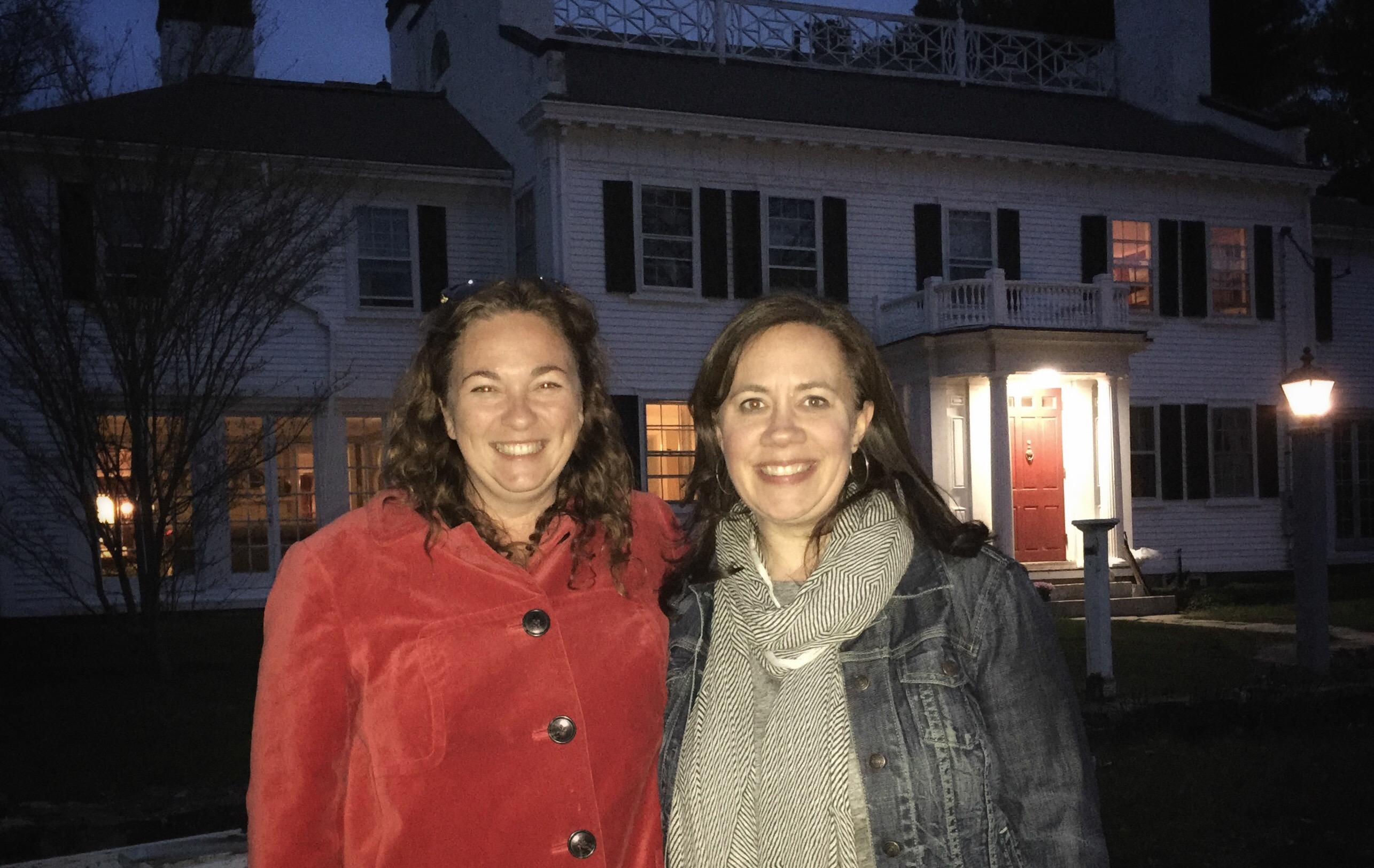 Outside Boston, we ate supper with a UGA friend, Mary Frances Giles. Mary Frances is a worker at one of the L’Abri study centers, and she gave us a tour of the Southborough campus. L’Abri, which means shelter, was established by Francis and Edith Shaeffer as a retreat for visitors wishing to study and consider their religious and philosophical beliefs. We loved wandering the beautiful old house and hearing about Mary Frances’s role there as a counselor, speaker, and hostess. Here’s a link to a Friday night lecture she recently presented:
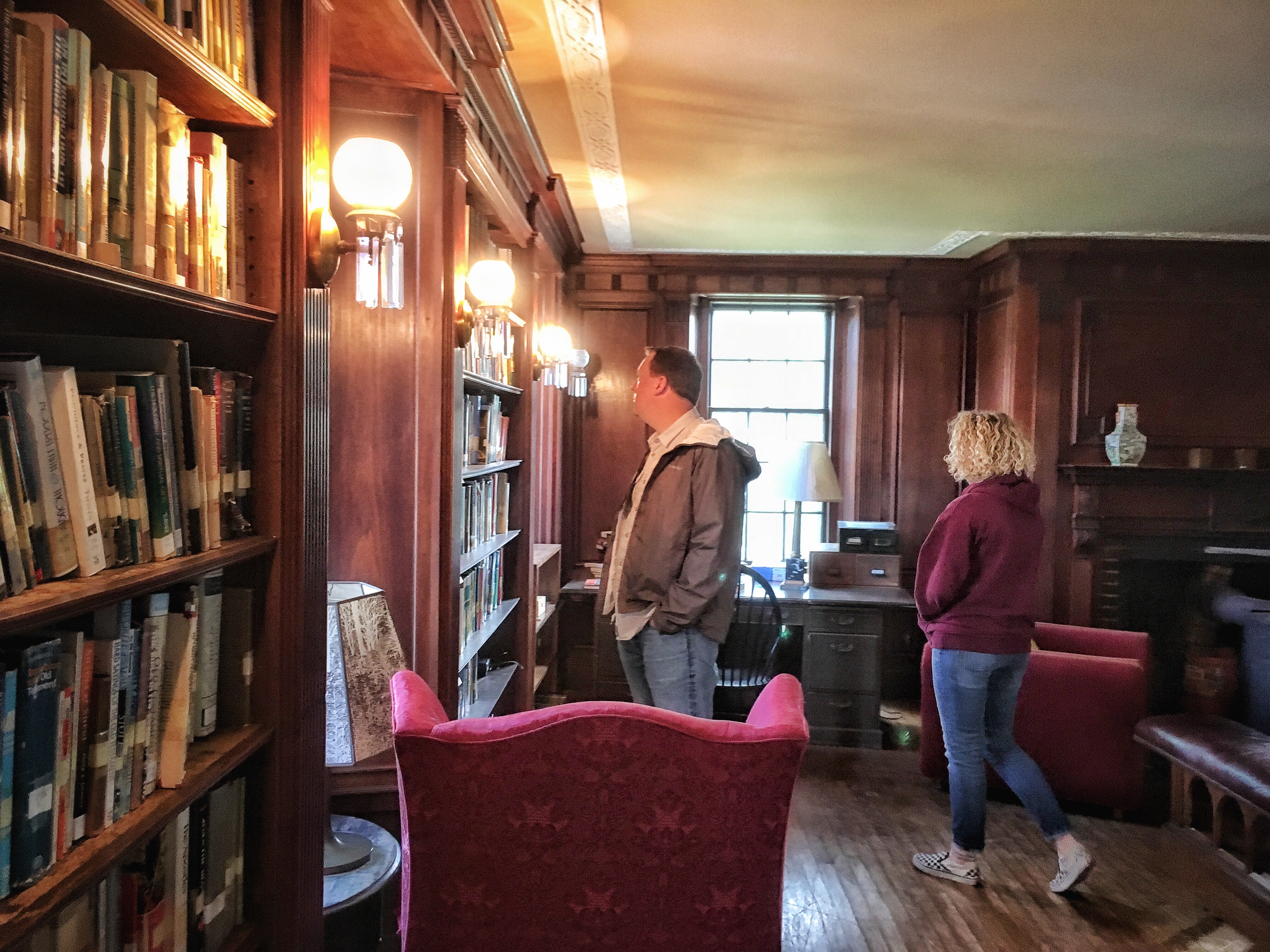 I didn’t know that visitors are not required to stay for a whole semester. As long as there is room in the house, anyone may study for as short a time period as a weekend. I was also surprised to learn that L’Abri study centers—9 worldwide–are still completely funded by unsolicited donations.
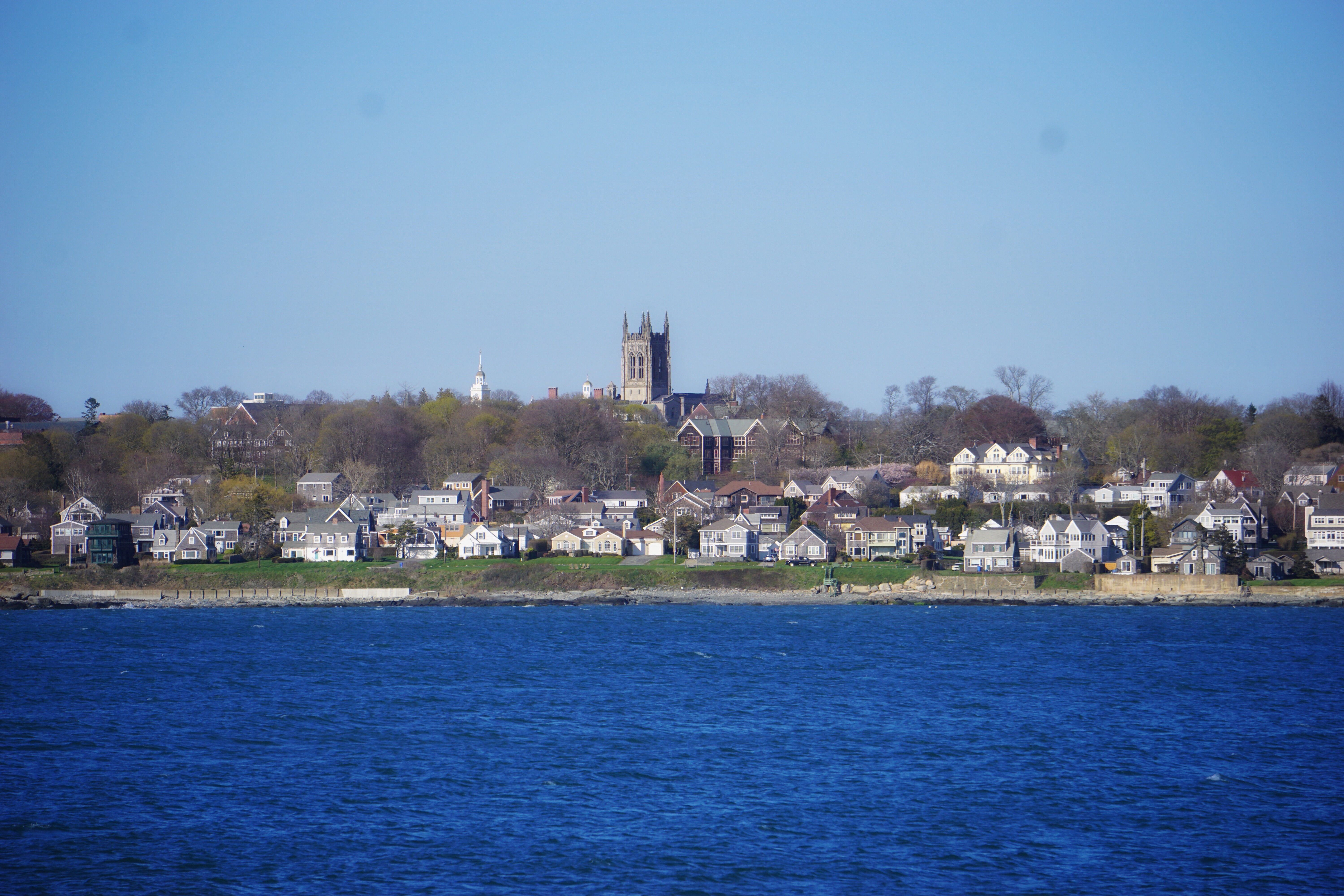 In route to MA, we stopped in Newport, RI to enjoy ocean and mansion views from the Cliff Walk.

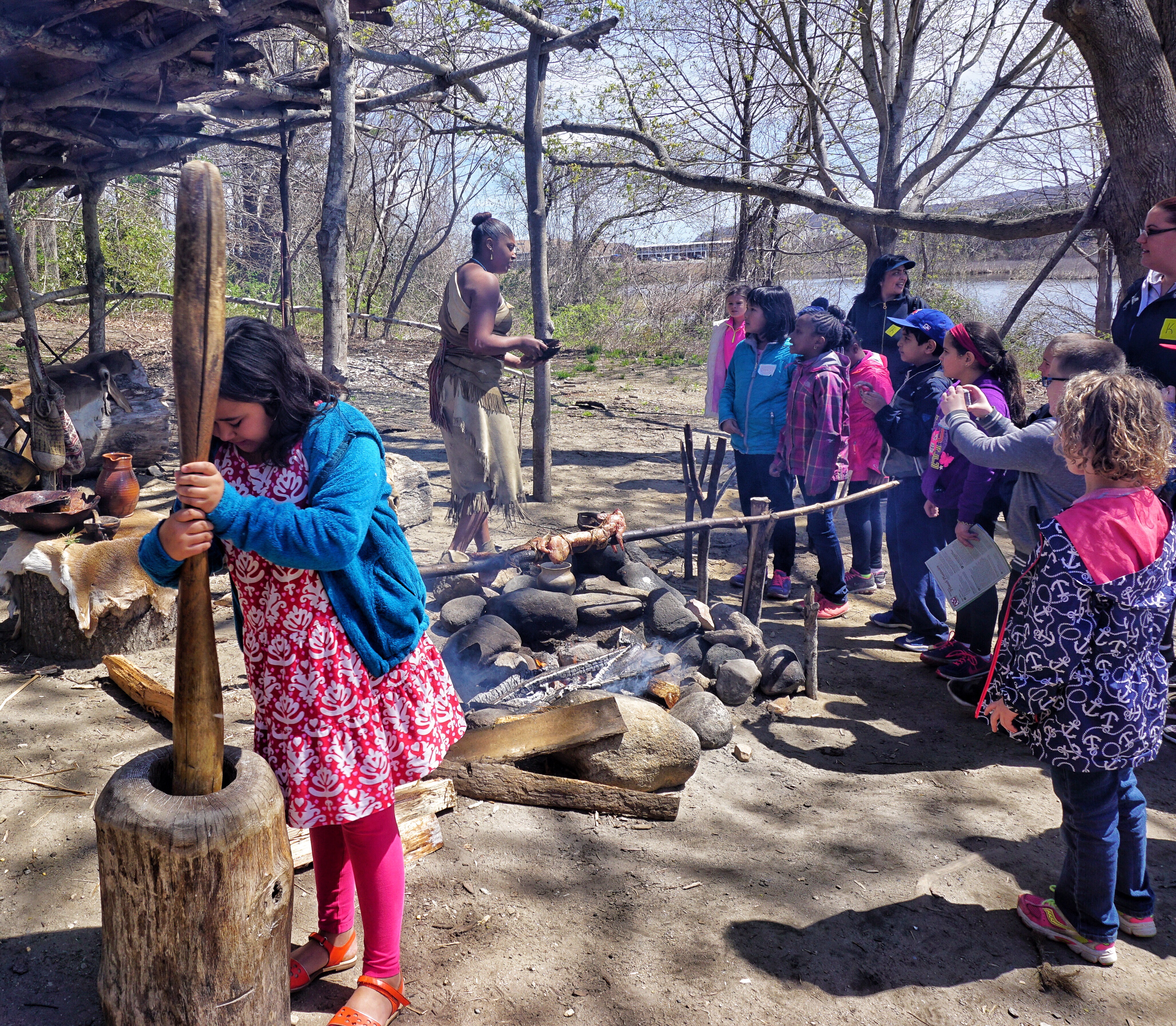 At the Wampanoag village in Plymouth, we learned about companion planting. Corn, bean, and squash seeds are planted in the same mound. The corn provides support for the bean vine and shade for the squash. The squash controls weeds, and the beans replenish soil nutrients.

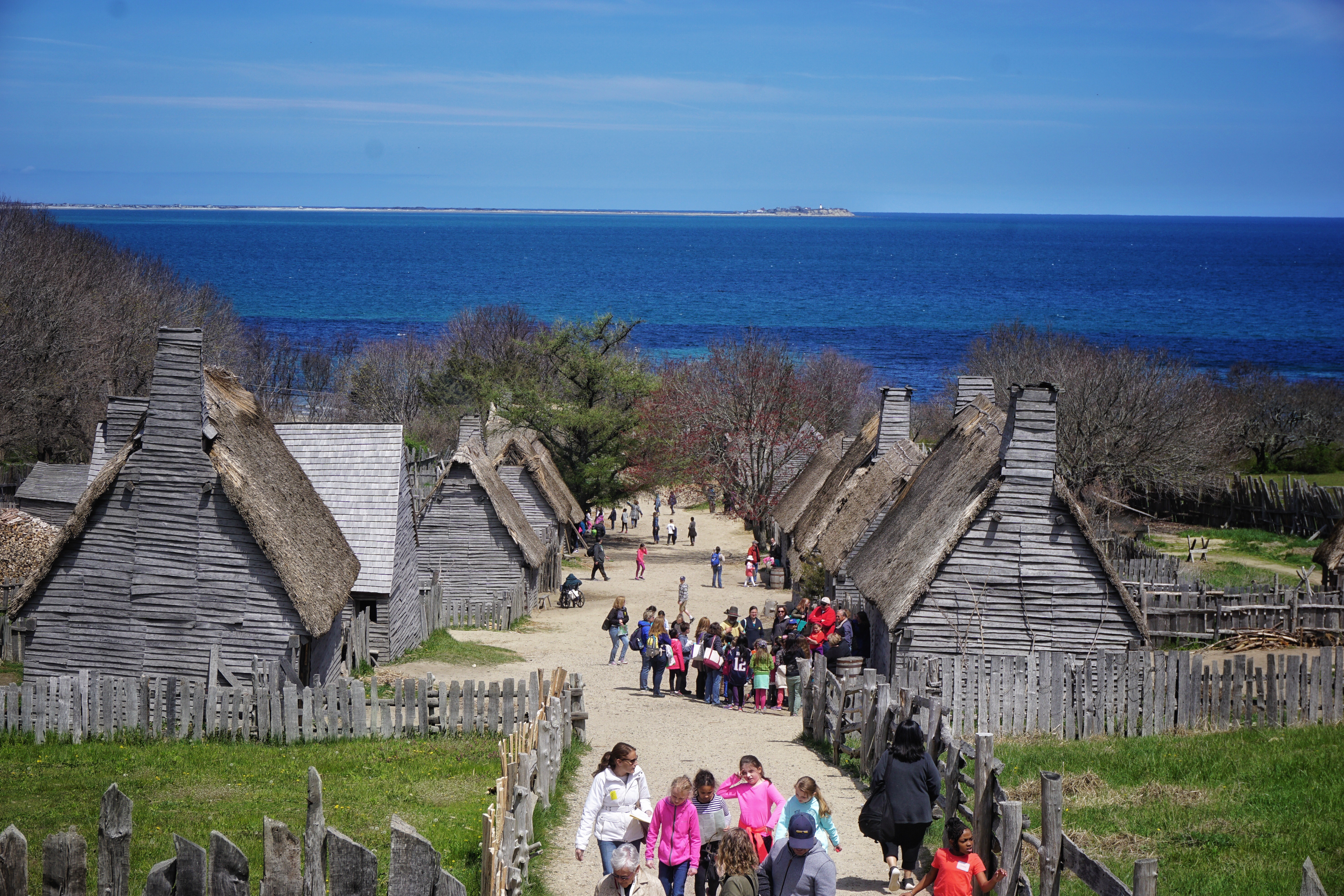
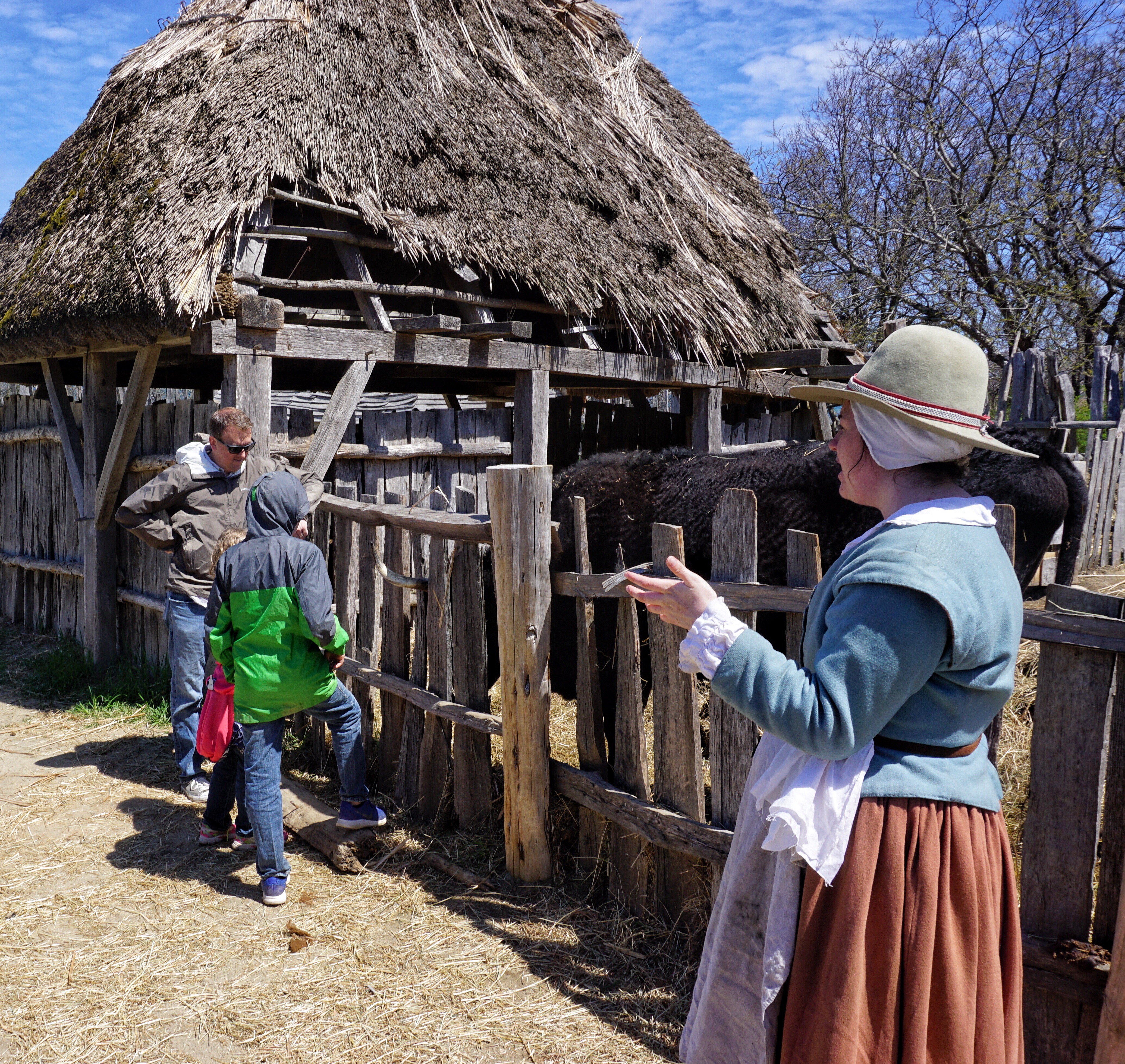
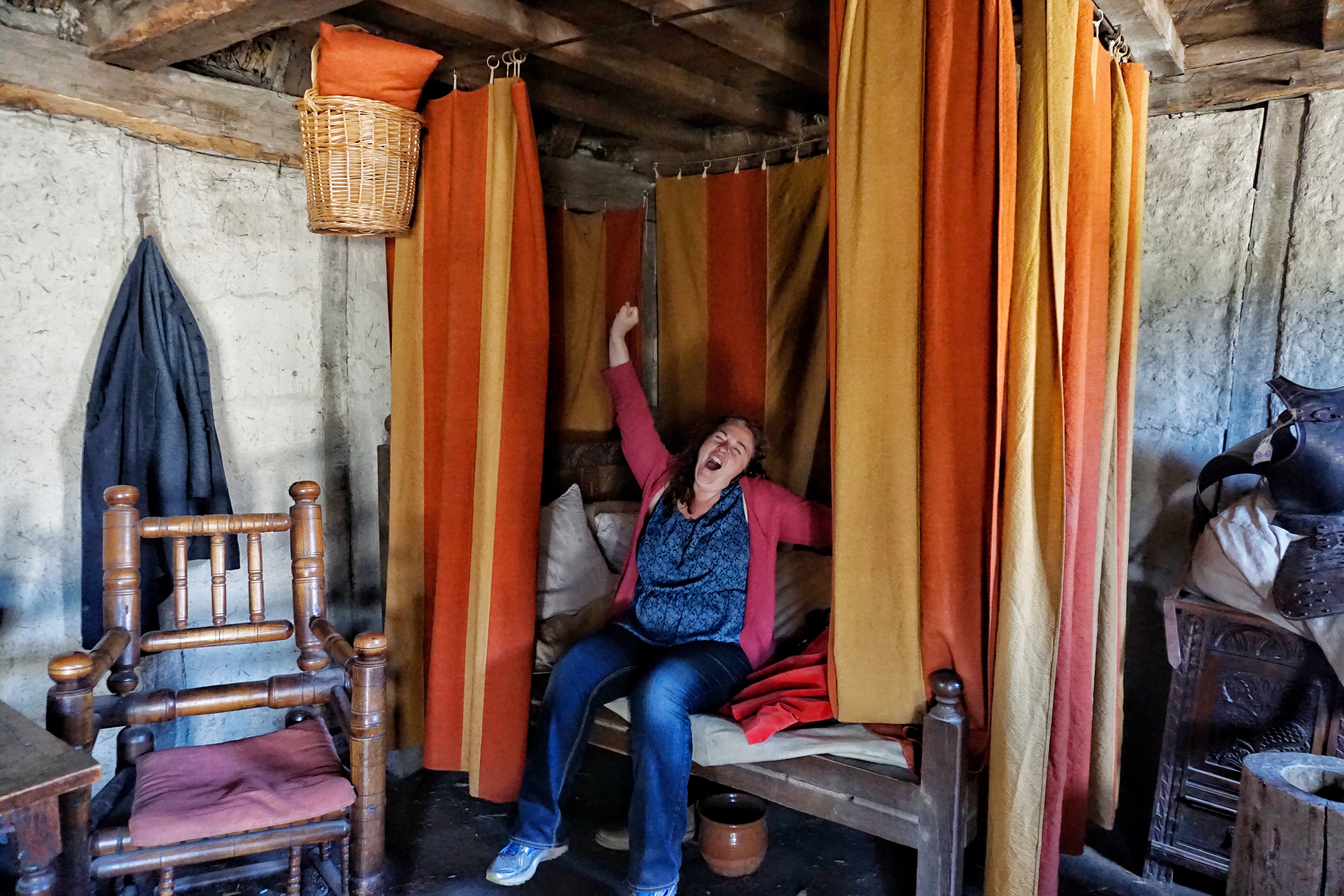
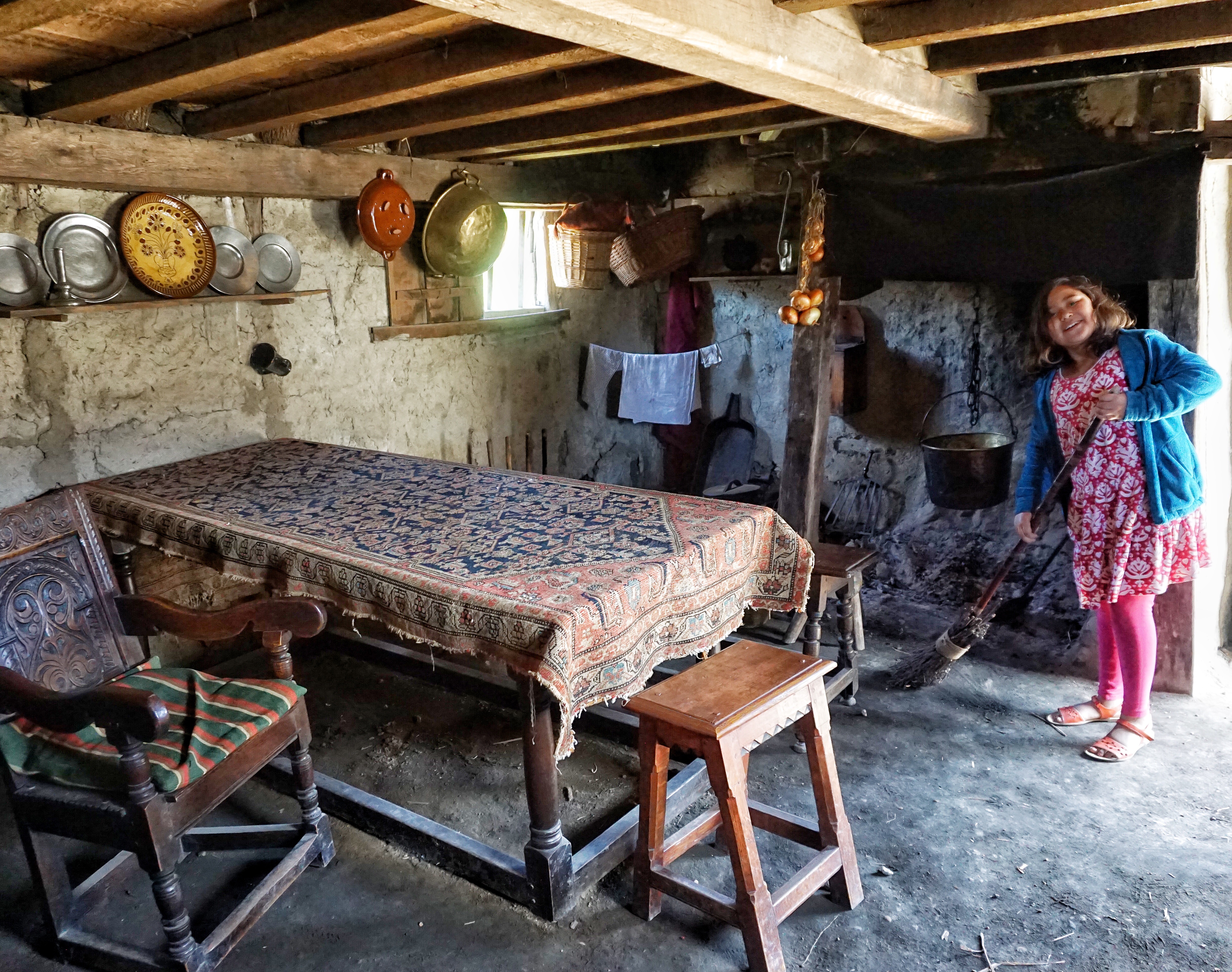
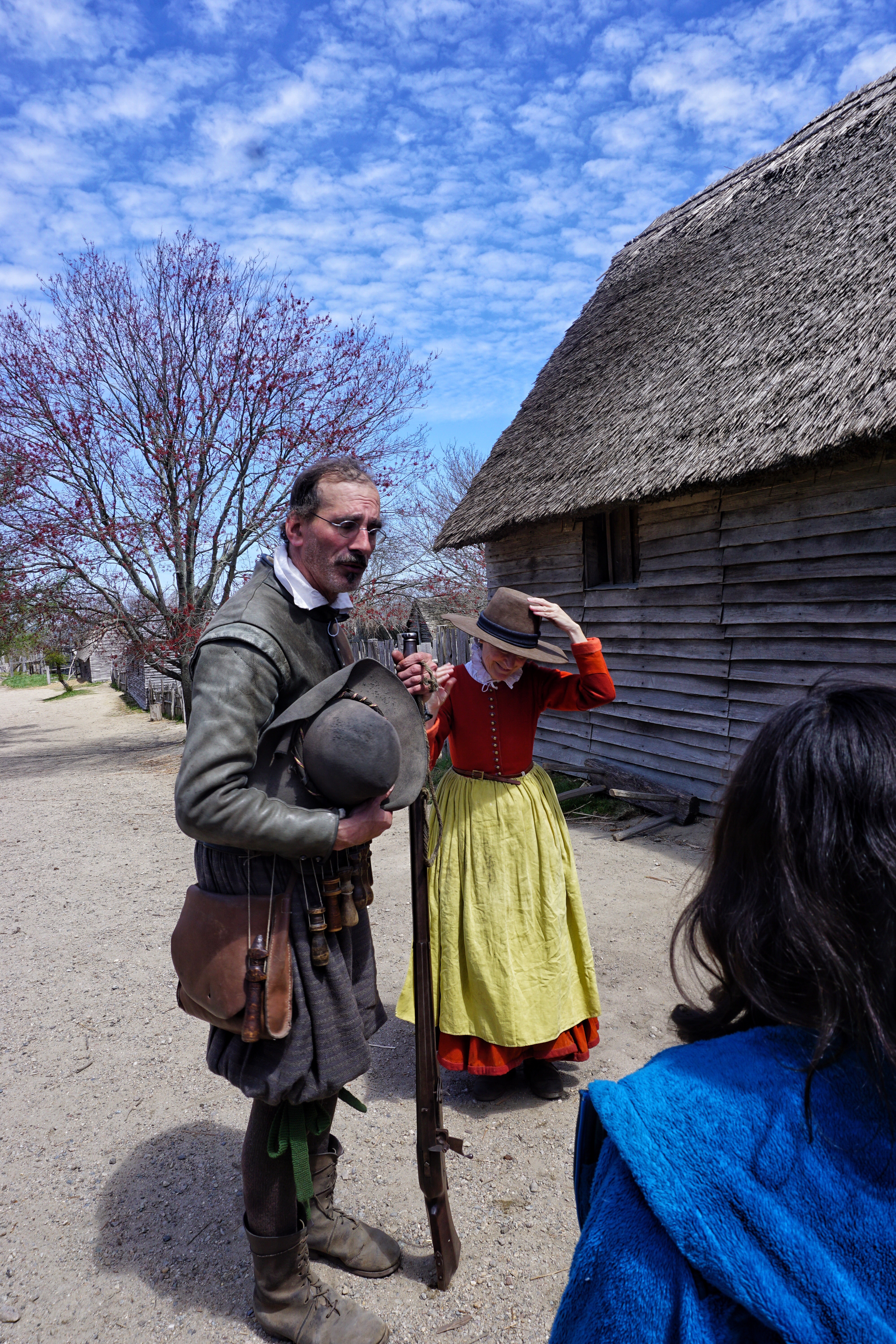
Plimoth Plantation was one of our favorite stops. It was fun to talk religion, politics, and farming with William Bradford and Miles Standish!
This house inspired the setting for The House of Seven Gables. (We only counted five, though.)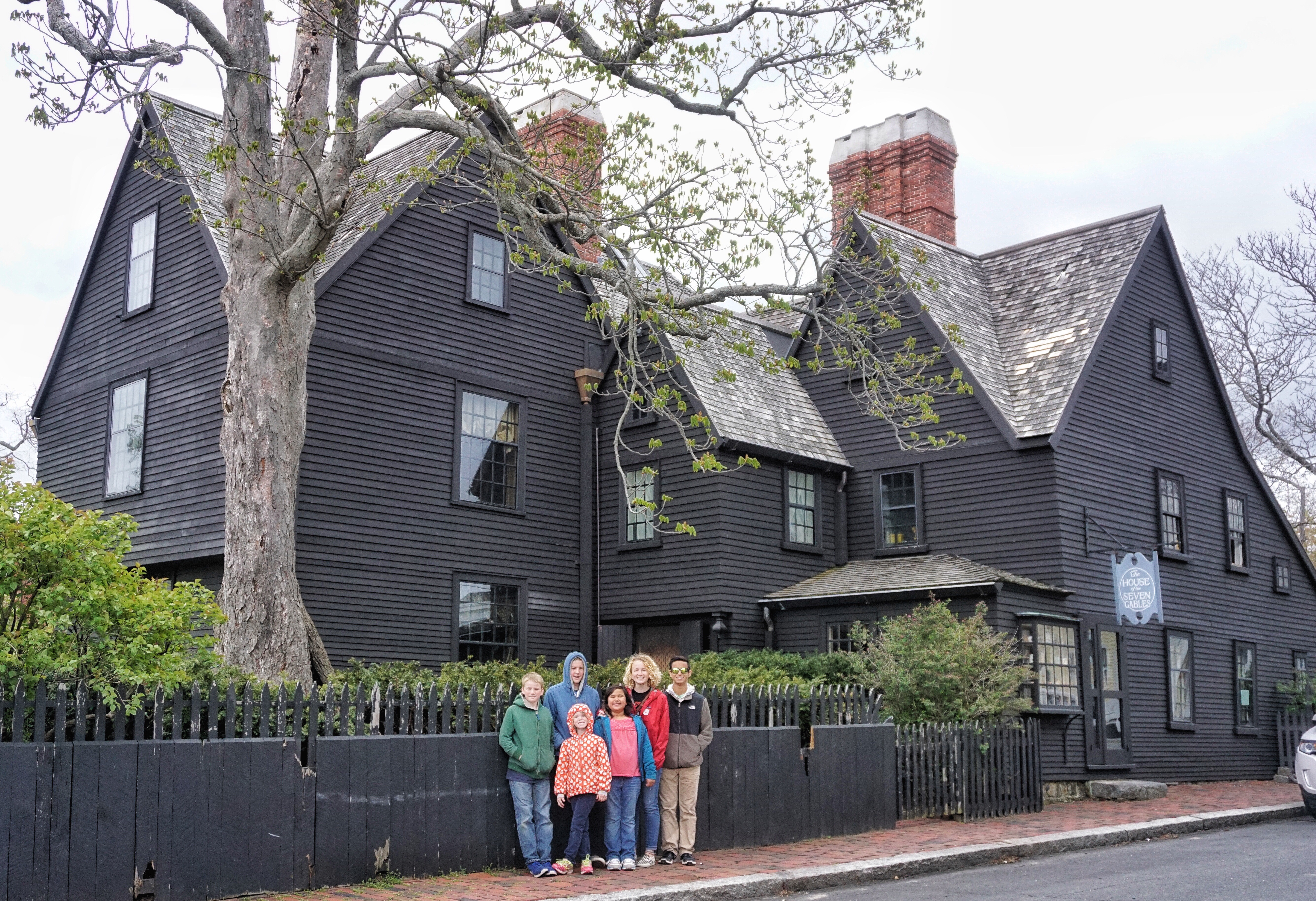
Here’s the custom house where Nathaniel Hawthorne wrote an angry diatribe against Salem in his introduction to The Scarlet Letter. He didn’t enjoy all the government bureaucracy, despite having won the job because his friend, James Polk, was elected president.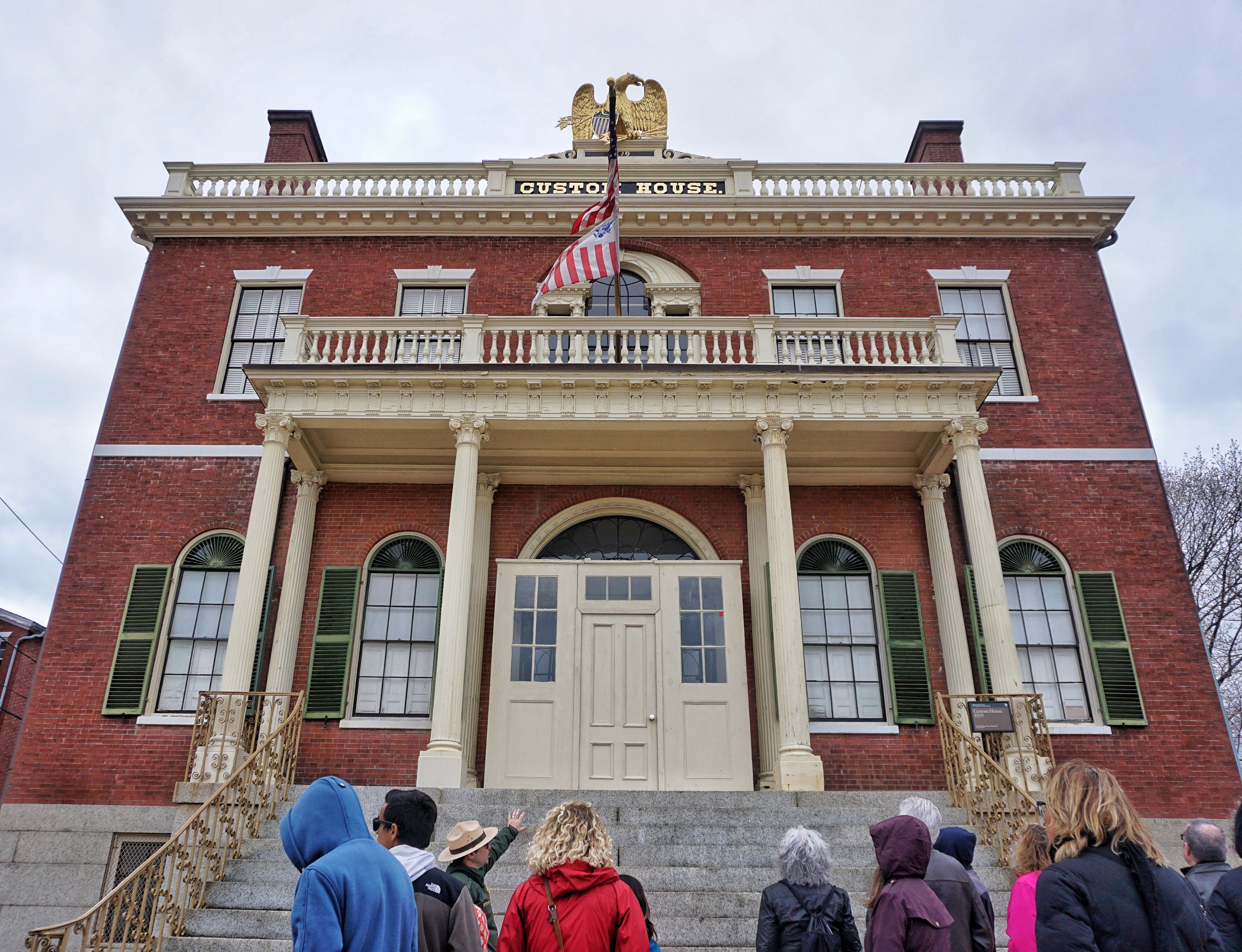
This is the narrow, winding stairway to our rooms in the former home of a scandalous sea captain, whose wife (a daughter of America’s first millionaire) paraded prostitutes into court to support her divorce case circa 1813.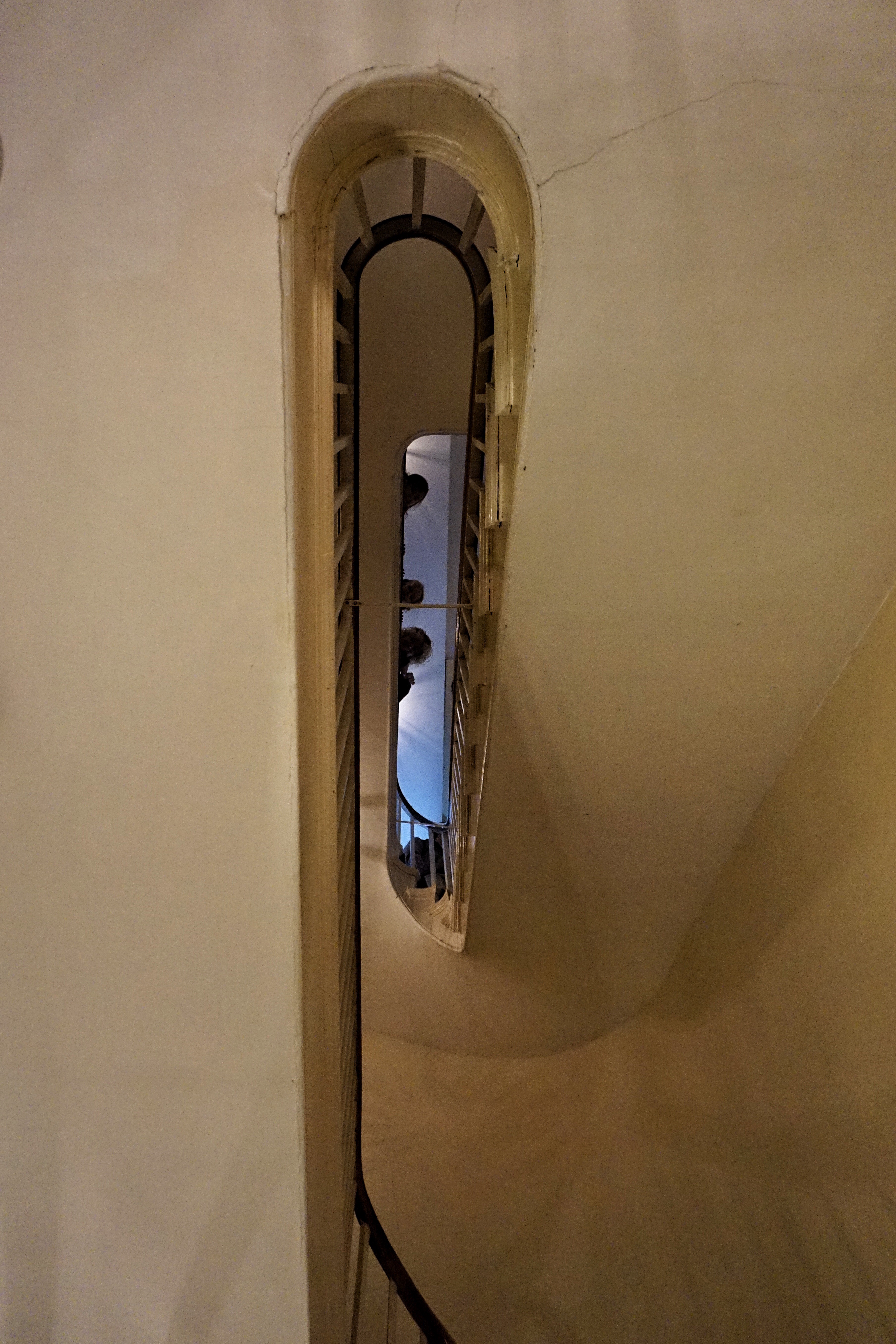
 Orchard House in Concord. The Alcotts encouraged daughter May (Amy in Little Women) to practice drawing on the walls of her bedroom. Her “doodles” are still on the walls, doors, and window trim.
Visitors leave pens and pencils at Louisa Mae Alcott’s grave on Authors’ Ridge in Sleepy Hollow cemetery.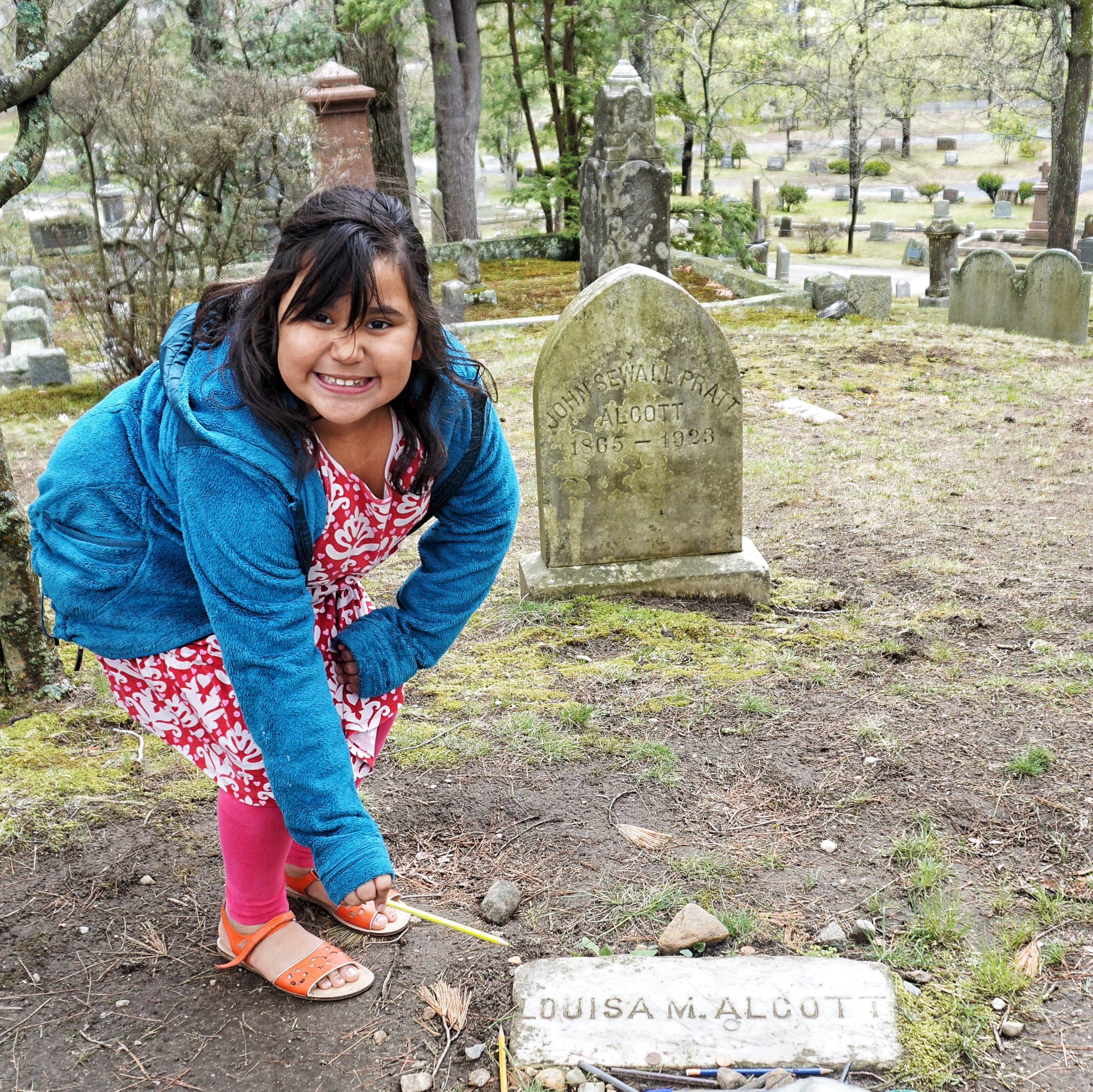
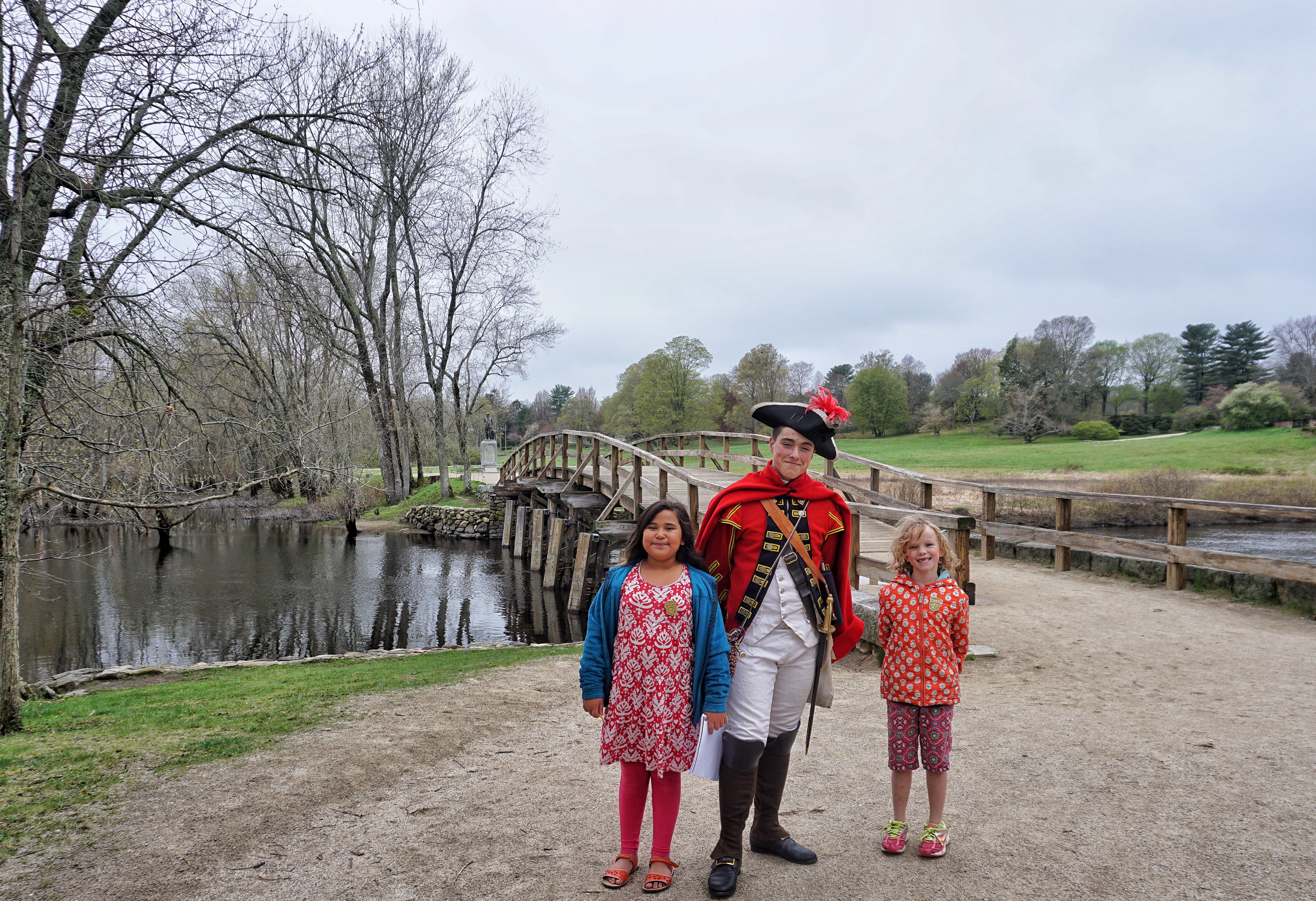
We argued politics with a Redcoat at the (new) Old North Bridge.
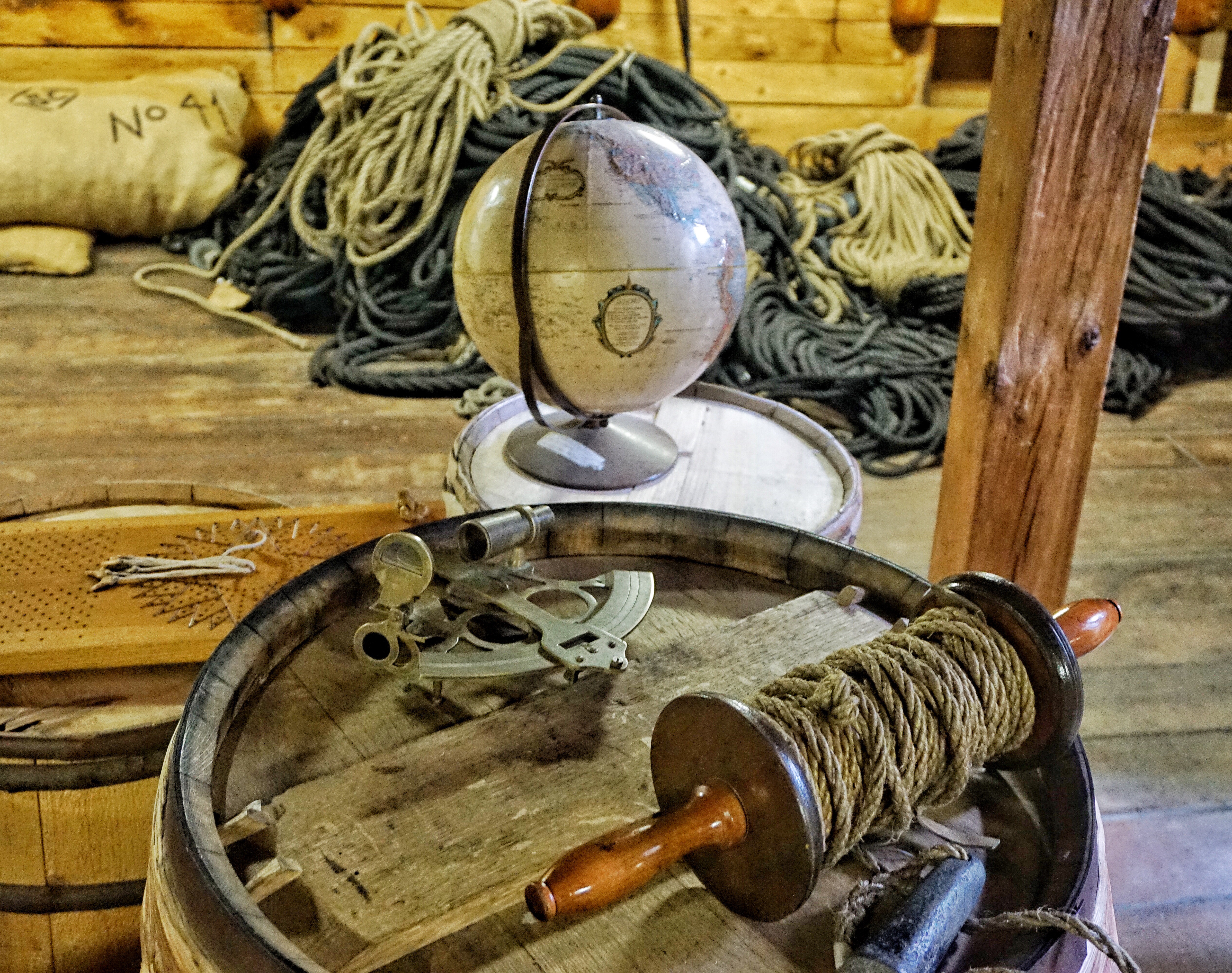 ‘Tween decks in a tall ship, we tried out tools for measuring distance and location at sea. Sextons are still required on Navy vessels in case some sort of cyber terrorism disables the high tech equipment!
My favorite line from Moby Dick is not the opening sentence, but the closing one. After the deadly climax of the story, the reader catches a last glimpse of Melville’s narrator, riding his coffin-turned-lifeboat in a calm sea: “On the second day, a sail drew near, nearer, and picked me up at last. It was the devious-cruising Rachel, that in her retracing search after her missing children, only found another orphan.” Oh, the delicious melodrama! But what a meandering journey to get that last, plaintive note. I know we’re supposed to read deep to get the most out of good literature, but frankly, I was worried all those words would exhaust, rather than inspire my kids. (We opted for a nicely abridged version!)
I was happy to find that the book hasn’t lost all appeal to a modern audience, though. One night, we pulled into a Cape Cod campground after closing hours. We were in dire need of clean clothes for the next day’s activities. The night manager drove me over to the laundry facility, so I wouldn’t have to stumble around in the dark. He looked and sounded like a baby-faced Affleck brother from Good Will Hunting. After asking about our impressions of the area and adding some commentary of his own, he said, “I heard you playing Moby Dick in your the RV when we were loading up your stuff.” He reached over, popped open the glove compartment, and pulled out his own worn copy. “I can’t get enough of that book,” he confessed reverently. “I like a book you have to think about for a long time.”
 On the Road with the Archangel
Delightful and the pictures are some of your best yet. I enjoyed this so much. Ya Mama
LikeLike